

Guwahati's Air Is Clean in the Rains and Among India's Worst in Winter, and a Purifier Has to Survive Both
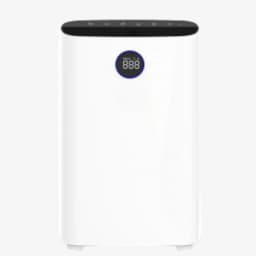
This is a city of two atmospheres. From May to September the monsoon washes the air, and what a purifier meets is humidity above 85 percent, pollen from the hills, and mould spores from every damp wall. From November to February the rain stops, a low inversion layer settles over the valley, and dust from flyover and road construction, brick kilns on the outskirts, stone crushers, vehicle exhaust and burning waste push particulate readings into the poor and very poor bands for weeks at a time. A purifier built for a dry northern winter or a clean coastal summer is asked here to handle wet air for half the year and heavy dust for the other half. Each of its parts fails in its own way under that load, and this page takes the machine apart to show how. It also sets out how AC Care India handles air purifier repair service in Guwahati.
The Purifier, Part by Part, in Guwahati Conditions
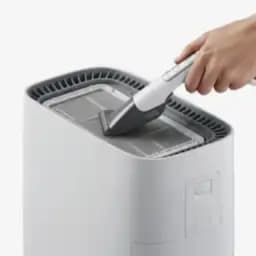
Pre-filter
A washable mesh or foam layer that catches hair, lint and coarse dust. In the winter construction season it loads up in a week; in the monsoon it grows mould if washed and refitted damp. Cheap, but if it is neglected the stages behind it suffer.
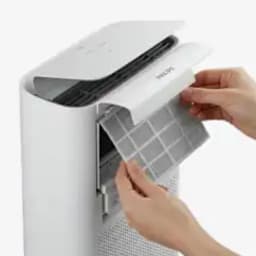
HEPA filter
The dense fibre layer that traps fine particles. Winter dust here is heavy and gritty, and a HEPA rated for a year of ordinary use can be spent in four months of nightly running. Humidity is the other enemy: a damp HEPA loses efficiency, sags, and becomes a bed for fungus, which the fan then blows into the room. A musty smell on start-up means the filter has gone.
Activated carbon layer
Absorbs smoke, cooking smells and gases. Mustard-oil frying, brick-kiln smoke in winter and burning waste saturate it fast, and in humid air carbon absorbs water vapour and loses capacity. A purifier that moves air but no longer removes the smell of frying has an exhausted carbon stage.
Fan and motor
Draws air through the filters. Running against a clogged HEPA for months loads the motor; damp air rusts its bearings and works into the windings. A whine, a rattle, or a fan that will not reach top speed are the signs.
Particle sensor
A small optical chamber that counts particles and sets the auto mode speed. Dust on its lens blinds it, and in the monsoon condensation on the lens makes it read high when the air is clean, so the purifier roars all night for nothing. Monthly cleaning with a dry cotton bud is essential here.
Ioniser or plasma module
A high-voltage emitter that charges particles. Dust on the needles causes crackling; humidity causes leakage and sometimes a faint ozone smell. The module is replaceable on most models.
Control board, touch panel and Wi-Fi module
The electronics suffer from the same two things as every appliance in this city: moisture creeping under the panel and onto the board, and surges from the pre-monsoon lightning that come down the mains in April and May. A purifier that resets, changes speed on its own or drops off the app usually has one of these.
Not Working, or Just Due a Filter?
Most purifiers brought to us in Guwahati as "not working" are working exactly as designed with a filter that has nothing left to give. Here is how to tell the difference at home. Hold the HEPA up to a bright lamp: if light barely passes, it is spent, whatever the counter says. Smell the outlet air on start-up: musty means mould in the filter, smoky or oily means the carbon is finished. Switch to manual high speed and feel the airflow at the outlet; weak airflow with a new filter means a fan or motor problem. Check the sensor readout against the sky: if the machine says the air is excellent on a hazy January morning with the inversion sitting over the city, the sensor is blind and needs cleaning. Only when the filter is fresh, the sensor is clean and the fan is still weak, noisy or erratic is the machine itself at fault.
What Guwahati's Air Does Through the Year
Being honest about the air helps you plan filters. November to February is the hard season: readings in the poor to very poor bands are common, and the pre-filter and HEPA do most of the work. March and April bring pollen from the surrounding hills and dust lifted by the Bordoisila storms. May to September is the cleanest air of the year, but humidity above 85 percent means a damp filter grows mould within days and the sensor fogs; this is when the machine should be run on a low setting in a closed room rather than switched off, so that air keeps moving through the filter and it stays dry. Diwali and the Puja season add a short spike of smoke. A purifier here therefore needs its HEPA replaced in October before the dust, its carbon replaced when smells return, and its sensor cleaned monthly all year.
Diagnostics We Run on Every Call
- Measure airflow at the outlet on each speed and compare with the expected figure for the model.
- Remove and inspect every stage, judging the HEPA against a lamp rather than by the counter.
- Clean the particle sensor and compare its reading with a reference meter.
- Measure fan motor current and listen for bearing noise at each speed.
- Test the ioniser or plasma module and its high-voltage supply.
- Inspect the board for moisture, corrosion and surge marks; test the panel key by key.
- Check the Wi-Fi module and app pairing where fitted.
- Perform the filter reset correctly and show you how.
- Measure the room and check door and window sealing, and say honestly if the purifier is too small for the space.
Parts, Expected Life Here, and the Sign to Watch
| Part | Typical Life in Guwahati | Warning Sign |
|---|---|---|
| Pre-filter | Wash weekly in winter, fortnightly in the rains; replace yearly | Visible grey felt, airflow drop |
| HEPA filter | 4 to 8 months of nightly use, depending on season | Light barely passes through, musty smell |
| Carbon layer | 4 to 6 months in a frying kitchen or a winter smoke zone | Cooking or smoke smell lingers |
| Fan motor | 4 to 7 years; shorter if run against clogged filters | Whine, rattle, cannot reach top speed |
| Particle sensor | 3 to 5 years with monthly cleaning | Reads clean in bad air, or high in clean air |
| Ioniser module | 3 to 5 years | Crackling, ozone smell |
| Control board | 5 to 8 years without surge damage | Resets, speed changes on its own |
| Touch panel | 4 to 6 years in humid rooms | Keys need repeated presses |
| Wi-Fi module | Variable | Drops off the app repeatedly |
Installation, Placement and Annual Care
A purifier in Guwahati should sit at least a metre from any wall, away from the kitchen and well off a damp floor; ground-floor homes in flood-prone colonies like Anil Nagar, Nabin Nagar and Rukminigaon should put it on a stand. The room needs to be closable: an old Assam-type house with wooden windows that do not seal will defeat a small unit, and we will say so rather than sell you a second filter. Plug it into a surge-protected socket before the April storms. For households with asthma or small children, an annual maintenance arrangement with a filter change in October before the winter dust, a sensor and motor service in March before the rains, and a pre-filter supply in between keeps the machine honest. Offices and clinics along GS Road running several units can ask for a scheduled plan.
Purifier Brands We Service
Philips, Dyson, Mi and Xiaomi, Honeywell, Sharp, Coway, Blue Star, Kent, Havells and Eureka Forbes, from bedroom units to large living-room machines and car purifiers. AC Care India is an independent multi-brand appliance repair service and not the authorised service centre of any purifier manufacturer; brand names here only identify the machines we repair. If your purifier is still under its brand warranty, please go to the brand first.
Guwahati Neighbourhoods We Reach
Anil Nagar, Nabin Nagar, Rukminigaon, Dispur, Ganeshguri, Beltola, Six Mile, Hatigaon, Kahilipara, Bhetapara, Panjabari, Hengrabari, Geetanagar, Lokhra, Basistha, Khanapara, Zoo Road, Chandmari, Silpukhuri, Uzan Bazar, Kharghuli, Pan Bazar, Paltan Bazaar, Fancy Bazaar, Ulubari, Lachit Nagar, Rehabari, Bhangagarh, Christian Basti, Noonmati, Narengi, Maligaon, Kamakhya, Jalukbari and Adabari.
Why AC Care India
- Verified technicians who carry a reference particle meter and judge filters by light, not by a counter.
- A written quote before any filter or part is replaced.
- Warranty on repair and parts.
- Genuine or clearly compatible HEPA and carbon filters that match the original's rating.
- Same-day or next-day slots in most of the city, which matters when the winter readings climb.
- Honest advice, including when the problem is a leaky room and not the machine.
Book Air Purifier Repair in Guwahati
Call or WhatsApp 9266608882, or book online through this page. Tell us the brand, the room size, when the filter was last changed, and whether the machine smells musty on start-up. Book in October, before the dust season begins, and your purifier will be ready for the months that matter.
