




Geyser Not Heating in Chapra? Run Through These Checks First
On a foggy January morning, a cold geyser is the last thing anyone wants. Before you call for help, run through this short triage. It takes less than five minutes and often tells you whether the problem is serious.
- Is the power reaching it? Look at the indicator lamp on the geyser and the switch. If the lamp is off, check the MCB in the distribution box and the plug. A tripped MCB that trips again as soon as you reset it is a sign of an earth leakage, so leave it off and call a technician.
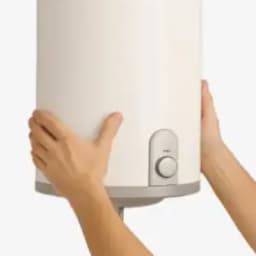
- Is the thermostat knob turned down? On models with an external knob, someone may have turned it to minimum in summer.
- Is water actually flowing in? If the overhead tank is empty after a power cut stopped the motor, the geyser cannot refill. Running a dry geyser can burn the element.
- Is the water warm but not hot? That usually points to a scaled or partly failed element or a weak thermostat, not a total breakdown.
- Is there a shock, burning smell or water leaking? Switch off at the MCB immediately and do not use the geyser until it has been checked.
If these checks do not solve it, the fault is inside the unit. The rest of this page explains how a geyser works part by part, what Chapra's water and weather do to each part, and what our geyser repair service in Chapra covers.
Winter in Saran District: Short, Foggy and Hard on Water Heaters
Chapra's cold season starts around mid-October and January is the coldest month, with night temperatures falling to around 7°C and, during cold waves, lower still. Dense fog can hang over the town and the rivers for days. Most homes use their geysers intensively for about three months, mainly in the early morning when everyone bathes before school and work. That concentrated use is when weak parts fail together. For the rest of the year, the geyser often sits idle with water standing in it, and that idle period does its own quiet damage.
Inside a Storage Geyser, Part by Part
Heating element
A copper or incoloy sheath with a resistance coil inside, sitting in the water at the bottom of the tank. In Chapra, the element's biggest enemy is the borewell water itself. Groundwater in this part of the Gangetic plain commonly carries iron and dissolved minerals, and when heated, those minerals form scale on the element. Scaled elements take longer to heat, run hotter and eventually crack or burn out. A sheath that has corroded through can also leak current into the water, which is a shock hazard.
Thermostat
Switches the element off when water reaches the set temperature. Repeated on-off cycling during heavy winter use wears its contacts. A failing thermostat gives either lukewarm water or water that keeps getting hotter until the safety cut-out trips.
Thermal cut-out
The backup safety device that cuts power if the thermostat fails and the water overheats. If it trips often, there is an underlying fault that needs finding, not just a reset.
Anode rod
A magnesium rod that corrodes so the tank does not. Iron-rich and mineral-heavy water uses it up faster. Once it is consumed, the inner tank starts rusting, and you will notice brownish hot water and a metallic smell. Many geysers in Chapra have never had their anode checked.
Inner tank and insulation
Usually glass-lined or stainless steel, wrapped in insulating foam. Sediment and silt from tanker or borewell water settle at the bottom, causing popping and crackling sounds as water heats. A tank that has corroded through cannot normally be repaired economically.
Pressure release valve and safety valve
Release excess pressure as water expands. In Chapra, where water often comes from a rooftop tank filled by a motor, pressure varies through the day. Valves can jam with scale and silt or drip constantly.
Wiring, switch and earthing
Many older homes in the city have wiring that predates modern appliances, and some lack a reliable earth. A geyser draws two kilowatts or more, so a loose connection or thin cable overheats. Proper earthing is the single most important safety feature for an electric water heater.
Instant Geysers and Gas Geysers
Instant geysers of 3 to 6 litres are common in kitchens and small bathrooms in Chapra. They have a smaller, more powerful element and a thermal cut-out that trips quickly if water flow is low, which happens when the overhead tank runs low. Their elements scale up faster because the water passes over them at high temperature.
Some households use LPG gas geysers. These need a well-ventilated bathroom, because burning gas in a closed space can produce carbon monoxide, which has no smell and can be deadly. If your gas geyser is in a bathroom without a window or exhaust fan, we will advise you to change the installation before anything else.
How We Diagnose a Geyser Fault
- Earth continuity and insulation resistance test before powering on.
- Socket voltage and the element's current draw to check for partial failure.
- Thermostat cut-in and cut-out tested against actual water temperature.
- Thermal cut-out function check.
- Draining a sample to check the amount of sediment and rust.
- Removing and inspecting the anode rod.
- Testing the pressure release valve at normal supply pressure.
- Checking the wall mounting, as a full 25-litre geyser weighs over 30 kg.
Component Lifespan and Warning Signs
| Component | Expected Life on Chapra Borewell Water | Warning Sign |
|---|---|---|
| Heating element | 3 to 5 years; longer with annual descaling | Slow heating, MCB tripping, higher bills |
| Thermostat | 4 to 7 years | Lukewarm water or overheating |
| Anode rod | 2 to 3 years with iron-heavy water | Rusty or brown hot water, metallic smell |
| Pressure release valve | 3 to 5 years | Constant drip, or no release when needed |
| Inner tank | 8 to 10 years if anode is replaced on time | Water leaking from base, damp wall |
| Instant geyser element | 2 to 4 years | Only warm trickle, frequent trips |
Lower Bills and Safer Use Through the Cold Months
In winter the geyser is often the heaviest electrical load in a Chapra home, and it runs at exactly the hour when the local supply is most stretched. A few changes cut both the bill and the risk of breakdown:
- Set the thermostat between 50 and 55°C. Water hotter than that scales the element faster and wastes heat, and it is uncomfortable for bathing anyway.
- Switch on 15 to 20 minutes before the first bath and switch off after the last one, instead of leaving it on all morning.
- Stagger usage if the house has two geysers, so both are not drawing current together during a voltage dip.
- If the supply in your lane often drops in the morning, have the voltage checked. An element working on very low voltage simply takes longer and keeps the wiring warm for longer.
- Never touch the geyser body or switch with wet hands, and keep the bathroom switch outside or well above splash height.
When you replace an old geyser, a well-insulated model with a good star rating keeps water hot longer between heatings, which matters when a power cut lands right before bath time.
Installation, Shifting and Annual Maintenance
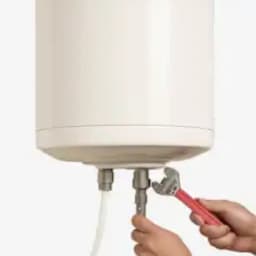
We install storage and instant geysers with sturdy wall anchors, a dedicated earthed socket on its own MCB, a correctly placed pressure release valve and a drain point. We check that your overhead tank provides enough pressure for the model. When you move home within Chapra, we take the geyser down, drain it and reinstall it at the new address.
An annual maintenance visit in October, before winter starts, includes descaling the tank, checking the element and anode, testing the thermostat and valves, and checking the earth. Given the water here, that one visit often doubles the element's life.
Brands We Service
Racold, Bajaj, Havells, AO Smith, V-Guard, Crompton, Venus, Orient and Haier, in storage, instant and gas versions. We also handle locally assembled water heaters sold in Chapra markets.
AC Care India is an independent multi-brand service company and not an authorised service centre for any geyser maker. Brand names are listed only to identify the products we repair. If your geyser is still under the manufacturer's warranty, please approach the brand first.
Neighbourhoods We Reach
Thana Chowk, Prabhunath Nagar, Daulatganj, Sahebganj, Rauza, Gudri Bazar, Katahri Bagh, Brahmpur, Bhagwan Bazar, Mauna, Shyamchak, Nai Bazar, Gandhi Chowk, Dahiyawan, Nagar Palika Chowk, Bhikhari Thakur Chowk, the area near Chhapra Junction, Doriganj and Revelganj, plus Garkha and Ekma on scheduled days.
Get Your Geyser Fixed Before the Cold Sets In
Our technicians are verified and trained on water heater electrics. You receive a quote before work starts, warranty on repairs and parts, genuine or clearly identified compatible spares, and a visit the same day or the next in most areas. Call or WhatsApp 9266608882, or book online through this page. Booking in October or early November means a working geyser on the first foggy morning instead of a long wait in mid-January.
