


Six in the Morning in Vigyan Nagar, Fog on the Road, and the Geyser Light Is On but the Water Is Cold
A December morning in Kota. The temperature outside has dipped to around 8°C, there is mist over the Chambal, and in a house in Vigyan Nagar a father is standing in the bathroom with the geyser switch on, the red indicator glowing, and the tap running cold. A student in a hostel on Jawahar Nagar is in the same position, except she has a 7 am class. Across the city, geysers that were switched off in March and ignored for eight months are being asked to work on the coldest week of the year. Some heat slowly, some trip the MCB, some give a thin stream of rust-coloured water. The owners think winter broke them. In truth, the geyser spent the summer and monsoon being quietly damaged, and the first cold morning is just when the bill came due.
This page takes a geyser apart, component by component, explains what Kota's water, heat and wiring do to each, and describes what geyser repair in Kota from AC Care India involves.
What Kota's Water Does Inside a Tank
Most of central Kota gets treated Chambal water from PHED, which is moderately hard. Colonies on the outskirts, such as Kunhari, Borkhera, Rangbari and along Baran Road, rely partly or fully on borewells sunk into the limestone that underlies the Hadoti region. That groundwater is very hard. When water above about 55 to 60°C sits against a heating element, calcium and magnesium precipitate as scale. On Chambal water, scale builds over two or three winters. On borewell water, a single winter can leave an element coated like a candle.
The result is an element that heats slowly, so the geyser runs longer and uses more electricity, while the element surface gets hotter beneath the scale until it burns out. Sediment collects at the bottom of the tank and makes the crackling noise people hear just after switching on.
Component by Component: What Fails and Why
Heating element
A copper or incoloy sheath over a resistance coil. Our most replaced part in Kota, usually because of scale-induced burn-out or because corrosion pinholed the sheath and the geyser began tripping the earth leakage breaker.
Thermostat and thermal cut-out
The thermostat switches heating off at the set temperature. The cut-out trips if the thermostat sticks. Kota's dusty, dry summers and the idle months pit the contacts. Lukewarm water, or water that gets scalding while the relief valve spits, points here.
Anode rod
A magnesium rod that corrodes instead of the tank. In hard borewell water it is consumed quickly, often within two years, and almost nobody in Kota has it inspected. Once it is gone, the tank rusts and brown water follows.
Inner tank
Glass-lined steel, enamel or stainless. Sediment at the bottom shortens its life; a leaking tank is the one fault where repair rarely makes sense.
Pressure release valve and non-return valve
Water expands as it heats and the valve lets it out. In Kota, where inlet pressure swings between PHED supply hours and overhead tank feed, these valves drip constantly or jam with scale. A dripping valve is normal in small amounts; a steady flow is a fault.
Wiring, switch and earthing
Older houses in Nayapura, Rampura and Chhawni frequently run geysers off thin, shared circuits with a doubtful earth. On the first cold morning, with the whole street's geysers switching on, the switch overheats, the wire insulation softens, and MCBs trip. A geyser without a proper earth is a shock risk in a wet bathroom, and this is the first thing our technician checks, before any part.
Instant geyser electronics
Instant units in hostel bathrooms around Rajeev Gandhi Nagar and Landmark City have a flow switch and a small PCB. Hard water jams the flow switch; the summer voltage spikes that are routine in Kota blow the board.
Diagnostics We Run Before Replacing Anything
- Earth continuity and insulation resistance on the element, done before power is applied.
- Supply voltage and the current drawn by the element, which reveals a partial burn-out.
- Thermostat setting versus actual outlet water temperature.
- A sample drained from the tank to see how much sediment and scale is present.
- Anode rod removed and inspected, not assumed.
- Relief valve tested under supply pressure.
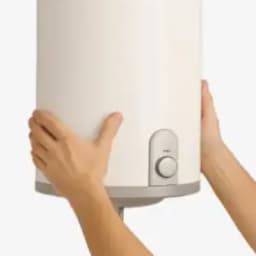
- Mounting bolts and wall checked, since a filled 25-litre storage geyser is a heavy load on an old plaster wall.
Part Life and Warning Signs on Kota Water
| Part | Expected Life on PHED Supply | Expected Life on Borewell Water | Warning Sign |
|---|---|---|---|
| Heating element | 4 to 6 years with yearly descaling | 2 to 4 years | Long heating time, higher bill, MCB trips |
| Thermostat | 5 to 7 years | 5 to 7 years | Lukewarm or scalding water |
| Anode rod | 3 to 5 years | 1.5 to 3 years | Brown water, metallic smell |
| Relief valve | 3 to 5 years | 2 to 4 years | Constant stream from the outlet |
| Inner tank | 8 to 12 years | 6 to 9 years | Damp wall, water beneath unit |
| Instant geyser flow switch | 3 to 4 years | 2 to 3 years | Unit will not switch on with tap open |
Kota's Short, Sharp Geyser Season
Honest note: Kota is a hot city and geysers here work for perhaps four months. From late November to February, average nights sit between 11 and 14°C and cold spells push them to 5°C or below; December 2019 recorded under 3°C. Everything switches on at the same hour, early morning before coaching batches and offices. Book your descaling and inspection in October or early November, when technicians are free and the weather is still warm. If the unit fails in the first week of December, you are in a queue with the rest of the city.
From April to June, when Kota crosses 43°C, the geyser sits unused. Water left in the tank keeps eating the anode, and in borewell areas evaporation through the valve leaves a crust. Either drain the geyser for the summer or run it once a fortnight. Instant geysers can simply be switched off at the MCB.
Instant or Storage, and Saving on the Winter Bill
Kota households are split between 3-litre instant geysers in hostels and small flats and 15 to 25-litre storage units in family homes. Instant units suit a quick bucket in a bathroom used by one or two people and draw a heavy current for a short time, so they need a solid 16-amp circuit. Storage units suit families queuing for the bathroom on a school morning, and they are where scale does its slow damage. If you are replacing, a five-star storage geyser with thick insulation holds heat through a Kota night and repays its price in a couple of winters. Whichever you own, set the thermostat around 50 to 55°C rather than maximum; it slows scaling, reduces standing heat loss and is still hot enough for a bath. Switch the geyser on twenty minutes before use instead of leaving it on from dawn. A freshly descaled element heats the same tank visibly faster, which is the most direct electricity saving available in a hard-water city.
Installation, Relocation and Annual Contracts
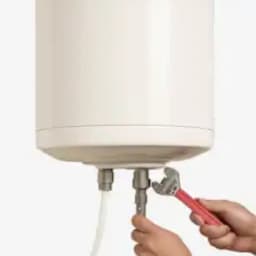
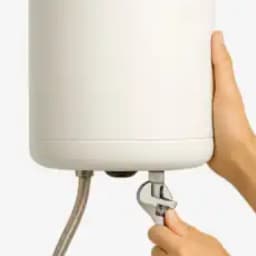
We install storage and instant geysers with anchor bolts suited to the wall, a dedicated 16-amp point with its own MCB and a tested earth, a relief valve pointed where its drip will do no harm, and a check that the overhead tank gives the pressure the model needs. When you shift within Kota, we drain, uninstall and reinstall. Hostels, PGs and guest houses with ten or more units can take an annual contract with pre-winter descaling of every geyser, element and anode checks, and priority call-outs through December and January.
Gas geysers still turn up in some older Kota homes. We service the burner and ignition, but if the bathroom has no ventilation we will say so plainly, because carbon monoxide in a closed bathroom is not a risk worth taking.
Brands Serviced
Racold, Bajaj, Havells, AO Smith, V-Guard, Crompton, Haier, Venus and Orient storage and instant geysers, with elements, thermostats, anode rods and valves carried for most of them so repairs finish in one visit.
For the record, AC Care India is an independent appliance repair company working across brands; we are not the authorised service centre of any geyser maker, and brand names appear here only to describe what we repair. In-warranty units should go to the manufacturer first.
Where We Go in Kota
Vigyan Nagar, Talwandi, Mahaveer Nagar, Dadabari, Jawahar Nagar, Indra Vihar, Rajeev Gandhi Nagar, Landmark City, Keshavpura, Shrinathpuram, Gumanpura, Nayapura, Rampura, Chhawni, Station Road, Kunhari, Borkhera, Rangbari, Bajrang Nagar, Anantpura, Thermal Colony and Kaithoon Road.
The AC Care India Difference
Technicians are verified and trained on water-heater electrics and earthing. The quote is given before work, and both repair and parts are covered by warranty. Same-day visits are available across most of Kota in the winter rush, next-day on the fringes. And if the tank is gone, you will be told that a new geyser is the better use of your money.
Book Geyser Repair in Kota
Call or WhatsApp 9266608882, or book online through this page. Tell us your area, the brand and capacity, and whether your supply is PHED or borewell. Get the geyser looked at before the fog settles on the Chambal, and the first cold morning will be an ordinary one.
