

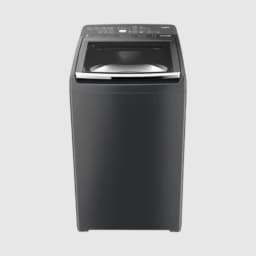
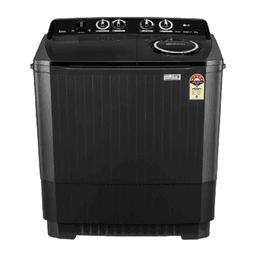
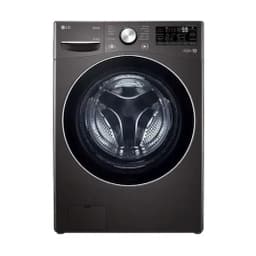
Sunday Morning in Adarsh Nagar, a Week of Laundry and a Machine That Stops Mid-Wash
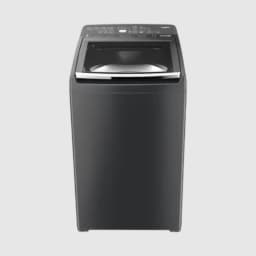
It is nine on a Sunday in Vijayapura (Bijapur). The corporation water came this morning, the overhead tank is full, and the week's clothes, school uniforms, office shirts, bedsheets dusty from April winds, go into the top-loader. Twenty minutes later it stops. The display blinks an error, the tub is half full and the clothes are soaking in grey water. On the terrace, the inlet pipe is warm from the sun, and inside the machine the little mesh filter at the water inlet is coated with fine silt and white crust.
That scene sums up what Vijayapura does to a washing machine: hard water, sediment from tanks and borewells, intense summer heat and dust, and a power supply that dips at the busiest hours. To repair a machine properly here, it helps to understand it part by part. That is how this page is organised.
Where the Water Enters: Inlet Valve and Mesh Filter
Every automatic machine has a solenoid inlet valve with a small mesh screen. In Vijayapura, homes on Krishna water stored at Bhutnal get reasonably clean supply, but many layouts on the city's growing edges still use borewells or tankers part of the time. Groundwater in the district is hard and in places high in dissolved salts. The screen chokes with silt and scale, flow drops, and the machine shows a "water inlet" error or takes forever to fill. The valve coil can also burn out after years of voltage dips. Cleaning the screen is often enough; a burnt coil means a new valve.
Pressure is the other half of the story. Most houses fill a terrace tank and feed the machine by gravity, so a first-floor bathroom just below the tank gets very little head. Fully automatic machines need a minimum pressure to fill on time, and on a weak line they time out and throw an error. Where corporation supply comes at fixed hours, some families connect the machine straight to the line, and the sudden pressure when water arrives stresses the valve diaphragm. Hard water also leaves your clothes greyish and stiff, because detergent reacts with calcium and magnesium instead of lifting dirt. Using a little less detergent, choosing a liquid one, and running an empty hot cycle with a descaler every couple of months does more for whites than adding extra powder.
The Tub, Drum and Bearings
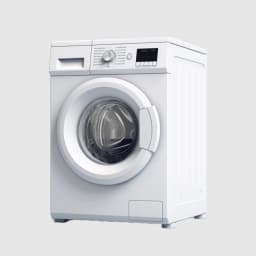
The outer tub holds the water; the inner drum spins the clothes. Between them, on front-loaders, sits a bearing and seal assembly. Hard water and detergent residue form a grey scum in the gap, and once the seal starts weeping, water reaches the bearings. The first sign is a rumble during spin, then a grinding noise that sounds like gravel. Bearing replacement is a bench job, not a ten-minute fix. On top-loaders, the drum's pulsator and the spin shaft wear out in similar ways, especially when machines are overloaded with heavy blankets in winter.
Motor, Belt and Direct Drive
Older top-loaders and semi-automatics use a motor and belt. In Vijayapura's summer, the inside of a machine kept on a terrace or in a tin-roofed utility area can get very hot, and rubber belts crack and stretch. A slipping belt means clothes that stay wet after spin. Newer direct-drive and inverter motors have no belt, but their Hall sensors and windings are sensitive to moisture and to surges after storms.
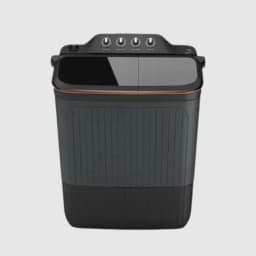
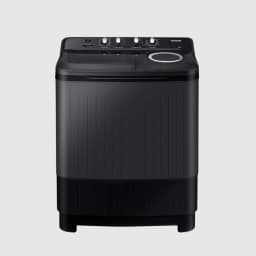
Semi-automatic twin-tubs are still common in Vijayapura, particularly in joint families and in homes where water comes at fixed hours and is filled by bucket. Their wash motor and spin motor are separate, each with its own capacitor, and the timer knobs are mechanical. The spin tub's brake and lid switch wear out, and the wash pulsator's seal leaks into the motor when the tub is overfilled. They are simple, robust machines and almost always worth repairing.
Where the Water Leaves: Drain Pump and Hoses
Coins, hairpins, threads from new saris and black soil from farm clothes end up in the drain filter of front-loaders and the drain path of top-loaders. When the pump impeller jams, water stays in the drum and the machine refuses to spin. Kinked or crushed drain hoses behind the machine cause the same complaint. Many front-loaders have a small filter door at the bottom front; clearing it every month or two avoids half of all drain calls. Farming families who wash field clothes caked in black soil should shake them out and rinse them in a bucket first; that clay is sticky when wet and settles in the sump like cement.
Suspension: Springs, Dampers and Shock Absorbers
A machine that walks across the floor during spin usually has worn dampers or a broken suspension spring. Uneven floors in older houses, and machines placed on a raised platform without proper levelling, make it worse. Replacing dampers and levelling the feet restores quiet spinning and protects the bearings. Front-loaders should also have their transit bolts removed at installation; we still find new machines in the city running with the bolts in place, which shakes the drum assembly apart within months. Placing a front-loader on a wooden stand or loose bricks to raise it above a wet floor causes similar damage, so use a proper stand rated for the machine.
Heater, Sensors and the Control Board
Front-loaders with a hot wash have a heating element at the bottom of the tub. In hard water areas it is the part that scales fastest. A scaled heater trips the earth leakage breaker or fails open. Water level sensors (pressure switches) can block with scale in their small tube. The control PCB is the brain, and in this city it suffers from two things: surges when power returns after a storm, and dust and dampness getting into the panel. Monsoon humidity, mainly in September and October, causes keypad and display faults on machines kept in bathrooms.
How We Diagnose a Washing Machine
- Run the machine's own service or test mode and read any stored error codes.
- Measure supply voltage and check the earth at the socket.
- Check water pressure and flow at the inlet, and inspect the mesh filter.
- Test the inlet valve coil, drain pump, door lock and heater with a meter.
- Spin the drum by hand to feel for bearing roughness.
- Inspect dampers, springs, belt and motor brushes where fitted.
- Check the PCB for burn marks, swollen capacitors and corroded connectors.
You see the readings and get a quote before any part is opened up further or replaced.
Machine Parts: How Long They Last in Vijayapura and What Warns You
| Part | Typical Life Here | Warning Sign |
|---|---|---|
| Inlet valve and filter | Filter needs cleaning every few months on borewell water; valve 5 to 8 years | Slow filling, inlet error |
| Heater (front-loader) | 3 to 5 years on hard water without descaling | Cold wash only, breaker trips |
| Drum bearings and seal | 6 to 10 years, less if overloaded | Rumbling spin, rust streaks at the back |
| Drain pump | 5 to 8 years | Water left in drum, humming without draining |
| Drive belt | 3 to 5 years in hot utility areas | Weak spin, burning rubber smell |
| Dampers and springs | 5 to 7 years | Machine walking, loud thumping |
| Control PCB | Varies; shortened by surges | Dead panel, random errors after a storm |
Installation, Shifting and Maintenance Plans
We install new machines with a level base, a proper inlet tap with a washer, a drain hose routed without kinks and a dedicated earthed socket. In homes with very low pressure from the overhead tank, we check whether the model you bought needs a minimum pressure to fill. For house shifting within Vijayapura, we lock the drum with transit bolts before moving and reinstall at the new home. Hostels, PG accommodations and laundries can take a maintenance plan with scheduled descaling and filter cleaning.
AC Care India is an independent repair service working on many brands. We are not the official service centre for any manufacturer, and the brand names below only identify machines we repair. If your machine is still in its warranty period, please contact the brand first.
Washing Machine Makes We Repair
Front-loaders, top-loaders and semi-automatics from IFB, Samsung, Whirlpool, Bosch, Godrej, Haier, Panasonic and Voltas Beko. Our verified technicians carry common spares, quote before work, give a warranty on the repair and the parts, and visit the same or next day in most localities.
Neighbourhoods We Reach in Vijayapura
Adarsh Nagar, Ashram Road, Solapur Road, KHB Colony, Gachinakatti Colony, Jalnagar, Station Road, Navbag, Shikarkhane, Ibrahimpur, Mahalbagayat, Basaveshwar Colony, Shastri Nagar, Allapur, BLDE Road, Bagalkot Road, Sindagi Road, Athani Road, Jorapur Peth and the area around Gol Gumbaz.
Book Washing Machine Repair in Vijayapura
Call or WhatsApp 9266608882, or book through this page. Tell us the brand, whether it is a top-loader or front-loader, and what the display shows. We will send a technician with the right parts for the job.
