

"Hard Water? Just Add More Detergent." In Gandhidham, That Habit Wrecks Washing Machines
Many households in Gandhidham notice that clothes come out stiff, whites turn dull and soap seems to vanish without lather. The usual response is to pour in an extra scoop of detergent. It feels logical, but it makes things worse. Water here, whether from the Narmada pipeline, a tanker or a bore, often carries a heavy load of dissolved minerals and salts. Those minerals bind with detergent and stop it working, so more powder simply leaves more residue: in the fabric, in the drum, in the drain pump and on the heating element. Front-loaders foam over, sensors misread, and drum bearings sit in a sludge of undissolved soap.
The real fix is understanding how your machine works and what Kutch water does to each part. This page takes a washing machine apart, section by section, and then explains how AC Care India handles washing machine repair in Gandhidham.
Water In: Inlet Valve, Filter Mesh and Pressure Sensor
Every automatic machine starts with an electrically controlled inlet valve that opens to let water in, protected by a fine mesh filter where the hose connects. A pressure sensor, sometimes called a water level sensor, tells the control board when the drum has enough water.
In Gandhidham, this front end suffers first. Tanker water brings sand and silt that clog the mesh. Mineral scale coats the valve's small rubber diaphragm until it sticks open or shut. Societies that switch between sources see sudden changes in pressure and sediment. Typical symptoms are a water inlet error, a drum that overfills, or a valve that drips into the machine even when it is off.
What we do
Remove and clean the mesh, test the valve coil and replace the valve if the diaphragm is scaled. Where water is gritty, we suggest a simple inline sediment filter on the tap feeding the machine.
The Drum, Bearings and Seal
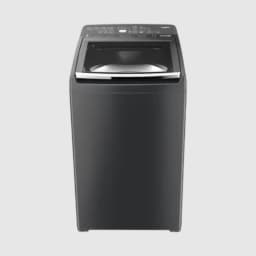
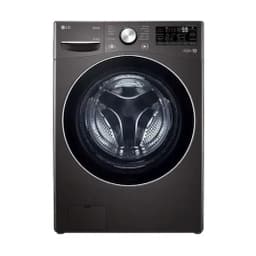
The inner drum spins on a shaft supported by two bearings at the back of the outer tub, with a rubber seal keeping water away from them. On top-loaders the structure differs but the principle is similar.
When detergent residue and scale build up, they work into the seal and wear it. Once water seeps past the seal, the bearings rust and begin to rumble, first only on spin, later all the time. Gandhidham's humid air near the coast adds to rust on any exposed metal. A machine that sounds like a small aircraft during spin, or one where the drum has visible play when you push it, needs bearing and seal replacement before the shaft or tub is damaged.
Motor, Belt and Drive
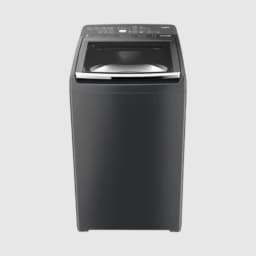
Older top-loaders and many semi-automatics use a universal or induction motor with a belt to turn the drum. Most modern front-loaders and premium top-loaders use direct drive inverter motors with no belt.
Belts stretch and glaze over time, particularly in heat, and a slipping belt gives weak agitation and a burning rubber smell. Carbon brushes in universal motors wear down with heavy use. Direct drive motors are reliable but depend on a hall sensor and a motor control circuit that are sensitive to moisture and surges.
Heater and Thermistor
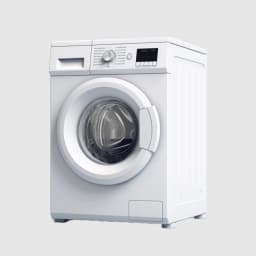
Front-loaders and many top-loaders with hot wash have a heating element at the bottom of the outer tub and a thermistor that reads water temperature. This is where Gandhidham's mineral-heavy water does serious damage. Scale builds on the element with every hot wash. A scaled heater takes longer to warm water, then overheats and fails, often tripping the MCB or showing a heater error.
A monthly descaling cycle with a proper machine descaler, or citric acid where the manual allows, extends heater life dramatically.
Drain pump and filter
At the end of each wash, a small pump pushes water out through the drain hose. In front-loaders there is a filter you can open at the front-bottom. Coins, hairpins, buttons, lint and grains of sand collect here. Undissolved detergent and scale make the sludge thicker. A blocked filter means water left in the drum and drain errors. A pump that has run against a blockage too long can burn out.
Suspension, dampers and springs
Springs at the top and shock absorbers at the bottom keep the tub steady during spin. When dampers weaken, the machine bangs and walks across the floor. On uneven floors, which are common in bathrooms and balconies, wear is faster. Overloading with heavy bedding and towels adds to the strain.
Control Board, Door Lock and Sensors
The PCB runs everything. It is sensitive to voltage spikes and to humidity, both of which affect machines in Gandhidham, especially those placed on open balconies or in bathrooms without ventilation. The door lock on front-loaders and the lid switch on top-loaders tell the board it is safe to start. When either fails, the machine will not run or stays locked with clothes inside.
Cabinet and frame
The steel body is the part people forget. Near the creek and port, and in bathrooms where the machine stands in splash water, the base frame rusts from below. Once rust eats into the mounting points for the dampers, the tub can no longer be held steady, and a repair becomes much harder. Keeping the machine on a plastic stand and wiping the base dry after each wash adds years to its life.
Semi-automatics in Gandhidham homes
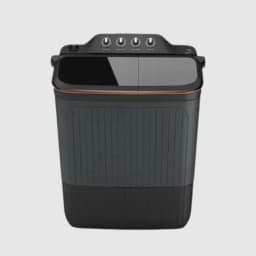
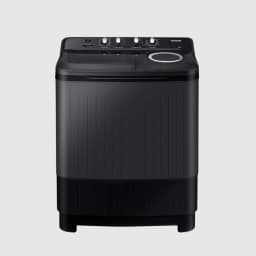
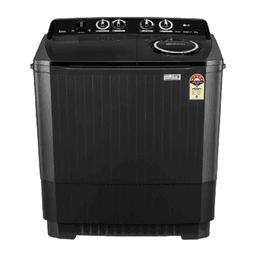
Twin-tub semi-automatics remain popular here, especially in larger Sindhi and Kutchi joint families who wash heavy loads of bedding and dupattas daily. They have fewer electronics, but their wash timer, spin motor capacitor, drain selector valve and spin-tub brake take heavy wear. A spin tub that keeps turning after the lid is opened has a failed brake, which is a safety issue and should be fixed promptly.
Diagnostics We Carry Out
- Supply voltage and earth test at the socket.
- Error code reading and service mode test on automatic machines.
- Inlet mesh, valve coil and pressure sensor checks.
- Drum play and bearing noise test by hand and on spin.
- Heater and thermistor resistance tests.
- Drain pump and filter inspection.
- Belt, motor brushes or direct drive sensor check.
- Door lock, lid switch and PCB checks.
- A full test cycle after repair to confirm the fix.
Parts, Expected Life and Early Warning Signs
| Component | Typical Life in Gandhidham Conditions | Early Warning |
|---|---|---|
| Inlet valve | 3 to 6 years, less on tanker water | Slow fill, inlet error, dripping when off |
| Heating element | 3 to 5 years without descaling | Lukewarm water, heater error, MCB trip |
| Drum bearings and seal | 6 to 10 years with correct loading | Rumbling on spin, rust streaks behind drum |
| Drain pump | 5 to 8 years | Slow draining, humming without water flow |
| Shock absorbers | 5 to 8 years | Banging and machine moving on spin |
| Drive belt | 4 to 6 years | Weak spin, burning smell |
| Door gasket | 4 to 7 years | Black mould, small tears, leaks at front |
| Control board | Varies; often fails after surges | Random errors, no response |
Installation, Relocation and Annual Maintenance
Gandhidham sees a lot of movement: port and logistics staff on transfer, families shifting between Gandhidham and Adipur, and new apartments coming up. Washing machines are often damaged in moving because the drum is not locked. We remove and refit transit bolts on front-loaders, disconnect and reconnect inlet and drain lines, and level the machine properly at the new home.
For new installations, we check water pressure, socket earthing and floor stability, fit an inlet filter where water is gritty, and position the drain hose correctly to avoid siphoning. For homes, PGs and small laundries that use machines heavily, an annual maintenance visit covering descaling, filter cleaning, gasket care and electrical checks keeps breakdowns to a minimum.
Brands We Repair
Samsung, Bosch, IFB, Whirlpool, Haier, Panasonic, Godrej and Voltas Beko, covering semi-automatic, top-load and front-load fully automatic machines and washer-dryers. AC Care India is an independent multi-brand appliance repair service and is not the official service centre of any manufacturer; brand names appear only to identify the machines we fix. Machines still in warranty are best taken to the brand first.
Neighbourhoods We Serve
Galpadar, Sector 8, Sector 1, Adipur, Bharat Nagar, Apnanagar, Tagore Road, Gurukul area, Sector 5, Sector 7, Sapnanagar, Shaktinagar, Rambaug Road, Rotary Circle, Railway Colony, IFFCO Colony, Transport Nagar, Meghpar Kumbhardi, Varsamedi, Antarjal, Kidana and Gopalpuri.
Book Washing Machine Repair in Gandhidham
We send verified technicians, give an upfront quote, use genuine or clearly stated compatible parts, and stand behind repairs and parts with a warranty. If your machine is not worth repairing, we will tell you so. Same-day or next-day visits are available in most areas.
Call 9266608882 or book online through this page. Tell us the machine type, brand, error code if any, and where your water comes from.
