

Many Malda Families Blame the Detergent for Grey Clothes. The Machine Is Usually the Real Problem.
A common belief in Malda homes is that dull, greyish clothes and a sour smell from the drum mean you need a stronger detergent. So people add more powder, and the problem gets worse. The truth is that most of these complaints come from the machine itself: a drum coated with residue, an inlet filter half blocked with silt and iron from the tube well, a drain pump that leaves dirty water behind, or a heater crusted with scale. More detergent only adds more residue for the machine to fail to rinse away.
Understanding what each part of a washing machine does, and how Malda's water, humidity and power supply affect it, makes it far easier to spot trouble early. This page takes the machine apart section by section, then explains how AC Care India carries out washing machine repair in Malda.
How Your Washer Works, One Component at a Time
Inlet valve and filter mesh
Water enters through a solenoid valve with a small mesh screen behind the hose connection. Many households in English Bazar and Old Malda switch between municipal water and a submersible pump, and groundwater in the district often carries fine sand and iron. That sediment collects on the mesh, so the machine fills slowly, shows a water-supply error or stops mid-cycle. On upper floors fed by a rooftop tank, low pressure makes the same symptom appear sooner.
Drum, tub and bearings
The inner drum spins on a shaft supported by bearings in the outer tub, sealed against water by a shaft seal. When the seal wears, water seeps into the bearings and they begin to rust. The warning is a growing rumble during spin that sounds like a small aircraft taking off. In a humid city, a machine left wet with the lid or door shut accelerates this damage.
Motor, belt and drive
Older top-loaders and many front-loaders use a motor and belt; direct-drive models use a motor mounted on the drum shaft. Belts stretch and slip, carbon brushes on universal motors wear down, and in direct-drive machines the hall sensor or rotor magnets can fail. Overloading with heavy winter blankets and quilts is a frequent cause of belt and motor strain.
Heater and thermistor
Front-loaders and some top-loaders have a heating element in the tub. Iron and hardness minerals bake onto the element, which then overheats and fails or trips the earth-leakage breaker. A faulty thermistor gives wrong readings, so the machine either never finishes heating or overheats.
Drain pump and filter
The drain pump pushes water out at the end of each wash. Coins, hairpins, threads from saris and lint from towels collect in its filter. When it chokes, the machine stops with water in the drum or the clothes come out soaked.
Shock absorbers and suspension springs
These steady the tub during spin. Once they weaken, the machine walks across the floor, bangs against the wall and throws unbalanced-load errors.
Control board, door lock and pressure sensor
The PCB runs the whole programme. It decides fill level using a pressure sensor and will not start a front-loader until the door lock confirms closure. Moisture in the air, rat damage in storerooms and voltage spikes after storms are the main enemies of these electronic parts in Malda.
What Malda Conditions Do to a Washing Machine
Three local factors account for most of the failures we see. The first is water quality: sand, iron and hardness from tube wells and pumps. Iron is particularly troublesome, because it stains whites yellow-brown and leaves a rusty film inside the drum.
The second is moisture. Malda's air stays humid from the pre-monsoon weeks through to October, and machines are often placed in a bathroom, under a staircase or on a covered balcony. Rust spreads on the cabinet base, and condensation forms on PCBs.
The third is power. Kalbaishakhi storms in April and May and heavy monsoon rain cause outages, and supply can return with a surge. A board that has handled a dozen such events is more likely to fail. A spike guard or stabiliser is a small investment compared with a control board.
Our Diagnostic Routine on Every Call
- Checking supply voltage and earth at the socket before the machine is opened.
- Reading any error code and running the machine's own test mode where the model supports it.
- Removing the inlet hose and inspecting the filter mesh for sand or iron sludge.
- Measuring resistance of the heater, thermistor, drain pump and motor windings.
- Spinning the drum by hand to feel for bearing roughness and checking for seal leaks.
- Testing shock absorbers and springs for damping.
- Opening the drain pump filter and clearing debris.
- Inspecting the PCB for burnt tracks, swollen capacitors or corrosion.
Only after these checks do you receive a written quote, listing exactly what needs replacing and why.
Part Lifespan and Early Warning Signs
| Component | Typical Life in Malda Use | Sign It Is Failing |
|---|---|---|
| Inlet valve mesh | Needs cleaning every 3 to 6 months on pump water | Slow fill, water-supply error |
| Drum bearings and seal | 6 to 10 years, less if overloaded | Rumbling spin, water traces under the machine |
| Drive belt | 3 to 5 years | Drum not turning while motor hums, burning smell |
| Heater element | 4 to 6 years with iron-rich water | Cold washes, earth-leakage trips |
| Drain pump | 5 to 8 years | Water left in drum, loud grinding during drain |
| Shock absorbers | 5 to 7 years | Machine walking or banging during spin |
| Control board | Varies widely with surges and humidity | Random resets, dead display, buttons not responding |
Semi-Automatic, Top-Load and Front-Load: Different Weak Points
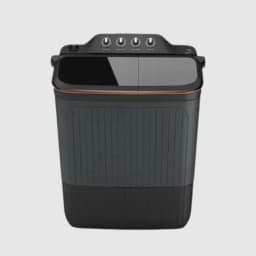
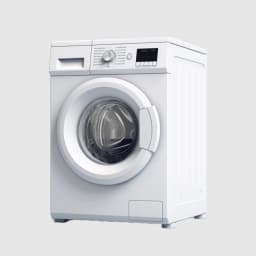
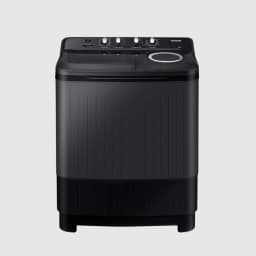
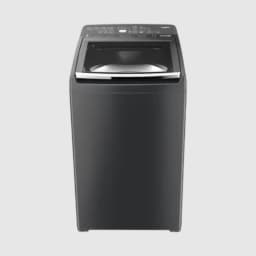
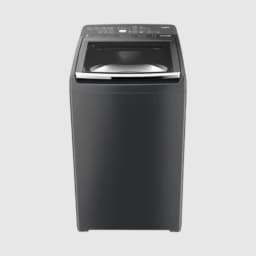
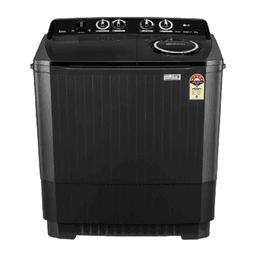
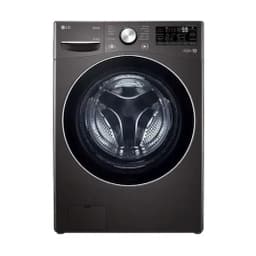
Semi-automatic twin-tub machines are still common in Malda, especially in larger families. Their wash timer, spin timer and separate motors are simple and cheap to repair, but the spin-tub brake and lid switch wear out with daily use. Fully automatic top-loaders suffer mostly from inlet blockage, clutch and belt problems. Front-loaders are gentle on clothes and use less water, but they are more sensitive to door gasket mould, scaled heaters and board faults. We repair all three types and explain which faults are worth fixing on each.
Monsoon Laundry and Winter Quilts: The Two Heavy Seasons
From June to September, clothes in Malda simply do not dry on the line. Families lean on the spin cycle far more than usual, often running an extra high-speed spin or two to get garments damp rather than soaking. That extra spinning is exactly when worn bearings, weak shock absorbers and stretched belts give up. If your machine already rumbles in March, have it checked before the rains instead of during them.
Monsoon also means muddy uniforms, towels used three times a day and a drum that never fully dries between loads. Mould grows quickly in the door gasket of a front-loader and in the gap under the top-loader's pulsator. Run an empty hot or tub-clean cycle once a fortnight and leave the lid or door open after the last wash.
Winter brings the opposite load. In December and January, households wash razais, blankets and heavy shawls. A single wet quilt can weigh more than the drum is rated for, and it often unbalances the spin. Check the capacity printed on the machine, wash one heavy item at a time, and use the bulky or blanket programme if your model has it.
Installation, Shifting and Maintenance Plans
We install new machines with the transit bolts removed (a surprising number are left in), the inlet connected with a fresh washer, the drain hose at the right height and the unit levelled to stop walking. When you move within Malda, we fit the transit bolts back, drain and pack the machine and reinstall it at the new home. Households that want regular care can opt for a maintenance plan covering periodic drum and filter cleaning, inlet mesh service and an electrical safety check.
Washing Machine Brands We Repair
IFB, Samsung, Whirlpool, Bosch, Haier, Godrej, Panasonic and Voltas Beko, across semi-automatic, top-load and front-load models. As an independent multi-brand repair company, AC Care India is not the authorised service centre for any manufacturer, and brand names here only describe what we fix. Machines still under brand warranty should go to the manufacturer first.
Neighbourhoods We Serve in Malda
Gayeshbari, Kalitala, Old Malda, Netaji More, Pirojpur, Rathbari, Sukantamore, Mokdumpur, Jhaljhalia, Fulbari, Krishnapally, Rabindra Avenue, Mangalbari, Naldubi, Gour Road, Nimasarai and Mahadipur Road, plus the colonies near Malda Town station and Malda Medical College.
Book a Washing Machine Technician in Malda
Our technicians are background-checked, quote before they start, use genuine or dependable compatible spares and give a warranty on both work and parts. Most localities get a visit on the same day or the next, and if a repair does not make financial sense, we tell you. Call or WhatsApp 9266608882, or book through this page with your machine type, brand and the symptom you have noticed.
