




Why Does My AC in Thanjavur Cool Well in May but Struggle in October?
It sounds odd, but it is one of the most common complaints we hear in Thanjavur. In May, with the delta baking at temperatures near 40°C, the AC seems to cope. Then the northeast monsoon arrives, the air turns thick and sticky, humidity climbs towards 80 percent, and suddenly the room feels clammy even though the AC is running. Water drips from the indoor unit, the walls feel damp, and the bedroom smells musty. The answer lies in what an air conditioner actually does: it does not just cool air, it pulls moisture out of it. In Thanjavur's wet season, that second job becomes the bigger one, and every weak part in the system shows up.
To explain properly, this page takes the AC apart component by component, shows what fails in each one under Thanjavur's conditions, and then covers the diagnostics, services and AC service in Thanjavur that AC Care India provides.
The Climate Your AC Has to Live With
Thanjavur is hot for most of the year. March to June is the dry hot season, with May the peak and highs in the late thirties, sometimes above 40°C. The southwest monsoon from June to September brings some showers, but the real rain comes from October to December with the northeast monsoon, bringing roughly two-thirds of the year's rainfall, high humidity, thunderstorms and, in some years, cyclones. Even the coolest months, December and January, rarely see nights below 20°C. In other words, many homes run their ACs for eight or nine months a year. The Bay of Bengal coast is not far away, so moist, slightly salty air reaches the city on sea breezes, though less harshly than in Nagapattinam or Karaikal.
Inside the AC, Part by Part
Compressor
The compressor pumps refrigerant around the system and does most of the work. On hot May afternoons it runs long cycles; in humid months it runs to remove moisture even when the temperature is moderate. Voltage dips during peak evening demand and surges when power returns after a cut put stress on its windings and starting components. Signs of trouble: the outdoor unit hums but the fan does not start, the MCB trips at start-up, or the compressor body is extremely hot.
Capacitor and contactor
The run capacitor helps the compressor and fan motors start and run. Heat ages capacitors quickly; a bulging or weak capacitor is the most common cheap fix we make in summer. The contactor's contacts pit and burn with every start, more so when voltage fluctuates.
Condenser coil and outdoor fan
The outdoor coil throws heat out of the house. Dust from roads, rice mill husk in some areas, and leaves and bird droppings block its fins. The humid, slightly salty air speeds up corrosion of the aluminium fins and copper joints over the years. A corroded, dirty condenser forces the compressor to work at high pressure, cutting efficiency and life.
Evaporator coil, blower and drain
The indoor coil is where moisture condenses. In Thanjavur's humid months it produces a steady stream of water. If the coil is dirty, airflow drops and the coil can freeze; if the drain pipe is blocked by slime and algae, water overflows onto your wall and floor. A damp coil and blower wheel are also where mould and the classic musty smell come from.
Expansion device and refrigerant lines
Capillary tubes or electronic expansion valves meter the refrigerant flow. Moisture or debris from a badly done gas charge can block them. The copper lines and flare joints are where most leaks start, especially if the unit was installed with poor flaring or has vibrated loose over time.
PCB, sensors and inverter drive
Modern ACs depend on electronics. The indoor PCB reads room temperature and coil sensors; inverter models have an outdoor drive board that controls compressor speed. Lightning during northeast monsoon storms and voltage surges are the main killers. Humidity creeping into the outdoor electrical box causes corrosion on board connectors.
How Our Technicians Diagnose an AC
- Measure supply voltage and check the earth at the AC point.
- Record compressor and fan current at start-up and while running.
- Test capacitors with a meter, not by eye.
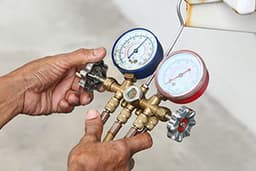
- Read operating pressures and the air temperature drop across the indoor coil.
- Inspect condenser and evaporator coils for dirt, damage and corrosion.
- Check the drain line flow and the tray for slime.
- Check sensors and read error codes on inverter units.
- Pressurise with nitrogen and leak-test if pressures are low.
Parts, Their Typical Life and the Warning Signs
| AC Part | Typical Life in Thanjavur Use | Warning Sign |
|---|---|---|
| Run capacitor | 3 to 5 years | Fan slow to start, compressor clicking on and off |
| Contactor | 4 to 6 years | Outdoor unit not starting, chattering sound |
| Outdoor fan motor | 6 to 8 years | Grinding noise, fan slow or stopping |
| Condenser coil | 8 to 12 years with cleaning | Visible corrosion, repeated gas leaks |
| Indoor blower motor | 7 to 10 years | Weak airflow, rattling indoor unit |
| Inverter outdoor PCB | Varies; shortened by surges | Error codes, AC dead after a storm |
| Compressor | 10 to 14 years with stable voltage | Very high current, tripping, poor cooling despite correct gas |
The Truth About Gas Top-Ups
Refrigerant is sealed inside the system. If an AC needs gas every season, it is leaking. A proper repair finds and fixes the leak, replaces the drier where needed, pulls a deep vacuum to remove moisture, and charges the correct amount by weight. A top-up without that work simply delays the same complaint.
Where the Outdoor Unit Sits Matters
In Thanjavur, a large share of homes are independent houses with terraces, and the outdoor unit often ends up on the roof in full sun or on a ledge facing west. On a May afternoon, the roof surface itself can be much hotter than the air, and the condenser ends up breathing that heat. A raised stand, a simple open shade above the unit and at least a foot of clear space on all sides make a measurable difference to cooling and power use. In apartment buildings on Medical College Road and the newer colonies, units are sometimes squeezed into narrow utility ducts where hot air from one unit feeds the next; we check for that and suggest changes where we can.
Coconut and neem trees are a lovely part of delta homes, but their falling leaves, flowers and fibres get sucked into outdoor coils. In houses with trees overhead, the condenser needs cleaning more often than the usual twice a year. Monsoon winds and cyclone gusts also test the brackets; rusty or loose mounting bolts are something we check on every visit before October.
Dry Mode and the Monsoon
During the October to December rains, many homes in Thanjavur would be more comfortable using dry mode than cooling at 18°C. Dry mode runs the compressor and fan in a way that removes moisture without over-chilling the room, which also reduces the cold, damp feel and lowers the electricity bill. It does produce plenty of condensate, so the drain line must be clean. We show customers how to use it properly during service visits.
Installation, Shifting and Annual Maintenance
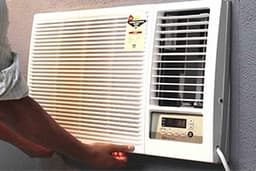
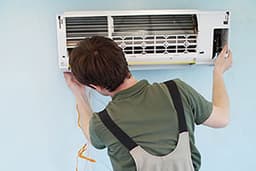
We install split and window ACs with properly flared joints, a vacuum before release of gas, a drain line with a correct slope, and outdoor brackets anchored to take monsoon winds. When you move within the city, we pump down the gas into the outdoor unit, uninstall carefully and reinstall at the new address. Homes, clinics, shops and small offices can choose an AMC with a pre-summer service in February or March, a mid-season clean before the northeast monsoon, and priority visits.
AC Brands We Service
Split, window, cassette and inverter models from Daikin, Voltas, Samsung, Blue Star, Carrier, Hitachi, Panasonic, Lloyd, O General, Godrej, Haier and Whirlpool. AC Care India is an independent multi-brand repair service; we are not an authorised service partner of these companies, and their names are used only to identify the units we repair. If your AC is still covered by the maker's warranty, the brand should be your first stop.
Neighbourhoods We Cover
Medical College Road, Arulananda Nagar, Nanjikottai Road, Yagappa Nagar, Neelagiri, Srinivasapuram, Karanthai, Vilar Road, Pudukottai Road, Trichy Road, Reddipalayam, Manambuchavadi, Keezhavasal, Vallam, Marriamman Kovil, Gandhiji Road, Old Bus Stand, New Bus Stand area and the Main Streets around the fort.
Book an AC Technician in Thanjavur
Verified technicians with proper gauges and meters, a quote before work starts, warranty on repairs and parts, same-day or next-day visits in most localities, and straight advice on repair versus replacement. Call or WhatsApp 9266608882, or book through this page with your locality, AC brand and the problem.
