

A Damp August Morning in Basavanagudi, and a Purifier Blinking Orange
It has rained most of the night. Outside, the coconut and areca palms are dripping, the compound wall has a fresh green film of moss, and the air smells of wet earth. Inside a bedroom in Basavanagudi, the air purifier that was bought for a child's dust allergy is blinking orange, its fan running loudly, and the room has a faint, stale smell that was not there last month. The family is puzzled. This is Shimoga, not Delhi. Surely the air here is clean.
Outdoor air in Shimoga is indeed far cleaner than in the big cities of the north. But indoor air is a different matter, and a purifier in this city faces its own set of challenges: fine dust in the dry months, mould spores and pollen in the monsoon, and humidity that affects the filters and sensors themselves. This page explains those local conditions first, then covers the faults we see, how an air purifier repair visit from AC Care India works, what you can check yourself, and when a purifier is worth repairing.
What Is Actually in Shimoga's Air
Shimoga sits at the edge of the Malnad, surrounded by agriculture, forest and the Tunga river. Outdoor air quality is generally moderate or good by Indian standards for much of the year. That does not mean a purifier has nothing to do. The city is growing, and road widening, new layouts and building work generate fine dust through the dry season from February to May. Traffic on the main roads adds exhaust. In some areas, garden waste and dry leaves are burnt in the open, and households in older parts of town still use firewood for heating bath water.
Indoors, the picture includes cooking smoke from tempering and frying, incense and agarbatti smoke from daily puja, mosquito coils in the evening, dust mites in bedding and sofas, and pet dander in homes with dogs or cats. For people with asthma, allergies or young children, these indoor sources matter more than the outdoor reading.
The Monsoon Changes Everything
From June to early October, the Malnad monsoon brings sustained rain and humidity that peaks around 80 percent in July and August. Rain washes dust out of the air, so particle counts often drop. But damp homes become ideal for mould. Spores rise from damp walls, bathroom corners, cupboards and stored clothes. Pollen from the lush vegetation adds to the load. Many families with allergies find the monsoon their hardest season, and that is when purifiers run longest.
Humidity also affects the purifier itself. HEPA filters left in a damp room can absorb moisture, and a filter loaded with organic dust can start to grow mould, giving the musty smell many owners notice. Particle sensors can misread in very humid air, sometimes showing high readings when the problem is moisture droplets rather than dust. The fan motor and control board, sitting in a warm, damp environment for weeks, are vulnerable to corrosion.
Storms before the rains
April and May often bring thunderstorms with lightning. Surges through the supply can damage the purifier's adapter or board, particularly in units left plugged in all the time. We see a cluster of "purifier won't turn on" calls in those weeks every year.
Filter life in Shimoga, realistically
Because outdoor air here is cleaner than in the north, a HEPA filter in Shimoga often outlasts the six-month figure on the box when the purifier runs only a few hours a day. The exceptions are homes close to construction sites or busy roads, where the dry months clog filters quickly, and homes where the purifier runs round the clock for an allergic family member. The carbon stage is a separate story. It absorbs odours from cooking, incense and damp, and in the monsoon it can saturate long before the HEPA layer does. If the purifier still moves plenty of air but the room smells stale, the carbon filter is the likely culprit.
Helping the purifier through the rains
- Keep the purifier off the floor near damp walls; a small stand improves airflow too.
- Run the fan on low for an hour after the rain stops to dry out the filter stack.
- Deal with the source of mould, such as a leaking bathroom wall, rather than leaving it to the purifier.
Symptoms and What They Usually Mean
| Symptom | Likely Reason | What We Check |
|---|---|---|
| Musty or sour smell from the outlet | Mould on the HEPA or pre-filter after humid weeks; saturated carbon layer | Inspect filters, replace affected stages, clean housing |
| Air-quality light stuck on red or orange | Dust on sensor lens, humidity affecting sensor, failed sensor | Clean sensor chamber, compare with reference, replace |
| Weak airflow even on high speed | Clogged HEPA from dry-season dust, blocked intake | Measure airflow, replace filter, check fan |
| Purifier dead after a storm | Surge-damaged adapter or power board | Test adapter, fuse and board, repair or replace |
| Rattling or grinding noise | Dust on fan, worn motor bearings | Clean and balance fan, replace motor if needed |
| Filter reset not working | Wrong reset sequence, chip not recognised, counter fault | Perform correct reset, check filter compatibility |
| Wi-Fi or app connection lost | Router change, firmware glitch, module fault | Reconnect, update, test module |
What Happens When Our Technician Visits
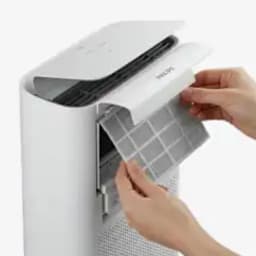
Our technician begins by asking a few questions: which room the purifier is used in, its size, whether anyone at home has allergies or asthma, how long it runs, and when the filters were last changed. He then checks the socket and adapter, opens the filter compartment and inspects each stage, from pre-filter to HEPA to carbon. He cleans the internal air path, the fan and the sensor chamber, and tests the fan at every speed and the sensor against a reference reading. You will be shown the old filter and told plainly whether it is spent or still has life in it. After you approve the quote, he fits any new filters or parts, resets the filter counter and runs the purifier long enough to confirm that the reading responds and airflow is strong.
Room size, placement and expectations
Many complaints come from a mismatch between purifier and room. A compact unit meant for a small bedroom cannot keep up in a large hall with doors opening onto a verandah. A purifier pushed into a corner behind a cupboard draws in little air. In the monsoon, a dehumidifier or simply better ventilation may help more with mould than a purifier alone. We will give you honest advice on what your space needs.
Check These Yourself, Call Us for These
Safe to check at home
- Whether the filter cover is fully closed; most purifiers will not start otherwise.
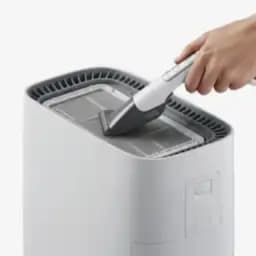
- Whether the pre-filter mesh is dusty, and wash it if it is washable.
- Whether the intake and outlet have at least a foot of clear space.
- Whether the filter-life indicator has simply run out and needs a new filter.
- Whether the adapter or plug is loose.
Call a technician when
- The purifier smells of burning or the adapter gets hot.
- It does not power on even with a known good socket.
- The sensor reading never changes, even when you light a match nearby.
- The fan grinds, rattles or runs at the wrong speed.
- There is a musty smell even after a filter change.
Purifier Brands We Service
Philips, Mi and Xiaomi, Coway, Honeywell, Sharp, Dyson, Kent, Blue Star, Havells and Eureka Forbes. AC Care India is an independent service and not the authorised service centre of any of these brands; the names appear only to identify the purifiers we work on. If your purifier is still under its manufacturer's warranty, the brand should be your first call.
With us you can expect verified technicians, a clear quote before work, warranty on parts and repair, original or carefully chosen compatible filters, same-day or next-day visits across most of Shimoga, and an honest opinion on whether your purifier needs a repair or just a filter.
Shimoga Areas We Visit
Basavanagudi, Gopala, Vinoba Nagar, Durgigudi, Kuvempu Nagar, Ravindra Nagar, Jayanagar, Gandhi Nagar, Vidya Nagar, Ashok Nagar, Sharavathi Nagar, Malleshwara Nagar, Tilak Nagar, Hosamane, Alkola, Gopishettikoppa, Savalanga Road, Sagar Road, BH Road and Kote, with Bhadravathi covered on scheduled days.
Repair It or Replace It?
Most purifier problems, including clogged or mouldy filters, dirty sensors, noisy fans and failed adapters, are well worth fixing. A control board repair is usually sensible on a purifier a few years old. If an older, small purifier needs a new motor and board together, or if replacement filters for your model are no longer available, buying a correctly sized new unit can make more sense, and we will say so. To book, call or WhatsApp 9266608882 or book online through this page, mentioning the brand, model and room size.
