

What Causes a Kitchen Chimney to Lose Suction, and How Does Expert Repair Fix It?
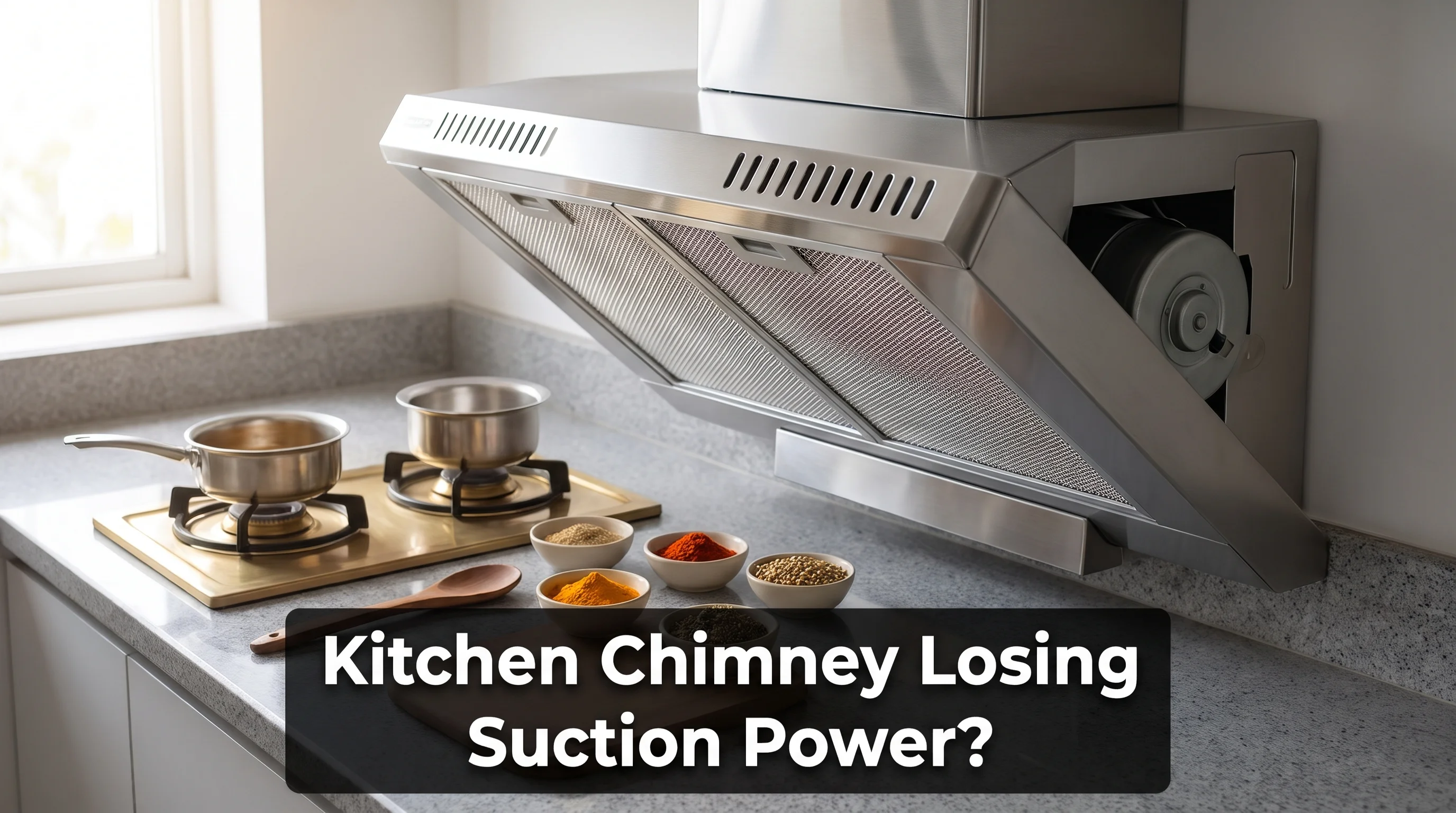
What Causes a Kitchen Chimney to Lose Suction, and How Does Expert Repair Fix It?
A kitchen chimney serves as the primary defense against smoke, grease, and odors in modern Indian kitchens. When your chimney loses suction power, the entire cooking experience becomes uncomfortable and unhygienic. Many homeowners across India experience this frustrating problem, often wondering whether their expensive appliance has reached the end of its life. The good news is that most suction-related issues stem from identifiable causes that professional Kitchen Chimney Repair Service Rewa can effectively address. Understanding what causes suction loss and knowing when to call experts can save you from unnecessary replacement costs while ensuring your kitchen remains fresh and smoke-free.
Kitchen chimneys have become essential appliances in Indian households, especially with the increasing popularity of open kitchen designs and modern cooking habits. The powerful suction mechanism that removes smoke, oil particles, and cooking odors depends on several interconnected components working harmoniously. When even one element malfunctions, the entire system performance deteriorates noticeably. Homeowners often mistake reduced suction for normal wear and tear, continuing to use their chimneys inefficiently for months before seeking professional help. This delay can lead to permanent damage to internal components and significantly higher repair costs.
The complexity of kitchen chimney systems means that diagnosing suction problems requires technical expertise and proper tools. What appears as a simple blockage might actually indicate motor bearing failure, damaged impeller blades, or electrical circuit problems. Professional technicians possess the specialized knowledge to identify root causes quickly and implement lasting solutions. Their systematic approach ensures that repairs address the actual problem rather than just treating symptoms, preventing recurring issues that plague DIY attempts.
In 2026, kitchen chimneys have evolved with advanced filtration systems, powerful motors, and sophisticated controls. However, these technological improvements also mean that repairs require updated knowledge and specific replacement parts. Generic repair attempts or using incompatible components can void warranties and create safety hazards. Expert repair services stay current with manufacturer specifications, technical updates, and industry best practices to deliver repairs that restore original performance levels without compromising safety standards.
The economic aspect of chimney repairs versus replacement represents another critical consideration for homeowners. While purchasing a new kitchen chimney might seem like the easiest solution, professional repairs typically cost 60-75% less while extending your appliance's lifespan by several years. This article explores the common causes behind suction loss, the professional repair methodologies used to fix them, and preventive measures that keep your kitchen chimney operating efficiently for years to come.
Common Causes of Kitchen Chimney Suction Loss
Grease accumulation stands as the most prevalent cause of reduced suction in kitchen chimneys across Indian homes. Indian cooking involves substantial oil usage, tadka preparations, and deep frying, all of which release grease particles into the air. These particles get trapped in filters initially, but over time, they bypass filtration systems and coat internal components including the blower, ductwork, and motor housing. A thick grease layer on the blower blades reduces their aerodynamic efficiency, forcing the motor to work harder while delivering weaker suction. Professional technicians report that grease-related issues account for approximately 65% of all suction complaints they handle.
Filter saturation represents another major culprit behind diminished chimney performance. Baffle filters, cassette filters, and charcoal filters all have finite capacities for trapping grease and odor particles. When filters become completely saturated, they transform from suction aids into suction barriers, blocking airflow rather than facilitating it. Many homeowners remain unaware of the recommended cleaning frequencies for their specific filter types. Baffle filters require monthly washing, cassette filters need replacement every three to six months, and charcoal filters should be changed every four to six months depending on cooking frequency. Neglecting these maintenance schedules invariably leads to suction problems.
Motor-related issues contribute significantly to suction loss in kitchen chimneys. The motor serves as the heart of the suction system, and any degradation in its performance directly impacts airflow. Motor bearings wear out over time, creating friction that reduces rotation speed. Dust accumulation on motor windings causes overheating, which triggers thermal cutoffs that limit motor power. Capacitor failures prevent the motor from reaching optimal RPM, resulting in weak suction despite the motor running. Kitchen Chimney Repair Service Patna technicians emphasize that motor problems often develop gradually, making them difficult for homeowners to detect until performance becomes noticeably poor.
Ductwork problems create significant suction issues, particularly in chimneys with external ducting systems. Improper duct installation with too many bends reduces airflow efficiency by creating resistance points. Ducts that separate at joints allow air to escape before reaching the external vent, reducing overall suction at the cooking surface. Small animals, birds, or debris can block external vent openings, completely stopping airflow. In apartments and buildings with common exhaust shafts, backflow from neighboring units can counteract your chimney's suction. These ductwork issues require systematic inspection and professional correction to restore proper function.
Impeller damage represents a serious mechanical cause of suction failure. The impeller, which spins rapidly to create the suction effect, can suffer blade damage from foreign objects, corrosion from grease accumulation, or warping from excessive heat exposure. Even minor impeller damage creates imbalance during operation, causing vibration and reducing suction efficiency. Complete impeller failure leaves the chimney unable to generate any meaningful airflow despite the motor running normally. Kitchen Chimney Repair Service Satna specialists frequently encounter impeller issues in chimneys older than three years, particularly those subjected to heavy daily use.
How Professional Repair Services Diagnose Suction Problems
Professional diagnostics begin with a comprehensive visual inspection of all accessible chimney components. Technicians examine the external condition, checking for obvious signs of damage, loose panels, or disconnected parts. They inspect filter conditions, noting saturation levels and physical damage. The inspection extends to control panels, switches, and indicator lights to identify electrical issues. This initial assessment provides valuable clues about potential problem areas and helps technicians plan their detailed investigation efficiently.
Airflow measurement forms a critical diagnostic step that separates professional service from amateur attempts. Technicians use specialized instruments like anemometers to measure actual suction velocity at various points around the chimney intake. They compare these measurements against manufacturer specifications to quantify performance deficits. This data-driven approach eliminates guesswork and provides objective evidence of the problem's severity. Kitchen Chimney Repair Service Hubli experts maintain that airflow testing reveals issues that visual inspection alone might miss, particularly internal blockages and motor efficiency problems.
Motor testing involves multiple electrical measurements to assess motor health accurately. Technicians check voltage supply to ensure the motor receives adequate power. They measure current draw during operation, comparing it to normal operating parameters. Excessive current indicates mechanical resistance from bearing wear or impeller drag, while insufficient current suggests electrical circuit problems. Capacitor testing verifies that this critical component provides proper motor starting and running support. Insulation resistance testing identifies potential short circuits or winding degradation before they cause complete motor failure.
Ductwork inspection requires systematic examination from the chimney unit to the external vent. Technicians check all duct sections for proper connections, adequate sealing, and structural integrity. They verify that duct diameter matches chimney specifications and that bend angles remain within acceptable limits. External vent openings get inspected for blockages, damage, or inadequate clearance. In buildings with shared exhaust systems, technicians assess whether backflow prevention mechanisms function correctly. This thorough duct evaluation often reveals hidden problems that significantly impact suction performance.
Component-by-component testing isolates specific failures within the chimney system. Technicians disconnect and individually test the blower assembly, checking for smooth rotation and proper balance. They examine the impeller for damage, measuring blade angles and checking for deformation. Control boards undergo diagnostic testing to verify that all circuits function properly and deliver correct signals to the motor. Sensor testing ensures that automatic chimney models respond appropriately to smoke and heat detection. Kitchen Chimney Repair Service Itanagar technicians emphasize that systematic component testing prevents misdiagnosis and ensures repairs target actual problems rather than symptoms.
Professional Repair Techniques for Restoring Suction
Deep cleaning represents the first intervention for most suction-related problems. Professional technicians disassemble the chimney completely, accessing areas impossible to reach during regular home cleaning. They use industrial-strength degreasers specifically formulated to dissolve thick grease accumulations without damaging metal or plastic components. Blower assemblies receive ultrasonic cleaning that removes grease from intricate blade geometries and tight spaces. Motor housings get thoroughly cleaned to prevent heat buildup and ensure optimal cooling during operation. This comprehensive cleaning process often restores 80-90% of original suction power in chimneys suffering primarily from grease accumulation.
Motor repairs or replacements address electrical and mechanical failures that cleaning cannot fix. Worn bearings get replaced with high-quality equivalents that ensure smooth, quiet operation. Damaged capacitors receive immediate replacement since they're critical for motor performance and relatively inexpensive components. In cases where motor windings show degradation or insulation breakdown, complete motor replacement becomes necessary. Technicians source original or equivalent motors that match specifications exactly, ensuring restored performance without compatibility issues. Motor mounting gets checked and reinforced to prevent vibration-related problems after repair.
Impeller repair or replacement requires precision work since this component directly determines suction effectiveness. Minor blade damage sometimes allows repair through careful reshaping and balancing. Severely damaged or corroded impellers require complete replacement with properly balanced units. Technicians ensure new impellers match original specifications for diameter, pitch, and material. After installation, they perform dynamic balancing tests to eliminate vibration that could damage bearings or create noise during operation. Proper impeller installation includes verifying correct orientation and secure mounting to prevent operational failures.
Ductwork repairs involve sealing leaks, correcting installation errors, and removing blockages. Technicians use high-temperature metallic tape or specialized sealants to fix separated joints and small holes. Improperly angled ducts get reconfigured to reduce airflow resistance. External vents receive cleaning, repair, or replacement to ensure unobstructed exhaust. In situations where duct routing creates excessive resistance, technicians may recommend complete duct redesign using larger diameter pipes or fewer bends. These structural improvements can dramatically enhance suction performance in chimneys where inadequate ductwork limited efficiency from installation.
Control system repairs address electrical issues that prevent proper chimney operation. Faulty switches get replaced with durable components rated for frequent use. Damaged control boards undergo repair or replacement depending on the extent of failure. Wiring problems receive correction with proper gauge wires and secure connections. Speed control mechanisms get calibrated or replaced to ensure users can adjust suction levels appropriately. Specialists highlight that electrical repairs require proper safety protocols since kitchen environments combine moisture, grease, and electrical components, creating potential hazards if not addressed correctly.
Preventive Maintenance to Avoid Future Suction Loss
Regular filter cleaning and replacement forms the foundation of chimney maintenance. Baffle filters should be washed monthly using hot water and degreasing agents, then dried completely before reinstallation. Cassette filters require replacement every three to six months depending on cooking frequency and oil usage. Charcoal filters in recirculation chimneys need changing every four to six months to maintain odor removal efficiency. Setting calendar reminders ensures these maintenance tasks occur on schedule. Clean filters not only preserve suction power but also protect internal components from grease accumulation that causes expensive damage.
Periodic professional servicing catches developing problems before they cause complete failures. Annual or biannual professional maintenance includes deep cleaning of internal components, motor lubrication, electrical connection inspection, and performance testing. Technicians identify wearing parts that need replacement soon, allowing planned repairs rather than emergency breakdowns. They verify that all safety features function correctly and that the chimney operates within normal parameters. Professionals recommend scheduling professional service during periods of lower cooking activity to minimize inconvenience.
Proper cooking practices reduce stress on kitchen chimneys and extend their operational life. Using appropriate burner sizes prevents excessive heat exposure that can damage chimney components. Turning on the chimney before starting cooking allows it to establish proper airflow before smoke generation begins. Running the chimney for five to ten minutes after cooking completes helps clear residual smoke and grease from the system. Avoiding extremely high flame settings when unnecessary reduces the quantity of grease particles the chimney must handle. These simple habits significantly decrease maintenance requirements and prevent premature component failures.
External duct maintenance prevents backflow and blockage issues that compromise suction. Homeowners should visually inspect external vents quarterly, checking for bird nests, debris accumulation, or physical damage. In apartments with shared exhaust systems, ensuring backflow prevention dampers function correctly prevents neighboring cooking smells from entering your home. During monsoon season, checking that rain doesn't accumulate in ducts prevents moisture damage to electrical components. Duct cleaning every two to three years removes accumulated grease that increases fire risk and reduces airflow efficiency.
Immediate attention to unusual symptoms prevents minor issues from escalating into major failures. Unusual noises during operation often indicate bearing wear or impeller imbalance requiring prompt professional attention. Reduced suction noticed suddenly rather than gradually suggests specific component failure needing immediate diagnosis. Vibration during operation signals mounting problems or impeller imbalance that can damage other components if ignored. Technicians emphasize that addressing symptoms immediately typically costs less than waiting for complete failure, which often causes collateral damage to multiple components.
Cost Considerations for Kitchen Chimney Repairs
Understanding repair cost structures helps homeowners make informed decisions about repair versus replacement. Basic cleaning services typically range from 800 to 1500 rupees depending on chimney size and grease accumulation severity. Filter replacements cost between 500 and 3000 rupees based on filter type and brand. Motor repairs range from 2000 to 4000 rupees for bearing replacement or capacitor fixes, while complete motor replacement costs 3500 to 7000 rupees depending on motor specifications. Impeller replacements typically cost 1500 to 3500 rupees including labor.
| Repair Type | Cost Range (INR) | Time Required | Frequency Needed |
|---|---|---|---|
| Basic Deep Cleaning | 800 - 1500 | 1-2 hours | Every 6-12 months |
| Filter Replacement | 500 - 3000 | 30 minutes | Every 3-6 months |
| Motor Bearing Repair | 2000 - 3500 | 2-3 hours | As needed |
| Complete Motor Replacement | 3500 - 7000 | 3-4 hours | Every 5-8 years |
| Impeller Replacement | 1500 - 3500 | 2-3 hours | As needed |
| Ductwork Repairs | 1000 - 4000 | 2-4 hours | As needed |
| Control Board Repair | 1500 - 5000 | 1-2 hours | As needed |
Comparing repair costs to new chimney purchases reveals significant savings potential. Entry-level kitchen chimneys cost between 5000 and 12000 rupees, mid-range models range from 12000 to 25000 rupees, and premium chimneys exceed 25000 rupees. Even extensive repairs involving motor replacement rarely exceed 10000 rupees, representing substantial savings compared to purchasing new equipment. Additionally, repairing rather than replacing reduces environmental waste and preserves warranty coverage that might still apply to other components.
Related Blogs
- How to Get the Best deal for the Air Conditioner
- Professional Water Purification Setup Services and Expert Solutions in Delhi NCR
- Complete Guide to Air Conditioning Maintenance and Repair Solutions in Mumbai
- Complete Guide to Air Conditioning Setup and Service Solutions in Mumbai
- Understanding Professional Refrigerator Maintenance Services in Mumbai: A Complete Guide