

Guide to Selecting the Best Portable RO Purifier
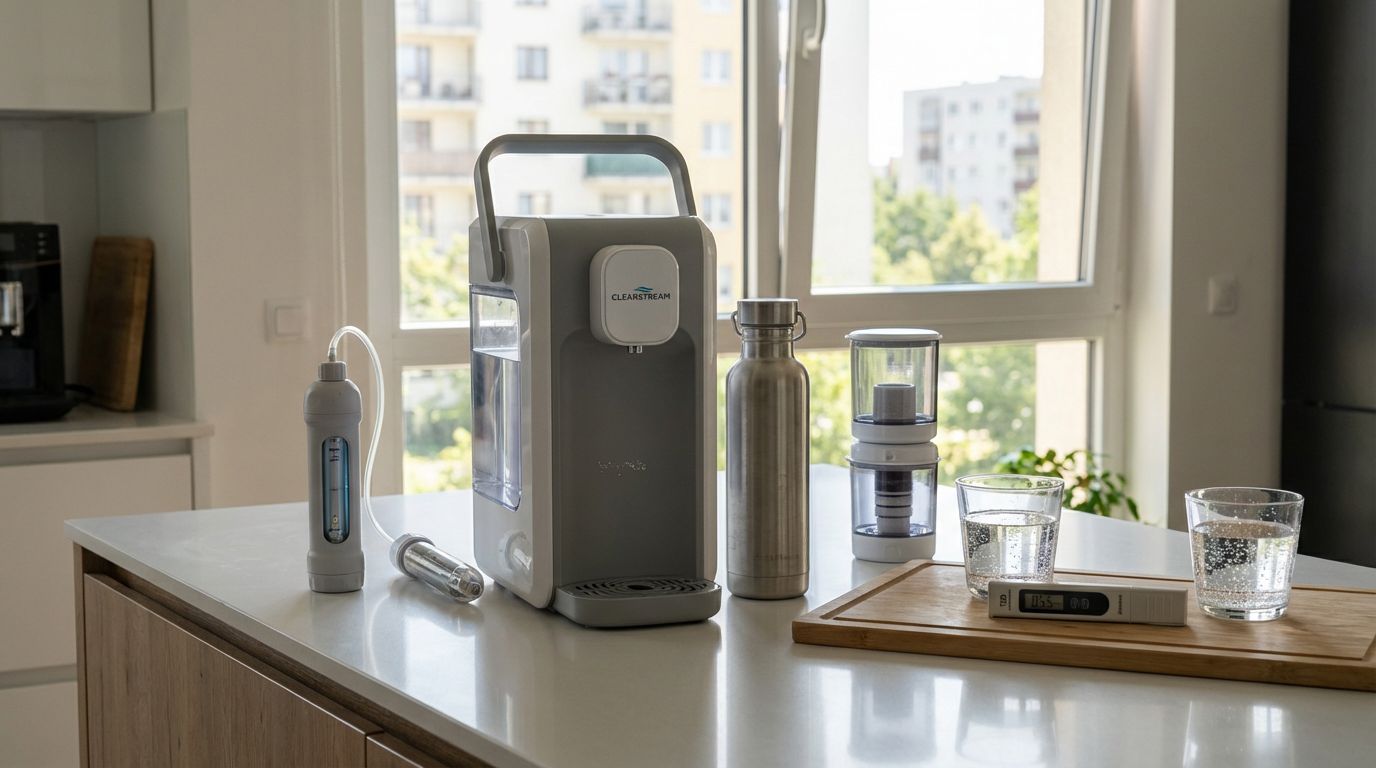
Portable RO Water Purifier for Home & Travel: Guide to Choosing the Right Model
Clean drinking water is no longer a luxury - it is a basic need that directly affects health, energy and general well being. When people hear “water purifier,” they usually picture a large wall mounted unit - yet small, movable units now matter just as much. Students in hostels, travellers who move often, professionals who transfer between cities plus families who rent cannot always install fixed equipment. For them a portable RO purifier gives a safe, practical choice.
The problem is that the market holds many models and every maker claims the best technology but also the purest water. Plenty of buyers look only at the starting price or at famous brands - they skip key facts like local water quality, the number of purification steps required and the long term upkeep cost. That oversight often ends in disappointment, weak performance or future expenses that far surpass the first price.
Another frequent doubt is whether a portable unit truly needs reverse osmosis or whether simpler tools like UV, UF or gravity based purifiers suffice. RO removes high TDS (Total Dissolved Solids) very well, a condition common in borewell or tanker water - yet it offers little benefit where the water is already soft as well as low in dissolved impurities. Identify the type of water you drink every day - let that knowledge guide every purchase.
Portability also carries different meanings. For some it is a small tabletop purifier that one lifts when the house changes. For others it is a travel size unit that slips into a bag and performs well in remote places. Before purchase spell out your own use cases or test each product against those needs, not against broad marketing promises.
Key Factors To Consider Before Buying
-
Know your source water quality
- Test the water or at least learn its approximate TDS value and likely contaminants.
- High TDS (above 300 - 500 ppm), brackish or borewell water - RO technology normally removes excess salts, heavy metals also dissolved pollutants.
- Low TDS municipal water - A UV + UF purifier usually suffices - a full RO unit would be superfluous and would waste extra water.
- Check also for biological threats (bacteria, viruses) next to chemical threats (pesticides, industrial waste), above all if you depend on tanker supply or live in semi urban or rural zones.
-
Decide how much portability you really need
- Portability falls into three clear groups
- Home units you can move - Those are small countertop or wall mounted purifiers. You unclip them and carry them when you shift house.
- Partly portable units - Benchtop models that hold water inside. You set them wherever a tap exists - they sometimes need a short hose.
- Travel units - Pocket-sized devices or filter bottles. You pack them for trips, hikes or daily office use - they need almost no setup.
- Pick the group that matches the way you will use the purifier most. A person who travels every week wants a lighter, simpler device than a large fixed tank.
-
Look at the filter steps and the tech inside
- Many portable RO purifiers run water through four main steps
- Sediment filter - Traps dust, sand plus visible bits.
- Activated carbon block - Pulls out chlorine, smell and some organic chemicals.
- RO membrane - The key barrier that strips out dissolved salts, heavy metals and many harmful substances.
- Final carbon or taste pad - Gives the water a final polish before you drink.
- Certain models add a UV lamp to kill germs but also a UF membrane to block larger microbes. Match those steps to your water test results and to the level of germ risk you are willing to accept.
-
Check stored volume and speed of refill
- One or two users usually manage with five to seven liters in the tank. Families or shared flats will find eight to twelve liters more practical. If you often travel with friends or host guests, pick a slightly larger tank.
- Speed governs how fast the tank refills after you empty it. A slow unit becomes a daily annoyance, especially at breakfast time.
-
Count the full cost of owning the device
- Many buyers look only at the tag price of the portable RO unit as well as forget the bills that arrive later. Add up
- Yearly service fees or maintenance contracts
- The price of new filters every few months
- A new RO membrane every one-and-a-half to three years depending on use and raw-water quality
- Over three to five years those repeat costs can top the original price - choose a model whose spare parts are common and fairly priced.
-
Judge how easy it is to fit, run and move
- A truly portable unit should go into place without special tools or permanent pipes. Check for
- Tap adapters that screw on to a standard kitchen or bathroom faucet
- No need to drill holes or fix brackets permanently
- Low weight or strong handles for lifting
- Also note power needs if you will use the purifier where electricity is patchy. Some compact or hybrid units accept water poured by hand and work without mains power.
-
Build quality warranty and service network
- A strong body made from safe plastic, joints that do not leak and materials certified as food grade are basic requirements. Electrical parts plus the RO membrane should carry a warranty of no less than one year. Equally necessary is the presence of an authorised service centre and trained technicians near your home. Without them even a well built purifier turns into a problem.
Types Of Portable Water Purification Options
-
Compact RO countertop purifiers
- Those units rest on a kitchen counter or table but also link to the tap with a simple adapter. Some models allow wall mounting.
- Benefits - they store multiple litres of water, use multiple purification steps and perform almost like a full size domestic RO.
- Limits - they weigh more as well as are awkward for air travel - they need mains power and steady water pressure.
-
Integrated bottle purifiers
- Those are standard looking bottles that contain a replaceable filter or a UV-C cap. They suit one person during hikes, site visits or daily commuting. They target bacteria, viruses or visible dirt - they do not lower high TDS. Use them where water appears clear but may carry microbes.
-
Gravity-based portable units
- Water pours from the upper chamber to the lower through sediment and carbon blocks - some models add a hollow fibre UF membrane. No electricity or tap pressure is required. They suit areas where TDS is already low yet microbes are a risk. The units are light, simple also slow - they do not remove dissolved salts or heavy metals.
-
Multi-stage travel purifiers with pump or battery
- Those field units rely on a hand pump, an internal pump or a battery powered UV lamp to treat water from streams, tanks or questionable taps. They suit campers and remote workers who cannot trust the local source. They cost more than gravity units - yet they tolerate rough use next to deliver higher safety.
Neutral Overview Of Popular Brands
Many brands sell water purifiers in India for both home and travel use. Doctor Fresh besides RO Care India highlight fast service, tailor made installations plus flexible after sales help. Buyers who want quick support and easy maintenance often prefer those two.
Mannubhai Service Expert is a repair and installation service that works with many different purifier brands. It helps people who move house often or who own purifiers from more than one company. Well-known brands like Kent, Aquaguard, Aquafresh, Pureit, Blue Star besides LG sell models that run from simple gravity units to full RO + UV + UF systems. Some of those units are small or have wall mount kits so they travel well. When you pick among them, give more weight to local service reach, spare part price, warranty length and whether the unit suits your water than to the brand name alone.
How To Match A Purifier To Your Specific Needs
State who will drink the water, where the unit will sit plus how many litres you need each day. A student or worker who changes cities every twelve months will often choose a countertop RO unit that fixes to a tap and stores five to seven litres. A family in a rented flat that receives high-TDS borewell water usually wants a larger RO plus UV unit that stores eight to ten litres yet lifts out with no plumbing work.
People who travel often and sleep in hotels or in places with unreliable supply do better with a light bottle purifier or a small gravity unit plus boiled water when it is available. Walkers who reach remote villages or mountain trails need field purifiers that use a hand pump or a UV lamp, because germs there are a larger danger than dissolved salts.
Every time you decide, check three points - the true quality of your water, the way you will really use the device but also the ease of long term upkeep. Phrases like “top portable water purifier” help only if the product gives safe, pleasant water and fits your daily rhythm.
Conclusion
To choose a portable RO purifier you do not simply take a shrunken home unit. You must know your water source, how often you will move and how to balance purification strength, ease of carry as well as future cost. Test the water note the technology you need, decide the storage size, inspect the build and check the service network - this short list will leave you with the few models that suit your life.
If you move house often, travel or simply want safe water without being tied to one spot, a well chosen portable unit will give you steady protection from dirt, germs and chemicals wherever you go. The “best” portable purifier is not the one with the flashiest brochure - it is the one that gives you safe water every time you use it, in every place you use it.
To pick a portable RO unit that suits your water, your habits and the effort you are willing to spend on upkeep, read deeper guides on purification types, TDS readings plus ways to carry or install the unit. Solid facts let you decide with confidence.
- Ideal TDS Levels in Drinking Water for Health
- Picking the Right RO Purifier for Any Family Size
- AC Care India – Affordable RO Water Purifier Service
- Best AC Service in India – Affordable AC Repair & Maintenance at Home
- Importance of Regular Air Conditioner Servicing
FAQ
Q: How do I know if I truly need a portable RO purifier instead of UV or UF?
A - Test your water for TDS first. If the reading is high, the water tastes salty or it comes from a borewell or tanker, RO is the usual choice because it strips out dissolved salts and heavy metals. If the source is treated municipal water with low TDS, a UV/UF or gravity unit that targets germs is normally enough.
Q: How portable should the unit be?
A - Match the unit to where you will use it. If you shift homes a few times a year, a small countertop model that unscrews quickly is fine. If you travel often or trek, choose a light bottle purifier or a pocket size gravity or hand pump unit that slips into a backpack and runs without tools.
Q: Which stages matter in a portable RO purifier?
A - A common line up is - sediment filter, carbon block, RO membrane but also a final carbon or taste polisher. Some units add UV or UF for extra microbe removal. Pick the stages that fit your water test and the risks you worry about.
Q: How do I pick the right storage size?
A - One or two users cope with five to seven litres. A family or shared flat needs eight to twelve litres. If you often have guests or face supply gaps, choose a slightly larger tank and check that the refill speed keeps up at busy times.
Q: What long term costs should I consider beyond the purchase price?
A - Include the yearly service fee, the cost of new filters when the old ones clog and a new RO membrane every two years - the exact intervals depend on how much water you use and how dirty it is. Ask whether you can buy real spare parts nearby and whether a local technician will call. After a few years, those repeated bills often total more than the price of the unit - let them guide your decision.