Cuttack Believes a Fridge That Stops Cooling Needs Gas. Usually It Needs Something Cheaper.
Ask around any colony from Tulsipur to Jagatpur and you will hear the same advice: "the fridge is not cooling, get the gas filled." Refrigerant in a sealed compressor system does not get used up. If it is low, it has leaked, and the leak must be found and fixed or the new gas will go the same way. More to the point, in our refrigerator repair work across Cuttack, low gas is behind only a minority of cooling complaints. A failed defrost heater, a blocked drain, a relay that clicks and gives up on hot evenings, a door gasket that has gone soft with mould, a condenser fan jammed with dust: each of these is more common, cheaper to fix, and routinely misdiagnosed as a gas problem by someone who arrives with a cylinder and no gauges.
The best protection against that is knowing how the machine works. This page takes a refrigerator apart on paper, part by part, and explains what Cuttack's heat, humidity, power supply and kitchens do to each one.
The Compressor: Pumping Hardest Through Cuttack's Long Summer
The compressor is the sealed black pump at the back, and it is the heart of the system. It squeezes refrigerant vapour, which then dumps its heat through the condenser. How hard it works depends on the difference between the inside temperature and the room temperature. In a Cuttack kitchen in May, with the air at 38 to 41°C and humidity high, the compressor may run almost continuously from noon to midnight. Add a fridge pushed into a tight alcove with no gap behind it, which is normal in older flats around Ranihat and Mangalabag, and the compressor's own heat has nowhere to go.
Failure modes we see: the overload protector tripping repeatedly on hot afternoons, the start relay burning out after repeated low-voltage starts, and, in older fixed-speed units, a worn compressor that runs but no longer builds pressure. Inverter compressors in newer Samsung and Whirlpool models handle heat better by varying speed, but their driver board is sensitive to surges, which brings us to power.
Relay, overload protector and the evening voltage dip
Bolted to the side of the compressor are two small parts: the start relay, which gives the motor a kick to begin turning, and the overload protector, which cuts power if the motor gets too hot or draws too much current. Both suffer in Cuttack because of the way the supply behaves. In the old city and in dense pockets like Chauliaganj and Khannagar, voltage dips in the evening when every household switches on fans, ACs and pumps at once. A compressor trying to start on low voltage draws heavy current, the overload trips, waits, and tries again. Every cycle wears the relay. The symptom is a fridge that clicks every few minutes, hums briefly and goes silent, while the inside slowly warms.
A good stabiliser sized for the fridge is worthwhile in these areas. It is also one of the first things we test, because a faulty stabiliser can cause the very problem it is meant to prevent.
Condenser and Condenser Fan: Dust, Fluff and Kitchen Grease
The condenser is the grid of black tubing at the back, or, in many newer models, a coil tucked underneath with a small fan blowing across it. It must shed heat to the room. In Cuttack, two things coat it: fine dust that blows in from unpaved lanes and construction, and the oily film that comes from frying in a small kitchen. Fluff from the city's textile trade is a bonus in homes near the godowns. A coated condenser cannot release heat, so the compressor runs longer and hotter. On under-mounted condensers, the fan motor also gums up and stalls. A fridge that feels hot on its sides and is running constantly almost always has a condenser that has not been cleaned in years.
Evaporator, Defrost Heater and the Frost-Free Cycle
In a frost-free refrigerator, the evaporator coil sits behind the back panel of the freezer. Humid Cuttack air entering every time the door opens deposits moisture on it as frost. A defrost timer or electronic control switches on a heater every several hours to melt that frost, and the water drains into a tray above the compressor to evaporate. When the heater, the defrost thermostat or the timer fails, frost builds into a block of ice behind the panel, blocks the airflow, and the fridge compartment warms while the freezer still seems cold. This is one of the two or three most common refrigerator repair jobs we do in Cuttack, and it is almost never a gas problem.
The drain hole under the evaporator also clogs, especially in a humid climate where slime grows readily. The result is water pooling under the vegetable tray or dripping from the freezer floor.
Door gasket, hinges and mould in a humid city
The rubber door seal is the cheapest part on the fridge and the most neglected. In Cuttack's damp air, black mould takes hold in its folds within a season, the rubber stiffens, and the magnet no longer pulls the door tight. Warm, humid air then leaks in continuously, the compressor runs more, and condensation forms on the inside walls and shelves. A sheet of paper closed in the door should resist being pulled out along the whole edge; if it slips free anywhere, the gasket needs cleaning or replacement. Sagging hinges on heavy double-door units cause the same effect.
Thermostat, Sensors and Control Board
Older fridges use a mechanical thermostat with a capillary tube; newer ones use thermistors reporting to a control board. Mechanical thermostats fail by sticking, so the fridge either freezes everything or never cools. Electronic boards fail mostly because of what Cuttack's power does to them: surges when supply returns after a cut, lightning during pre-monsoon storms and cyclone-season squalls, and damp creeping into connectors. A fridge with a display that flashes, a fan that runs with no cooling, or a compressor that never gets the command to start is often a board or sensor fault. We test the sensor values and the board outputs before condemning anything.
Fridge Parts, Typical Service Life in Cuttack Conditions and Early Warnings
| Component | Typical Life Here | Early Warning Sign |
|---|
| Compressor (fixed speed) | 10 to 15 years with clean condenser and stable voltage | Runs non-stop, body very hot, poor cooling |
| Start relay and overload | 4 to 7 years; less in low-voltage areas | Clicking every few minutes, brief hum then silence |
| Defrost heater and timer | 5 to 8 years | Ice wall behind freezer panel, fridge section warm |
| Door gasket | 4 to 6 years in humid air | Mould in folds, sweating walls, door does not snap shut |
| Condenser fan motor | 6 to 10 years | Rattling at the back, sides hot to touch |
| Control board or thermostat | 6 to 10 years; surge-dependent | Erratic temperature, flashing display, no start command |
| Evaporator fan | 7 to 10 years | Freezer cold, fridge warm, noise that stops when door opens |
How We Diagnose Before We Touch a Gas Cylinder
- Measure supply voltage and check any stabiliser on the line.
- Listen to and time the compressor's start cycle, and read its current draw with a clamp meter.
- Feel the condenser for heat distribution and inspect it for dust and grease.
- Check the evaporator for frost pattern; a part-frosted coil points to low charge, a solid ice block points to a defrost fault.
- Test defrost heater resistance, defrost thermostat and timer or board output.
- Test door gasket seal and hinge alignment.
- Test thermistors and, on inverter units, read fault codes from the board.
- Only if everything else passes, connect gauges, confirm low pressure, find the leak with a detector and repair it before vacuuming and charging by weight.
Beyond Repair: Installation, Shifting and Yearly Care
We install new units with the correct clearance at the back and sides, level them so doors close on their own, and advise on placement away from the stove and the west wall that bakes in Cuttack's afternoon sun. If you are moving within the city, from a rented flat near Link Road to a house in Sikharpur, say, we prepare the fridge for transport, keep it upright, and let the oil settle before switching on at the new address. Hostels, mess kitchens, pharmacies near SCB Medical and sweet shops around Buxi Bazar can take a yearly maintenance contract covering condenser cleaning, gasket checks and priority visits in summer.
Brands We Repair in Cuttack Kitchens
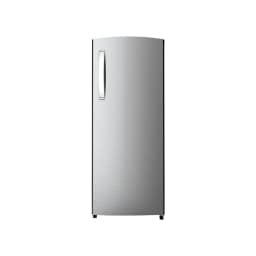
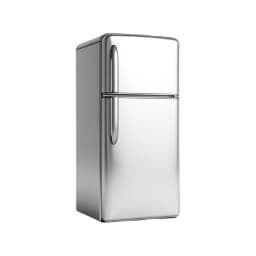
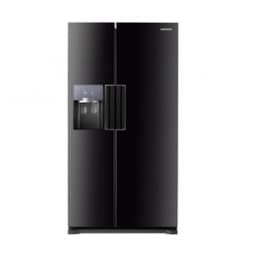
Single-door, double-door, side-by-side and inverter-compressor models from Samsung, Whirlpool, Godrej, Haier, Bosch, Panasonic, Hitachi and Voltas Beko. For clarity: AC Care India is an independent appliance repair service working across brands, not the authorised service centre of any manufacturer. Brand names here identify what we repair, nothing more, and a refrigerator still in its warranty period is best taken to the brand first.
Where in Cuttack We Come For Refrigerator Repair
Mangalabag, Ranihat, Tulsipur, Buxi Bazar, College Square, Chandni Chowk, Dolamundai, Badambadi, Link Road, Bidanasi, CDA Sector 6 to Sector 10, Jagatpur, Khannagar, Chauliaganj, Sikharpur, Jobra, Madhupatna, Nayabazar, Telenga Bazar, Pithapur, Bajrakabati Road, Choudwar and Phulnakhara.
What AC Care India Promises on Every Fridge Call
A verified technician with gauges, a clamp meter and a leak detector, not just a gas cylinder. A quote before any part is fitted. A warranty on the repair and on the spare parts, which are genuine or properly matched. A same-day or next-day visit across most of the city. And honest advice: if the compressor on a fifteen-year-old fridge has failed, we will tell you that a new, more efficient unit makes more sense.
Call for Refrigerator Repair in Cuttack
Call or WhatsApp 9266608882, or book online through this page. Tell us the brand, whether it is single-door, double-door or side-by-side, and what you have noticed: clicking, frost, water, a warm fridge section or a hot cabinet. The more precisely you describe it, the more likely the job finishes in one visit, and the less likely anyone talks you into gas you do not need.