


Why Does My Fridge in Ongole Run All Day but the Milk Still Spoils?
It is one of the most common questions we hear from Ongole households between April and June. The refrigerator hums without a break, the back panel is hot to touch, the freezer has some ice, yet the main compartment feels only cool and the curd turns sour in a day. The answer is rarely one dramatic failure. Usually it is a chain: the kitchen is hot, the condenser cannot shed heat, the compressor works longer, a fan or defrost part starts to struggle, and cold air stops reaching the lower shelves.
To understand what a good refrigerator repair in Ongole involves, it helps to know what each part of a fridge does and how this city's heat, humidity, storms and power supply treat it. That is what this page walks through.
The Compressor: The Heart That Works Overtime in Prakasam's Summer
The compressor squeezes refrigerant gas and pushes it round the circuit. Most fridges are designed around a certain room temperature, and Ongole kitchens in May are often far above it. Afternoon highs in the city commonly climb into the forties, and a closed kitchen with a stove running can be hotter still. The compressor cycles on more often and for longer, and its winding temperature climbs.
What fails: the starting relay and overload protector go first, usually with a clicking sound and a compressor that tries to start and gives up. The compressor itself can seize after years of overheating or after repeated low-voltage starts during evening load. Inverter compressors used in newer Samsung, Whirlpool and Haier models handle voltage swings better, but their drive boards are sensitive to surges.
The Condenser: Where Heat Leaves the Fridge
The condenser is the grid of tubes on the back or the hidden coil along the sides of the cabinet. Heat removed from inside the fridge is released here. If the condenser is coated in dust or pushed flat against a wall, heat has nowhere to go.
In Ongole, the dry months bring fine dust indoors from roads and open land, and many kitchens in older houses are narrow, with the fridge tucked into a corner beside the stove. We regularly find condensers with a felt-like layer of dust and cooking residue. Cleaning it and leaving a few inches of space behind and above the cabinet is one of the cheapest ways to bring cooling back.
Evaporator, Defrost Heater and Timer
The evaporator is the cold coil inside, usually hidden behind the freezer panel in frost-free models. Moisture from the air freezes on it, and a defrost heater, controlled by a timer or board, melts that ice every few hours.
Ongole's humidity rises in the late monsoon and cyclone months, roughly October to December. Each door opening lets in damp air, and ice builds faster. If the defrost heater, bimetal thermostat or timer fails, the evaporator turns into a block of ice, airflow stops, and the fridge section warms while the freezer stays cold. This is the textbook cause of "freezer fine, fridge not cooling" in frost-free models here.
Thermostat, Sensors and the Control Board
Direct-cool fridges use a mechanical thermostat knob. Frost-free and inverter fridges use temperature sensors feeding a PCB. In a coastal district that sees lightning and power fluctuations during storm season, the PCB takes hits. A board that has been through a surge may show error codes, cut out at random, or stop running the fan while the compressor works.
Sensors drift as they age and read the wrong temperature, so the fridge either freezes vegetables or never gets cold enough. We test sensors against a thermometer before replacing anything.
Door Gaskets, Fans and the Sticky Months
The rubber gasket seals cold air in. In humid weather it collects mould along the folds, hardens, and develops gaps, especially near the hinge. Warm moist air leaks in, the fridge sweats inside, and ice forms faster. A simple test: close the door on a sheet of paper. If it slides out without resistance, the seal is gone.
Frost-free fridges have an evaporator fan inside and often a condenser fan below. A fan with a worn bearing becomes noisy, then slow, then stops. Without it, cold air never circulates to the lower shelves.
A word on gas charging
A fridge low on refrigerant has a leak, most often at a brazed joint, the capillary or a corroded coil. Simply adding gas without fixing the leak is a short-term trick. When gas work is genuinely required, we locate the leak, repair it, pull a proper vacuum to remove moisture, and charge by weight to the maker's specification. That is the difference between a repair that lasts years and one that brings you back in two months.
Power Cuts, Storms and the Food Inside
Ongole's power supply is reasonably stable for most of the year, but storm nights in the October to December cyclone season can bring repeated outages, and summer evenings often see the voltage dip as every AC in the colony comes on. Both are hard on a refrigerator. When power returns after a cut, the compressor tries to restart against high pressure; a healthy unit waits a few minutes for pressures to equalise, but a weak relay or an old overload protector may let it struggle. Repeated attempts like this shorten compressor life.
Some practical advice for these months. Keep the door closed during an outage; a full, closed fridge holds a safe temperature for a few hours. If the power has been off for long, check milk, cooked rice, curd and fish first, since these spoil fastest in Ongole's warm kitchens. Do not switch the fridge off and on rapidly when the voltage is flickering. A stabiliser with a time-delay feature, or a fridge with a built-in delay, protects the compressor from those rapid restarts.
For food safety, a cheap fridge thermometer is useful. The main compartment should sit at around 3 to 5°C. If it drifts higher during summer afternoons, that is an early sign of a condenser, fan or gas problem worth getting checked before the compressor is pushed into failure.
How Our Technicians Diagnose a Fridge Fault
- Measure supply voltage at the socket, including during the evening peak if possible.
- Check compressor current, relay and overload response.
- Read temperatures inside both compartments and at the condenser.
- Inspect the evaporator for ice blockage and test defrost heater resistance.
- Test fans, sensors and the PCB, reading error codes on electronic models.
- Check door alignment and gasket seal all the way round.
- Look for oil stains on tubing, a sure sign of a refrigerant leak point.
Refrigerator Parts: Typical Life and First Warning Sign
| Part | Usual service life with good care | Early warning sign |
|---|---|---|
| Compressor | 10 to 14 years | Very long running, hot body, clicking on start |
| Start relay and overload | 4 to 7 years | Repeated clicking, compressor fails to start |
| Defrost heater and bimetal | 5 to 8 years | Ice wall behind freezer panel, fridge warm |
| Evaporator fan motor | 5 to 8 years | Whining noise, weak airflow from vents |
| Door gasket | 5 to 7 years in humid conditions | Sweating inside, mould on seal, paper slides out |
| Control PCB | Varies widely; shortened by surges | Error codes, random shutdowns after storms |
| Temperature sensor | 6 to 10 years | Wrong temperatures, freezing in fridge section |
Installation, Shifting and Annual Care Plans
When you move house within Ongole, a fridge should travel upright and rest for a few hours before it is switched on, so compressor oil settles. We help with safe shifting and re-commissioning. For families who prefer not to wait for breakdowns, an annual care plan includes a pre-summer condenser clean and electrical check, plus a post-monsoon gasket and defrost inspection. Use a stabiliser rated for your model, or at least a good-quality surge protector, on older non-inverter fridges.
Refrigerator Brands We Repair
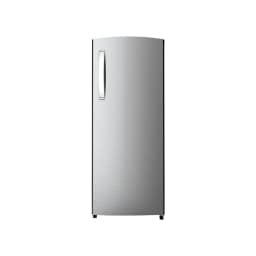
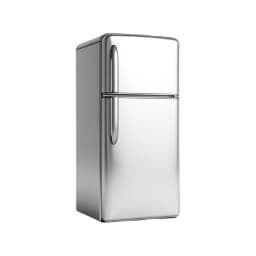
Single-door, double-door, side-by-side and convertible models from Samsung, Godrej, Whirlpool, Haier, Panasonic, Bosch, Hitachi and Voltas Beko.
AC Care India is an independent multi-brand repair service. We are not an authorised centre for any of these companies and use brand names only to say which fridges we fix. If your refrigerator is still within its manufacturer warranty, approach the brand first.
Ongole Neighbourhoods on Our Route
Bhagya Nagar, Trunk Road, Lawyerpet, Santhapet, Ram Nagar, Gandhi Nagar, Kurnool Road, Kothapatnam Road, Mangamuru Road, Venkateswara Colony, Islampet, Balaji Nagar, Gaddalagunta, Sujatha Nagar, Old Town, Vengamukkapalem, Pellur, Throvagunta and Mukthinuthalapadu.
Book Refrigerator Repair in Ongole
You get a verified technician, a diagnosis explained in plain words, a written quote before any part is replaced, genuine or equivalent-quality spares, and a warranty on the job. Most areas of Ongole are covered the same day or the next. If the compressor and cabinet are too old to justify the cost, we will say so. Call 9266608882 or book online through this page.
