


The Myth That a Fridge in Sri Ganganagar Just Needs More Gas
Ask around in any Sri Ganganagar colony and someone will tell you that a fridge which stops cooling in summer "needs gas." It is the most common belief we hear, and in most cases it is wrong. A refrigerator's gas runs in a sealed loop and does not get consumed. When the cooling fades in May, the cause is far more often a dusty condenser, a failing fan, a stuck defrost system, a tired compressor relay or a door gasket that has gone hard in the heat. Refilling gas without finding the real fault gets you a few weeks of relief and the same complaint again.
The only way to repair a fridge properly is to understand what each part does and what this city's climate does to it. That is what this page covers, followed by how AC Care India handles refrigerator repair in Sri Ganganagar.
Why the Climate Here Is Hard on Refrigerators
A refrigerator does not create cold. It moves heat from inside the cabinet to the room. The hotter the room, the harder it has to work. Sri Ganganagar has one of the most extreme climates in India: average May and June highs around 42°C, record temperatures that have touched 49.4°C, and kitchens that stay hot well into the night. In winter the same kitchen can drop below 10°C, and some nights the city goes below freezing. A fridge here has to cope with both extremes in one year.
Add summer dust storms, voltage that dips when farm and household loads peak, and the occasional surge from thunderstorms, and you have the conditions that shorten the life of each component in the machine.
Inside the Fridge, Part by Part
Compressor and its relay
The compressor is the pump that circulates refrigerant. On a 45°C afternoon, it may run almost without a break. Its starting relay and overload protector take the strain of repeated starts during voltage dips. A clicking sound every few minutes with no cooling usually means the relay or overload has failed, not the compressor itself. A compressor that hums but cannot start, or draws very high current, is a more serious fault.
Condenser coil
The black grille or the hidden coil in the side walls throws out heat. Sand and lint from summer storms coat it, and in fridges pushed tight against a wall, the hot air has nowhere to go. A choked condenser is the single most common reason for weak cooling we find in this city.
Evaporator and frost
The evaporator absorbs heat inside the freezer. In direct-cool fridges it frosts up naturally and needs manual defrosting. In frost-free models, a heater and timer or sensor melt the frost on a cycle. If that system fails, ice blocks the air passage and the lower compartment warms up even while the freezer stays frozen.
Defrost heater, timer and bimetal
These three small parts fail more often than people realise. A heater that has burnt out after years of cycling, a timer stuck in one mode, or a bimetal switch that has stopped closing will all produce the classic "freezer fine, fridge warm" complaint.
Fans
Frost-free fridges use an evaporator fan to push cold air into the fridge section and, in many models, a condenser fan at the back. Dust and dry heat wear out their bearings. A squeal or ticking noise is the early warning.
Thermostat, sensors and control board
Older fridges use a mechanical thermostat; newer ones use thermistors and a PCB. Inverter compressors have their own drive board. Voltage swings and storm surges are the main killers of these electronics.
Door gasket
The rubber seal hardens and cracks in extreme summer heat and becomes stiff in winter. A gasket that does not seal lets warm air leak in all day, which loads the compressor and causes sweating and frost build-up.
Capillary tube and drier
These control refrigerant flow. A blockage from moisture or debris, often after a poorly done earlier gas job, will stop cooling completely.
How We Diagnose a Refrigerator Fault
- Check the supply voltage at the socket and the earth connection.
- Measure the compressor's running current and listen for abnormal starts.
- Test the relay, overload protector and, where fitted, the start capacitor.
- Inspect and clean the condenser, then compare cooling before and after.
- Check evaporator fan and condenser fan operation.
- Test defrost heater resistance, the timer or sensor, and the bimetal switch.
- Read error codes on inverter and smart models and inspect the control board.
- Run a gasket test with a sheet of paper around the door.
- Only if all of the above are fine, check refrigerant pressure and look for a leak.
Refrigerator Components: Typical Life and Warning Signs
| Part | Typical Life in Local Conditions | Warning Sign |
|---|---|---|
| Compressor | 10 to 14 years with good voltage protection | Very hot body, humming without starting, frequent tripping |
| Starting relay and overload | 4 to 7 years | Repeated clicking, fridge cools for a while then stops |
| Defrost heater | 5 to 8 years | Ice wall at back of freezer, fridge section warm |
| Evaporator fan motor | 5 to 8 years | Noise from freezer, weak air flow into fridge |
| Door gasket | 5 to 7 years | Gaps, cracks, water droplets around the door |
| Control PCB or inverter board | Varies widely; shortened by surges | Display errors, fridge dead after a storm |
| Thermostat | 7 to 10 years | Over-freezing or no cooling despite compressor running |
Power cuts and food safety
During summer outages, a closed fridge will usually hold a safe temperature for around four hours, and a full freezer for longer. Keep the door shut, and if the cut runs past half a day, throw out milk, paneer, cooked dal and leftovers rather than risk them in this heat. When power returns with a jump in voltage, wait a few minutes before the compressor restarts; a stabiliser with a time delay does this automatically and protects the relay and board.
What the Two Seasons Do to Your Fridge Here
Between April and July, the compressor's hardest months, the condenser needs cleaning every couple of months in homes near dusty roads or the mandi. Many families also stock the fridge heavily in summer with water bottles, kinnow juice, curd and lassi, which blocks the internal air vents in frost-free models and creates warm spots. Leave space between items so cold air can circulate.
In December and January, the problem flips. Some older single-door fridges in unheated kitchens see the room fall so low that the thermostat rarely calls for cooling, and the freezer compartment stays soft. This is not a fault; it is how simple mechanical thermostats behave in a cold room. Modern frost-free and inverter models handle it better. If your old fridge struggles every winter, it may be a sign that a newer model would suit this climate.
Gas Charging Done the Right Way
When there genuinely is a refrigerant leak, the repair is a sequence, not a top-up. The leak is located, brazed or the faulty section replaced, the drier changed, the system pulled into deep vacuum to remove moisture, and then the correct refrigerant charged by weight. Modern fridges use R600a or R134a, and the two cannot be mixed. A fridge that has been "refilled" three times in two summers almost certainly had its leak ignored each time.
Installation, Placement, Shifting and Maintenance Plans
Where the fridge sits matters a great deal in this climate. Keep at least a hand's width of space at the back and sides, away from the gas stove and direct afternoon sun. Use a stabiliser rated for refrigerators, or a fridge model with a wide voltage range. When you move house within the city, let the fridge stand upright for a few hours before switching it on. We help with shifting and re-commissioning, and offer yearly maintenance visits that include condenser cleaning, gasket checks and electrical tests before summer.
Refrigerator Brands We Repair
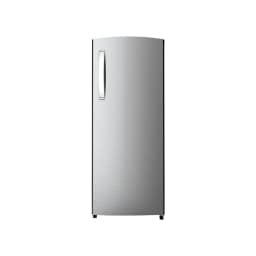
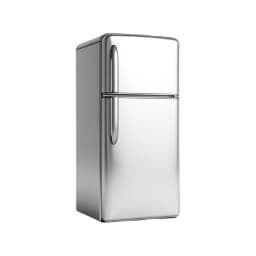
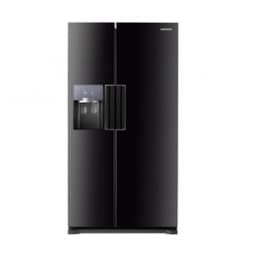
Single-door, double-door, side-by-side, French-door, convertible and inverter models from Samsung, Godrej, Whirlpool, Haier, Panasonic, Hitachi, Bosch and Voltas Beko. We are an independent appliance repair company, not the official service partner of these manufacturers. Brand names are mentioned to identify the fridges we work on, and if yours is still under warranty, the brand's own service is the first call to make.
Neighbourhoods We Serve
Gol Bazar, Purani Abadi, Vinoba Basti, Sukhadia Nagar, Jawahar Nagar, Agrasen Nagar, Ravindra Path, Indira Colony, Housing Board Colony, Mukherjee Nagar, New Dhan Mandi, Old Dhan Mandi, Shiv Chowk, Bhagat Singh Chowk, Gaushala Road, Suratgarh Road, Hanumangarh Road, the lettered blocks such as D Block, H Block and P Block, and the RIICO area.
Book Refrigerator Repair With AC Care India
Our technicians are verified, carry common relays, fans, heaters and gaskets, explain the cost before starting, and stand behind their work with a warranty. Most areas get a same-day or next-day visit. Call or WhatsApp 9266608882, or book online through this page, and tell us the brand, model type and what you have noticed.
