




Why Does My Washing Machine in Gulbarga Leave Clothes Stiff and Grey Even on a Long Cycle?
It is the question we hear in Kalaburagi more than any other about washing machines, and the answer is almost never the detergent brand. The city's water is the reason. Bhima river supply is moderately hard, borewell water across this part of the Deccan is harder still, and both are stored in sumps and rooftop tanks for days between supply turns. Hard water reacts with detergent to leave a mineral film on cotton, and the same minerals coat the machine's heater, drum and pipes. The stiff, grey towels are the visible symptom; the invisible one is a machine that is slowly scaling up from the inside. To explain what washing machine repair in Gulbarga involves, it helps to open the machine up part by part and look at what this city does to each component.
The Machine, Component by Component
Inlet valve and mesh filters
Two solenoid valves with tiny mesh screens behind the hose connections. In Kalaburagi they trap river silt from the first cloudy minutes of a supply day and fine grit from the sump. A blocked screen shows up as slow filling or an inlet error, and on upper floors with a low overhead tank the valve may not see enough pressure to open fully.
Drum, tub and spider
The stainless drum turns inside a plastic or steel tub. The cast-aluminium spider that carries the drum corrodes in hard, alkaline water with detergent residue, and when it weakens the drum wobbles and eventually cracks it. Scale also builds on the tub walls and the drum holes.
Heater element and thermistor
Most fully automatic machines heat water for warm cycles. In hard water the element scales over, heats more slowly and burns out. The thermistor beside it can read wrongly when crusted, so the machine either overheats or refuses to heat.
Motor, belt and carbon brushes
Belt-driven machines use a universal motor with carbon brushes that wear; direct-drive models use a brushless motor on the drum shaft. Kalaburagi's evening voltage sags stress both. A hum with no spin is usually brushes, a belt or a capacitor on older top-loaders.
Bearings, shock absorbers and suspension
Front-loaders rest the tub on shocks and springs; top-loaders hang it on suspension rods. Bearings fail when the seal lets water through, which hard-water scale on the shaft accelerates. The sign is a roar during spin that gets louder each month.
Drain pump and filter
A small pump pushes water out past a coarse filter. Coins, hairpins, kumkum packets and the threads from saree borders collect there, and silt that got past the inlet settles in the sump. A machine that will not drain or stops mid-cycle with water in the drum almost always has a pump problem.
Control PCB, door lock and pressure switch
The board runs everything; the door lock holds the door shut; the pressure switch tells the board how much water is in the tub. Surges in the monsoon and chronic low voltage damage boards. A scaled pressure-switch hose gives false readings, overfilling or underfilling.
What Kalaburagi Does to Each Part
Put the components against the city and a pattern appears. Water hardness attacks the heater, the spider, the drum and the pressure hose. Silt from the supply line and sump attacks the inlet filters and the drain pump. The summer, with afternoons at 42°C to 45°C in April and May, bakes rubber seals and door gaskets in bathrooms under tin or RCC roofs until they crack. The monsoon's humidity rusts the cabinet of any machine kept in a wet-floor bathroom and grows mould in the door gasket of a front-loader that is kept shut. Voltage, with GESCOM's evening peaks and rural feeders on the city's edges, stresses motors and boards. None of these is unique to Kalaburagi, but few cities combine all of them.
The Diagnostics We Run on a Washing Machine
- Socket voltage and earth continuity measured; a machine body that tingles is a safety fault first.
- Inlet pressure checked and both inlet mesh filters removed and inspected.
- Drain pump filter opened and the pump tested under power.
- Heater element resistance and insulation measured; thermistor reading compared with actual water temperature.
- Motor current measured; brushes, belt and capacitor checked on belt-drive machines, the stator and hall sensor on direct-drive.
- Drum spun by hand and listened to; play in the bearing felt at the drum edge.
- Shock absorbers compressed and checked for leakage; suspension rods examined on top-loaders.
- Pressure switch hose blown clear and the switch tested.
- Error codes read from the board and cleared after the fault is fixed.
- Full test cycle run, with the quote given in writing before any part is replaced.
Part, Expected Life in Kalaburagi, and the Warning Sign
| Part | Typical Life on Local Water | Early Warning |
|---|---|---|
| Heater element | 3 to 5 years without descaling; longer with monthly descaler runs | Warm cycle takes much longer, heating error code |
| Inlet valve and filters | Filters need cleaning every 2 to 3 months; valve 5 to 8 years | Slow fill, inlet error, trickle on supply days |
| Drain pump | 5 to 7 years, less with coins and silt | Water left in drum, humming at drain stage |
| Carbon brushes | 4 to 6 years depending on loads | Motor hums, drum does not turn, sparking smell |
| Drum bearings | 6 to 9 years, less if the seal scales | Roar on spin, rust streaks on clothes |
| Shock absorbers | 5 to 8 years | Banging on spin, machine walks on the floor |
| Door gasket (front-loader) | 4 to 7 years, less with mould and heat | Leak from the door, black spots, smell |
| Control PCB | 7 to 10 years, less with surges | Random stops, dead display, flickering |
| Spider (front-loader) | 7 to 10 years; shorter in hard water | Loud clunk on spin, drum visibly wobbles |
Top-Load, Front-Load or Semi-Automatic: Which Suffers Most Here
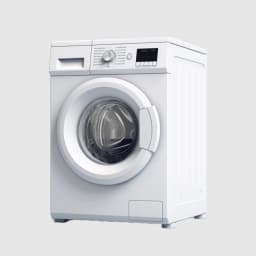
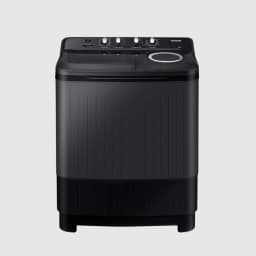
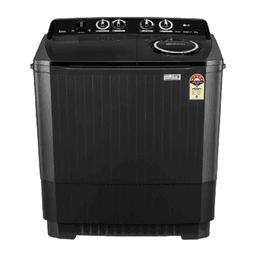
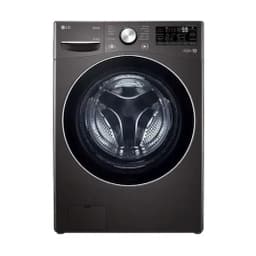
Each type has its own weak point under Kalaburagi conditions. Semi-automatic twin-tubs are simple and tolerant of low pressure because you fill them with a bucket, but their spin motors and the small drain pumps clog with silt, and the plastic body cracks after years in a sun-baked washing area. Top-load fully automatics cope with low pressure better than front-loaders and rarely have gasket mould, but their suspension rods and the pulsator shaft seal wear with hard water, and the lint filter needs cleaning every few washes. Front-loaders wash best and use the least water, which matters on alternate-day supply, but they need steady inlet pressure, their door gaskets grow mould if kept shut through the monsoon, and their heaters scale fastest because they heat on most cycles. If you are buying for a Kalaburagi flat with a low tank, ask us about pressure before choosing a front-loader; a booster pump may be part of the purchase.
Installation, Shifting and Annual Contracts
We install new front-load and top-load machines, which in Kalaburagi often means checking the overhead tank height first and recommending a booster pump for flats where the pressure is too low for a front-loader's inlet valve. We level the machine on uneven bathroom tiles, route the drain hose at the right height so it does not siphon, and verify the socket's earth before the first run. When families shift within the city, we fit the transit bolts, move the machine upright and recommission it at the new address. Hostels, hospitals, salons and the lodges near the Dargah and the railway station that run machines all day can take an annual maintenance plan covering descaling, filter cleaning, bearing checks and priority breakdown visits.
Makes and Types We Repair
Front-load and top-load fully automatic machines, semi-automatic twin-tubs and washer-dryers from Samsung, IFB, Bosch, Whirlpool, Haier, Godrej, Panasonic and Voltas Beko. Common spares, including inlet valves, drain pumps, heaters, belts, brushes, door locks and shock absorbers, come in the technician's kit. AC Care India operates as an independent multi-brand appliance repair service and is not the authorised service centre of any washing machine manufacturer. Brand names are used only to identify the machines we service, and a machine still under the manufacturer's warranty should be taken up with the manufacturer first.
Where We Go in Kalaburagi
Jagat, Brahmpur, Super Market, Station Bazar, Aland Road, Sedam Road, Humnabad Road, Ring Road, Shahabazar, Kotnoor, Jewargi Road, Ram Mandir Circle, Nehru Gunj, Basaveshwar Colony, Rajapur, Shanti Nagar, Vidya Nagar, Godutai Nagar, Mahalaxmi Layout, Shivaji Nagar, Ashok Nagar, Timmapuri Circle and the Dargah area, with Shahabad and Wadi covered on scheduled days.
What AC Care India Promises
- Verified technicians trained on both belt-drive and direct-drive machines.
- Written quote before any part is fitted.
- Warranty on the repair and on the spares.
- Genuine or tested-compatible parts, with packaging shown.
- Same-day or next-day appointments in most of the city.
- Honest advice if a machine with a cracked spider or a rusted tub is not worth the repair.
Book a Washing Machine Technician in Gulbarga
Call or WhatsApp 9266608882, or book online through this page. Mention the brand, whether it is front-load, top-load or semi-automatic, which floor you are on and whether your water is from the corporation line or a borewell. Those four facts decide what the technician brings, and they are why most jobs here finish on the first visit.
