

Four Months of Rain, Soft River Water and Borewell Edges: What Shimoga Means for a Washing Machine
Shimoga is the gateway to the Malnad, and its washing machines live by the Malnad calendar. From June to early October the monsoon keeps the air damp and clothes refuse to dry on the line, so families wash more often, use the spin cycle harder and lean on the dryer function if they have one. The city's main water supply is drawn from the Tunga river and is generally soft and low in dissolved salts, but newer layouts on the outskirts depend on borewells with noticeably harder water, and the river itself turns silty after heavy rain upstream. Add thunderstorms in April and May that bring surges and power cuts, and you have a set of conditions that wear out particular parts of a washing machine in particular ways.
This page explains those local conditions first, because once you understand them most faults make sense. After that you will find a table of symptoms and causes, a walk-through of a washing machine repair visit by AC Care India, a checklist of what you can try yourself, and honest guidance on whether to repair or replace.
The Monsoon Load: Damp Clothes, Long Spins and Rust
In July and August, humidity in Shimoga sits around 80 percent and it can rain for days without a break. Clothes hung on a balcony or inside the house stay damp, school uniforms need to be ready by morning, and many families run an extra high-speed spin to wring every drop out. That means the motor, bearings, shock absorbers and drive belt or direct-drive coupling work harder for four months straight.
The machine itself sits in a damp place too: a utility area, a bathroom corner or a covered balcony where rain splashes in. The steel cabinet starts to rust at the base and the back. Moisture gets into the control panel through vents and around buttons. Rubber parts, such as the door gasket of a front-loader and the drain hose, grow mould if the machine is closed up wet. A musty smell on freshly washed clothes in the monsoon is very often a machine problem, not a detergent one.
Mould in front-loaders
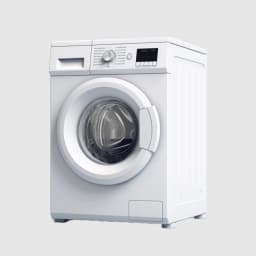
Front-loaders use little water and seal tightly, which makes them efficient but also makes them prone to trapping moisture in the door gasket fold and the detergent drawer. In Shimoga's rains, black mould can appear within weeks. Leave the door and drawer open after every wash, wipe the gasket dry, and run a hot drum-clean cycle once a month in the wet season.
Shimoga's Water: Mostly Kind, Sometimes Not
Tunga water treated by the city is generally low in hardness, which is good news for heater elements and detergent performance. Homes on the city supply typically see less scale than in many Indian cities. But two things change the picture. First, during monsoon floods the river carries silt, and fine sand reaches the inlet valve's mesh filter, slowing the fill and eventually triggering water inlet errors. Second, several growing areas on the city's edges, such as parts of Gopishettikoppa, Alkola and the layouts towards Sagar Road and Savalanga Road, depend partly or wholly on borewells, where hardness and iron can be higher. In those homes, front-loader heaters scale up, clothes go stiff and white fabrics yellow over time.
Water pressure matters as well. Single and two-storey independent houses with an overhead tank give modest pressure; fully automatic machines need a minimum pressure to fill within their time limit, and a weak flow can cause the machine to stop with an error. Apartment blocks with a pressure pump can deliver too much at times, which stresses the inlet valve.
Power Supply and Storms
Pre-monsoon thunderstorms are a familiar feature of April and May in Shimoga, and lightning-induced surges are hard on the control boards of modern fully automatic machines. During the main monsoon, outages and fluctuations are also common in heavy rain. A machine that stops mid-cycle repeatedly, then restarts when supply returns, puts strain on its door lock, relays and motor drive. A properly earthed socket and a surge protector rated for the machine help a great deal.
Top-load, front-load or semi-automatic in Shimoga homes
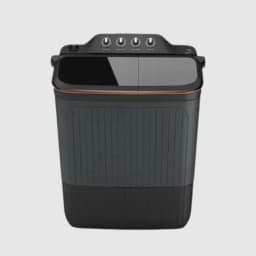
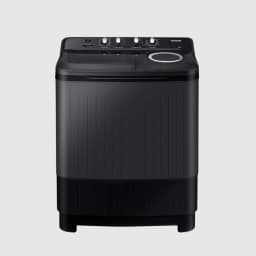
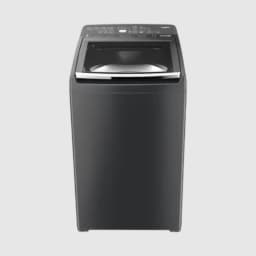
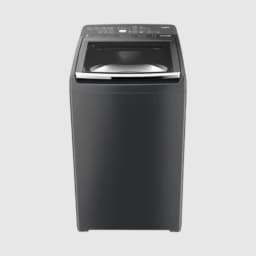
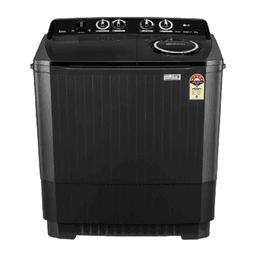
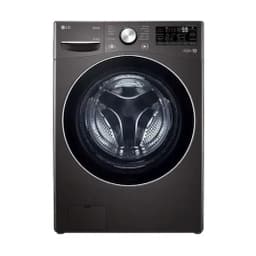
Semi-automatic twin-tubs remain common in older houses and with families who want to control water use; they are tolerant of low pressure and outages, and their usual faults are the wash-motor capacitor, the spin brake and the timer. Fully automatic top-loaders are the most popular choice in newer layouts and apartments, and they mostly need attention at the drain motor, clutch and inlet valve. Front-loaders save water and treat clothes gently, but they rely more on electronics and are the most sensitive to monsoon mould and storm surges. Knowing which type you own tells our technician where to look first.
Symptoms and Their Likely Causes
| What You Notice | Likely Cause | What a Technician Checks |
|---|---|---|
| Fills slowly or shows inlet error | Silt in inlet mesh, low tank pressure, faulty valve | Clean mesh, measure pressure, test valve coil |
| Does not drain | Lint, coins or hairpins in pump filter; kinked hose | Clear pump, test drain motor, check hose route |
| Loud noise in spin | Worn bearings, failing shock absorbers, uneven floor | Inspect bearings and dampers, level the machine |
| Clothes smell musty | Mould in gasket, drawer or outer tub | Clean and sanitise, replace gasket if damaged |
| Machine dead after a storm | Blown fuse or damaged control board | Test supply, fuse, door lock and PCB |
| Door will not open | Door lock fault, water left in drum | Drain, test lock, replace if faulty |
| Water not heating (front-load) | Scaled or burnt heater, faulty NTC sensor | Test heater and sensor, descale |
| Rust spots on clothes | Corroded drum spider or rusty cabinet parts | Inspect drum assembly and replace parts |
A Washing Machine Repair Visit, Start to Finish
When our technician arrives, he first asks what the machine is doing, when it started and whether anything changed: a new detergent, a move, a storm. He checks the socket voltage and earth and the water pressure at the tap. If the machine shows an error code, he reads it and runs a diagnostic cycle where the model allows. He then opens the relevant panel and tests the suspected component with a meter rather than guessing. You get a clear explanation and a written quote. Once you approve it, the repair is carried out, the inlet mesh and drain filter are cleaned as a matter of routine, and a full wash and spin cycle is run before he leaves to confirm everything works.
Try These Yourself, Call Us for the Rest
You can safely check
- That the water tap is fully open and the inlet hose is not kinked.
- The drain pump filter on front-loaders, after placing a tray below to catch water.
- That the machine is level and all four feet touch the floor.
- Whether the child lock is engaged.
- That the load is balanced; a single heavy bedsheet or quilt can make the drum lurch.
Call a technician if
- The machine trips the MCB or gives even a slight shock.
- There is a burning smell or smoke.
- Water is leaking from under the machine.
- The drum makes grinding noises when turned by hand.
- The display shows the same error after a restart.
Brands We Repair
We work on front-load, top-load and semi-automatic machines from Samsung, IFB, Whirlpool, Bosch, Godrej, Panasonic, Haier and Voltas Beko. AC Care India is an independent multi-brand repair service, not the authorised service centre of any manufacturer; brand names appear only to identify the machines we service. For machines still covered by the maker's warranty, contact the brand first.
Booking with us means a verified technician, a quote before work, a warranty on the repair and parts, genuine or reliable compatible spares, and same-day or next-day visits in most of the city.
Shimoga Neighbourhoods on Our Route
Ravindra Nagar, Vinoba Nagar, Gopala, Basavanagudi, Durgigudi, Kuvempu Nagar, Gandhi Nagar, Jayanagar, Ashok Nagar, Tilak Nagar, Vidya Nagar, Hosamane, Sharavathi Nagar, Malleshwara Nagar, Gopishettikoppa, Alkola, Sagar Road, Savalanga Road, BH Road and Kote, plus Bhadravathi by appointment.
Repair or Replace?
A machine under eight years old with a pump, valve, belt, door lock or sensor fault is almost always worth fixing. Bearings are a larger job but still worthwhile on a sound machine. If a machine over ten years old needs a control board and bearings together, or the cabinet and drum assembly are badly rusted, the money is usually better spent on a new one. We will give you the facts and let you decide. To book, call or WhatsApp 9266608882 or book online through this page. Mention your locality, the brand and type of machine, and any error code on the display, so the technician can carry the likely part with him.
