






Katni's Lime-Rich Water, Fine Dust and Long Summers Set the Pace for Every Washing Machine Here
Katni sits on limestone. The groundwater that many homes draw from borewells has passed through that rock, so it carries calcium and magnesium that leave white rings on buckets and taps. The air carries fine lime and cement dust from the quarries, kilns and the cement works around Kymore, plus grit from one of the busiest railway junctions in central India. Summers climb past 40°C, the monsoon brings well over a thousand millimetres of rain in a normal year, and winter mornings in the coldest weeks drop close to single digits.
For a washing machine, each of those facts has a consequence. Hard water scales heaters and stiffens clothes. Dust gets into motors and control panels. Heat and voltage dips punish the electronics, and the monsoon tests every drain and seal. Because the strain changes through the year, this page is arranged around Katni's calendar: what tends to go wrong in each season, and what washing machine repair in Katni from AC Care India does about it.
March to June: Heat, Water Shortage and Voltage Sag
As the summer builds, two things happen together. Water supply gets patchy, and families lean harder on borewells and stored overhead tank water. Electricity demand peaks in the evening when coolers and ACs come on, and voltage on older feeders can dip noticeably.
What we see in these months
- Fill errors and slow filling. Low pressure from a half-empty overhead tank, or sediment from a borewell that is running low, chokes the small mesh filter in the inlet valve. Front-loaders show an error and stop; top-loaders take forever to fill.
- Motor and PCB stress. Low voltage makes motors draw more current and run hot. Machines kept in a sun-facing balcony or on a terrace with a tin shade overheat further, and control boards fail more often in May and June than at any other time.
- Scaling speeds up. Borewell water used in the summer gap is usually harder than municipal supply, so heater elements in front-loaders and the drum of every machine gather scale faster.
What the service involves
The technician removes and cleans the inlet valve filter, checks water pressure at the tap, and measures supply voltage while the motor runs. On front-loaders the heater is tested for resistance and scale. We will suggest a proper stand or shade for machines kept outdoors.
Late June to September: Monsoon Moisture and Drain Trouble
The rains bring their own problems. Clothes take days to dry, so families run extra spin cycles and heavier loads. Bathrooms and utility areas stay damp, and the dust that settled through summer turns into a paste around the machine's base and back panel.
- Drain pump blockages. Wet-season loads carry more mud, sand and loose threads. Coins and hairpins from school uniform pockets finish the job, and the pump hums but cannot clear water.
- Rust on the cabinet and base. Machines standing directly on a wet floor rust from the bottom up. The legs and the lower edge of the body go first.
- Electrical faults from damp. Moisture on connectors and the control board causes random errors and, with poor earthing, a tingle from the body. Thunderstorms add surge damage.
- Mouldy smell. Front-loader door gaskets and detergent drawers grow black mould when the door is kept shut between washes.
The monsoon visit focuses on the drain pump and filter, the earth connection, connector cleaning and a gasket and drawer sanitising wash. If the base is rusting, we can lift the machine onto a stand.
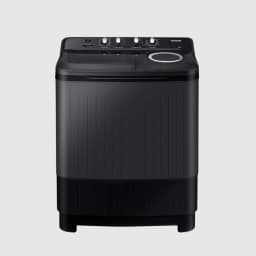
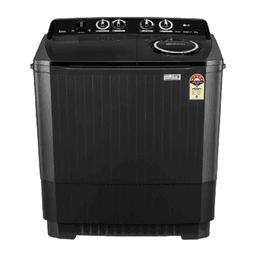
One habit helps a lot in these months: leave the lid or door open for an hour after the last wash, wipe the gasket dry, and pull the detergent drawer out to air. On semi-automatics, empty the lint filter in the wash tub after every load, because the monsoon mud that comes off school and work clothes collects there first and then works its way into the drain.
October and November: Festival Washing and Post-Rain Checks
Navratri and Diwali bring curtains, sofa covers, bedsheets and guest linen into the wash all at once. Machines that limped through the monsoon often give up in these weeks, because overloading a drum with weak shock absorbers or a worn bearing finishes them off.
Typical signs are loud banging during spin, the machine walking across the floor, a grinding rumble from behind the drum, or a belt smell on semi-automatics. This is also a good time to look for rust that started during the rains. We replace dampers, suspension springs, bearings and belts, rebalance the drum and re-level the feet.
December to February: Cold Water, Slow Wash
Katni's winter is milder than north India's, but early mornings in December and January are genuinely cold. Detergent dissolves poorly in cold water, especially hard water, so powder clumps in the drawer, residue stays on dark clothes and woollens come out grey. People switch on the heater setting on front-loaders more often, which exposes any element that has scaled up over the summer. A heater that trips the MCB on the first warm wash of the season is usually scaled or cracked. Winter is also a calm time to book bigger jobs, like a bearing change or a drum overhaul, before demand rises again in March.
Common Faults and Their Causes in Katni Homes
| Fault | Most Likely Cause | Season It Peaks |
|---|---|---|
| Machine will not fill or shows inlet error | Sediment in inlet valve filter, low tank pressure | Summer |
| Water stays in the drum | Blocked drain pump or kinked outlet hose | Monsoon |
| Loud thumping on spin | Worn shock absorbers, unbalanced load, loose counterweight | Festival season |
| Grinding or rumbling noise | Drum bearing failure, often after a seal leak | Any, worse after monsoon |
| Front-loader not heating, MCB trips | Scaled or shorted heater element | Winter |
| Dead panel or random error codes | PCB damaged by surge, heat or moisture | Summer and storm season |
| Spin motor runs but drum does not turn (semi-auto) | Loose or broken belt, worn pulley | Year-round |
| White crust on drum, stiff clothes | Hard borewell water, too much detergent | Year-round |
The Ten Checks in Every Washing Machine Visit
- Note the model, age, water source and the exact symptom.
- Measure supply voltage and test the earth at the socket.
- Run a short cycle to watch filling, washing, draining and spinning.
- Clean the inlet valve mesh and test the valve coil.
- Open and clear the drain filter and pump, then check the outlet hose.
- Check the drum for play, bearing noise and seal leaks.
- Inspect shock absorbers, springs and counterweights.
- Test the motor, belt or direct-drive unit and the door lock.
- Read error codes and check PCB connectors for moisture or burn marks.
- Explain the fault and give a quote before any part is replaced, then run a final full cycle after repair.
What We Will Not Do
We will not recommend a new PCB when cleaning a corroded connector solves the problem. We will not bypass a door lock, overload or earth to make a machine run, because that is how people get hurt. We do not pretend that a front-loader with a cracked outer tub or a semi-automatic with a rusted-through gearbox is worth large spending; we tell you the cost and let you compare it with a new machine. And we do not quote fixed prices on the phone, because the right figure depends on what is actually broken.
Areas Where We Repair Washing Machines
Technicians cover Madhav Nagar, Jhinjhari, Station Road, NKJ, Civil Lines, Bargawan, Khirhani, Gandhi Ganj, Jagannath Chowk, Mission Chowk, Subhash Chowk, Azad Chowk, Ghanta Ghar and Jabalpur Road, with planned visits to Kymore, Vijayraghavgarh, Barhi, Sleemanabad, Bahoriband and Rithi.
Machines and Makes We Handle
Front-load, top-load and semi-automatic washing machines, plus washer-dryers, from IFB, Whirlpool, Samsung, Bosch, Godrej, Haier, Panasonic and Voltas Beko. That covers the inverter direct-drive models in newer flats as well as the twin-tub machines that still do daily duty in many joint families.
AC Care India is an independent repair service for many brands. We are not an authorised service centre of any manufacturer, and brand names appear only so you know which machines we work on. If your machine is still under the company warranty, please approach the brand first.
Why Katni Families Choose AC Care India
- Technicians are background-verified and trained on both semi-automatic and fully automatic machines.
- You hear the price before anything is opened up for replacement.
- Genuine or quality compatible spares, with a warranty covering the repair and the parts.
- Same-day or next-day visits across most of the city.
- Straight advice when an old machine is not worth fixing.
Book Washing Machine Repair in Katni
Call or WhatsApp 9266608882, or book online through this page with your locality, machine type and the problem you are seeing. If you can, mention whether you use borewell or municipal water; it helps the technician bring the right parts. A seasonal washing machine service in Katni before the summer or the monsoon saves most of the breakdowns listed above.
