



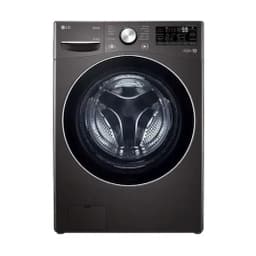
Why Does My Washing Machine in Singrauli Leave Clothes Grey and Gritty?
It is one of the questions we hear most often from families in the Singrauli coal belt. The machine fills, tumbles and spins, yet white school shirts come out dull, collars stay dark and there is sometimes a fine grit in the folds of a towel. The usual suspects are blamed first: cheap detergent, a "weak" machine, or the maid. In most cases the real cause sits inside the machine. Fine dust from the overhead tank has partly blocked the inlet filter, so the drum never gets enough water. The drain pump is half-choked, so dirty water lingers in the tub. On front loaders, the heater is crusted with scale and the wash never reaches its set temperature.
To understand why these faults show up so often here, it helps to know what each part of a washing machine actually does, and what Singrauli's water, dust, heat and power supply do to it. That is how this page is organised. It ends with how AC Care India handles washing machine repair in Singrauli, from diagnosis to installation and shifting.
The Water That Reaches Your Machine in Singrauli
Depending on the colony, a household here may be on township supply, municipal supply, a private borewell, a handpump or a water tanker, and many homes use more than one through the year. Two things are common to most of them. First, the water usually passes through a rooftop tank, and in a region surrounded by open-cast mines, power stations, ash dykes and coal-laden truck routes, fine particles settle into any tank with a loose lid. Second, borewell water in parts of the district is mineral-heavy, which means scale whenever it is heated. Both matter enormously to a washing machine, because every litre that enters the drum first passes a small mesh filter, a solenoid valve and, on many models, a heater.
Part by Part: How a Washing Machine Works and Where It Fails Here
Inlet valve and mesh filter
Where the hose screws into the machine there is a tiny mesh screen, and behind it an electrically operated valve that opens when the controller asks for water. Sediment and ash from the tank collect on this screen. As it clogs, filling slows, the machine times out with a "no water" or fill error, or it runs a wash with too little water and the clothes rub against each other dry. A clogged valve can also stick slightly open, so the drum keeps filling even when the machine is off.
Water level sensor (pressure switch)
A small tube runs from the bottom of the tub to a pressure sensor that tells the controller how much water is inside. Grit and detergent sludge can block this tube. The machine then overfills, underfills or refuses to start the wash stage.
Heater and thermistor
Front loaders and many newer top loaders have a heating element under the drum and a temperature sensor. Hard borewell water coats the element with white scale, which slows heating, trips the earth leakage breaker when the sheath eventually cracks, or throws a heater error. When the heater gives up, the wash runs cold, and greasy work clothes from the mines or the plant simply do not come clean.
Drum, tub, bearings and seal
The inner drum spins on a shaft supported by bearings at the back of the outer tub, protected by an oil seal. Heavy loads of thick uniforms, jeans and blankets wear bearings faster, and once grit or water gets past a tired seal the bearings rust and start to rumble. A loud roar during spin, like an aeroplane taking off, almost always means bearings.
Motor, belt and drive
Older and semi-automatic machines use a motor with a belt, while many newer models use direct-drive inverter motors. Belts loosen and slip; carbon brushes on universal motors wear out; inverter motor modules are sensitive to voltage spikes.
Suspension and shock absorbers
Springs and dampers hold the tub steady. When they weaken, the machine walks across the floor during spin, bangs against the wall, and stresses the bearings further. A machine on an uneven floor, which is common in older houses and rented rooms, wears these out faster.
Drain pump and filter
Front loaders and fully automatic top loaders pump water out through a small filter that traps coins, hairpins and lint. In Singrauli that filter also collects black silt. A clogged pump hums without draining, leaves water in the drum, or stops the cycle with a drain error.
Control board and door lock
The PCB runs everything. Moisture, cockroaches in the panel, and voltage spikes when supply returns after a cut are the usual killers. On front loaders, the door lock assembly also fails, and the machine will then not start at all.
Singrauli's Climate and Power: The Other Half of the Story
Water is not the only factor. Summers in Singrauli are long and very hot, commonly reaching the mid-40s in May, and a machine kept on an open balcony or a tin-roofed utility area cooks along with it. Rubber hoses harden and crack, the door gasket on front loaders loses its flexibility, and plastic parts become brittle. The monsoon then brings humidity, condensation inside the control panel and mould in the door seal and detergent drawer. Lightning storms are frequent, and voltage can dip in the evenings in colonies outside the plant townships, then spike when supply returns. The result is that board and motor failures here often follow a storm or a power cut, while valve and pump faults build up slowly from dust.
What Our Technician Checks Before Naming a Fault
- Supply voltage at the socket and whether the earth connection is sound.
- Inlet tap pressure and the condition of the mesh filter at the hose end.
- Inlet valve coil resistance and whether it shuts fully.
- Pressure switch tube for blockage and the sensor reading.
- Heater resistance and insulation test, plus the thermistor value.
- Drum play and spin noise to judge bearings and seal.
- Motor, belt or brushes, and on inverter models the motor module.
- Drain pump flow and filter condition.
- Door lock, error code history and a short test cycle.
Only after these does the technician give you a diagnosis and a written quote. We do not open the machine and start replacing parts on guesswork.
Components, Typical Life and Early Warnings
| Component | Typical life in local conditions | What you notice first |
|---|---|---|
| Inlet mesh filter | Needs cleaning every 2 to 3 months on tank water | Slow filling, fill error |
| Inlet valve | 4 to 7 years | Water trickles in when off, or does not fill |
| Heater | 3 to 6 years on hard borewell water without descaling | Cold wash, heater error, MCB or RCCB trips |
| Drum bearings and seal | 6 to 10 years, less with heavy loads | Rumbling spin, rust streaks under the tub |
| Shock absorbers | 5 to 8 years | Machine walks or knocks during spin |
| Drain pump | 5 to 8 years, filter needs monthly cleaning | Water left in drum, humming |
| Belt or carbon brushes | 4 to 7 years | Drum not turning, burning smell |
| Control board | Variable; often ends after a surge | Dead panel, random stops |
Installation, Shifting and Annual Service
Many households in Singrauli move between quarters, colonies and towns because of transfers and project shifts. A washing machine that is moved carelessly can come out of it with damaged suspension or a broken tub. For front loaders, the transit bolts must go back in before moving. Top loaders need the tub supported. At the new house we install the machine on a level surface, fit an inlet with an external sediment filter where the tank water is dusty, route the drain hose correctly so it does not siphon, and check the socket and earth.
For families who use the machine daily, an annual service covers inlet and drain filter cleaning, a drum descale, a check of hoses and gaskets, and an electrical safety test. Doing it before the monsoon makes sense, since that is when drying loads go up and machines are under the most strain.
Machines We Repair in Singrauli
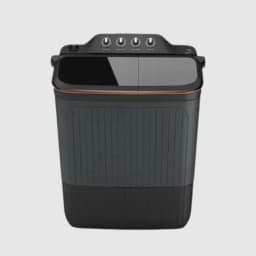
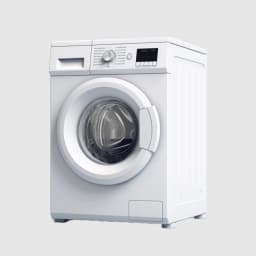
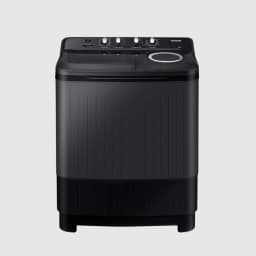
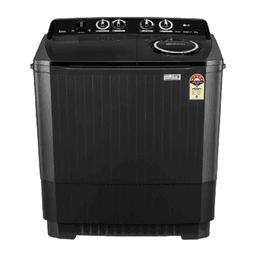
We handle semi-automatic twin tubs, fully automatic top loaders, front loaders and washer-dryers. Brands include IFB, Whirlpool, Samsung, Bosch, Godrej, Haier, Panasonic and Voltas Beko, along with older models from smaller brands where parts are still available.
A clear note for customers: AC Care India is an independent repair service that works across many brands. We are not authorised by, or connected to, any washing machine manufacturer, and brand names are used here only to describe the machines we fix. If yours is still under the maker's warranty, please contact the brand first.
Colonies and Areas We Reach
Jayant, Bargawan, Waidhan, Nigahi, Vindhyanagar, Navjeevan Vihar, Amlori, Morwa, Kachni, Dudhichua, Ganiyari, Deosar, Balianri, Sasan, Jhingurdah, Pachaur, Gorbi and Bilaunji, along with Shaktinagar, Bina and Khadia close to the state border.
Why Families Here Call AC Care India
- Technicians whose identity and work history we have checked.
- The price for the job is agreed with you before any part is changed.
- Warranty on both the repair work and the parts fitted.
- Genuine or tested compatible spares, never mystery parts.
- Visits on the same or the next day across most of the Singrauli area.
- A straight answer when an old machine is not worth repairing.
Book a Washing Machine Repair in Singrauli
Call or WhatsApp 9266608882, or book online through this page. Tell us your colony, the brand and type of machine, the error code if any, and whether your water comes from a borewell, township line or tanker. That one detail often tells our technician which parts to carry.
