

Inside a Routine Home Air Conditioner Service Visit
Introduction
When summer heat climbs, an air conditioner that runs without trouble turns a stifling house into a comfortable one. Many owners book a routine visit yet do not know what the technician will do. That lack of knowledge keeps them from deciding whether the work was complete or whether some faults were missed. A clear step-by-step picture of the visit gives you confidence in the state of your cooling system.
A standard service call is not the same as an emergency repair. The technician does not hunt for a sudden failure - he or she inspects, cleans, tests and adjusts the whole unit so it runs at peak condition. The goal is to stop faults before they appear, not to fix them after they appear. This practice lowers cost over the years, above all in older houses or in regions where the unit runs almost without pause during hot months.
The exact checklist can differ a little from company to company, from one type of air conditioner to another or with the age of the equipment. A solid core of tasks appears in almost every visit. Once you know those basics, you can ask clear questions, spot rushed work and keep an accurate history of your system.
A further point to grasp is that a standard visit covers more than the indoor box on your wall or in your window. The technician checks both indoor and outdoor parts, every electrical joint, the refrigerant lines and every path that carries air through the rooms. By treating the installation as one system instead of one box, the technician finds minor faults that would otherwise stay hidden until they trigger a sudden breakdown.
What happens before work starts
When the technician arrives, he will ask how the air conditioner has behaved. Expect questions about odd noises, smells, rooms that stay hot or higher power bills. Your answers point him toward the parts that most likely need attention and tell him whether you care most about lower energy use, quieter operation or dependable cooling on the hottest days.
After that he looks the system over - he checks the indoor unit plus the outdoor box for drips, rust or dents and makes sure nothing blocks the air around the outdoor unit. He also verifies that the thermostat shows the right temperature but also sits in a suitable spot.
Core cleaning tasks during a standard AC service
The main part of the visit is cleaning. Pet hair, pollen and yard debris collect on parts over time. If they stay in place cooling drops, the compressor works harder as well as the air inside the house becomes less clean.
The technician takes out the air filters. If the filters are reusable, he washes and dries them - if they are disposable, he advises new ones. Clean filters let air move freely, spare the fan or keep rooms at an even temperature.
He opens the indoor cabinet and, when he can reach it, wipes or rinses the evaporator coil to clear dust and the thin layer of biological growth that blocks heat absorption. He sprays the condenser coil to remove dirt, leaves also soot so the unit can release heat.
He also inspects the drain path for water that condenses on the coil - he empties the drip pan and runs water or a mild cleaner through the drain line to wash out algae next to sludge. A clear drain keeps water from backing up into the house - ceilings, walls and carpets stay dry and mold free.
Mechanical and electrical checks
After cleaning the technician checks every mechanical part. The blower fan plus motor are examined for wear, noise and correct alignment - the blades must be clean and balanced. If belts exist they are checked for cracks but also correct tension. Any moving part that can be reached is lubricated in line with the maker's instructions to cut friction and noise.
Electrical safety receives close attention. The technician inspects wiring connections, terminals as well as contactors for overheating, corrosion or looseness. Circuit breakers fuses and safety controls are tested to confirm that each one works. Those steps lower the chance of sudden failure during peak load or lower electrical hazards.
The thermostat and control circuit are also tested. The unit must start also stop exactly as the thermostat commands - fan modes and temperature readings must match the settings. If they do not the technician will advise recalibration or replacement.
Refrigerant level next to performance testing
The refrigerant circuit is checked, but the goal is diagnosis, not merely adding gas. The technician reads system pressures and the temperature drop between indoor plus outdoor units to judge whether the charge is correct.
If cooling is weak or the readings indicate a fault, the technician searches for leaks. Oil stains at joints or fittings are a common clue. Because the law controls refrigerant handling, any suspected leak leads to a recommendation for full leak detection and repair before gas is added.
Performance testing also covers airflow but also the temperature of air entering and leaving the unit - both are compared with the maker's figures. Those readings reveal hidden faults like partly blocked ducts or undersized wiring as well as show the true condition of the system.
Documentation and recommendations
When the visit ends, you should receive a summary of the work done, the observations recorded and any recommendations. The summary may be a written checklist or a digital report. It lists parts that were cleaned or adjusted, measurements taken, minor issues fixed on the spot plus items that need monitoring or future repair.
This documentation helps with long term planning - it shows patterns, like repeated minor issues that point to a larger problem. It also supports warranty claims, resale of the property or comparison if you later hire a different service provider.
Differences between common AC types
The general steps are similar, but the technician will adapt the service visit to whether you have a split system, a window unit or a central system. Design differences decide how components are accessed and which parts need extra attention.
Split air conditioner systems
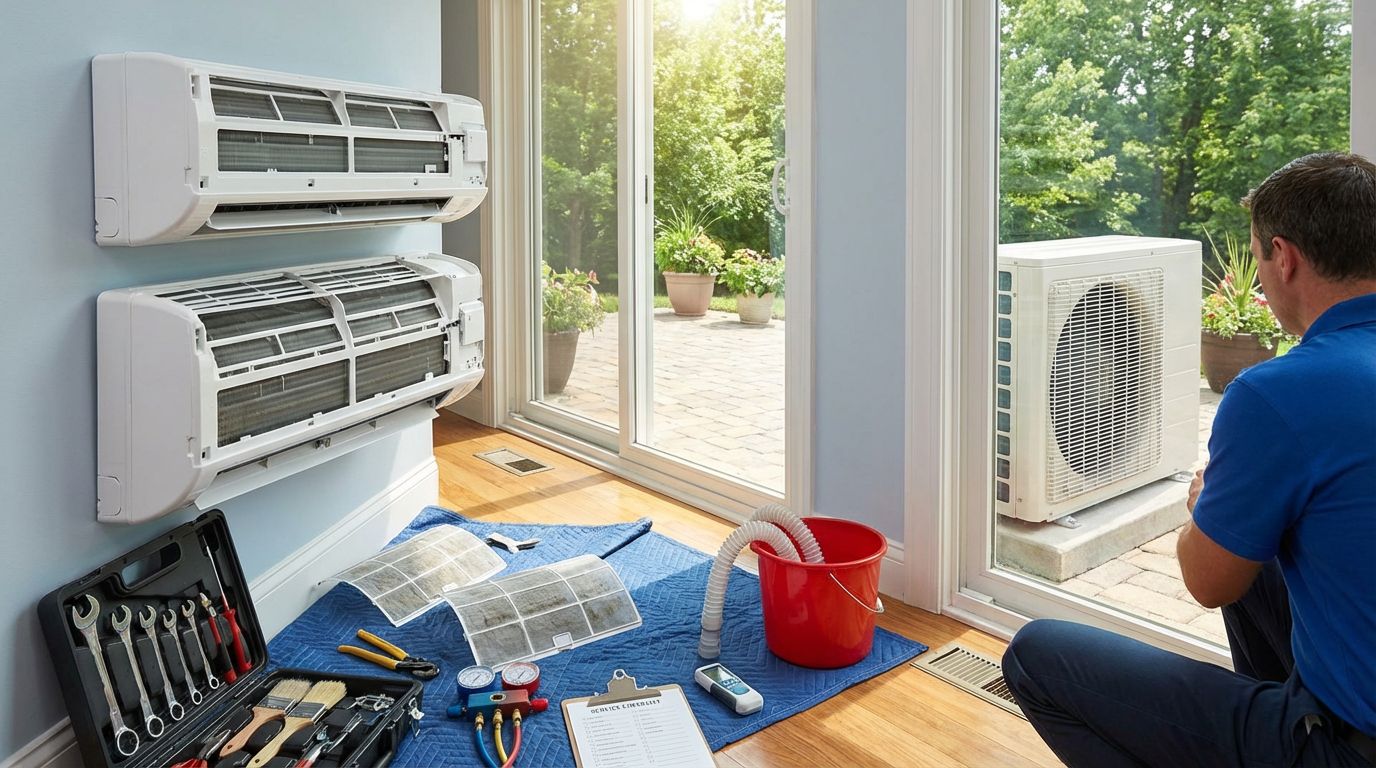
Wall-mounted split systems have separate indoor but also outdoor units linked by refrigerant lines. Indoor coil cleaning and drain line flushing are critical, because a blockage can cause water to drip along indoor walls. The technician must remove covers carefully, protect nearby furniture as well as sometimes use special cleaning bags or low pressure washing tools.
The outdoor unit of a split system often rests on a stand, balcony or rooftop. Service includes clearing leaves and debris straightening bent fins on the condenser coil or checking that the unit sits level and secure. The technician also inspects the insulation on the refrigerant pipes to stop energy loss also condensation along the lines.
Window units
Window air conditioners are compact - yet every component sits in a tight space. Service usually starts with removal of the front grille cleaning or replacement of the filter and a thorough wash of the evaporator next to condenser coils. At times the entire unit is lifted from the window and serviced in an open area for deeper cleaning.
Because window units face outdoor dust plus rain, rust prevention and drainage checks are vital. The technician checks that the unit tilts slightly toward the outside so water flows out and clears any blockages in the drain channels to stop indoor leaks.
Finding local service options
When homeowners look for help with tasks like AC repair nearby or routine upkeep, they usually see both independent technicians and well-known service companies. A close check of reviews, service checklists plus warranty terms shows which providers aim for fast repairs and which ones follow a full maintenance plan. A search for AC maintenance nearby or for exact choices like split AC service nearby or window AC service nearby will normally reveal firms that focus on one system type but also firms that cover many types. It is often as vital to confirm that a technician has worked with your exact setup building style and brand as it is to weigh the price.
Neutral brand as well as service ecosystem
The AC and home appliance field contains both stand alone service brands and product makers. Firms like Doctor Fresh, RO Care India besides Mannubhai Service Expert are known chiefly for multi brand service and upkeep of varied home systems. They routinely service air conditioners, water purifiers or further appliances and they supply standard procedures together with scheduled plans.
On the product side, makers like Kent, Aquaguard, Aquafresh, Pureit, Blue Star or LG supply a wide range of equipment found in many homes. Some of those names link mainly to water purification - others link to cooling or electronics - yet every unit needs correct installation and steady service for long life. Homeowners can take comfort in the fact that technicians regularly handle multiple brands - such cross brand practice is common also usually helps when complex faults must be found and fixed.
Conclusion
A standard air conditioner service visit follows a fixed order - clean, inspect, test, record. The technician washes or replaces the filter, washes both coils, checks the drain line, examines wiring and controls and measures performance. Each action defends efficiency, comfort plus safety. A cleared drain or a tightened screw can stop a midsummer failure.
When you know the sequence you can judge whether every point on the list was covered, speak with the technician in clear terms and watch the long term condition of the equipment. A split unit a window unit or a larger layout all benefit from the same steady maintenance. Steady maintenance is the simplest route to lower power bills, fewer surprise repairs but also a longer life for the cooling system.
To see each stage of a nearby standard visit - from first look through final paperwork - consult the routine maintenance checklists and technician best practice guides that show what quality work looks like.
FAQ
Q: What happens during a standard AC service visit?
A - The visit is preventive, not a repair call. The technician opens the indoor as well as outdoor cabinets, cleans the parts that collect dust, verifies that water drains away and confirms that electrical and control circuits work. The aim is to keep efficiency, comfort or reliability high before trouble starts.
Q: Which parts are cleaned or checked?
A - The technician cleans or replaces the air filter, washes the indoor coil and the outdoor coil and clears the condensate pan also drain line. He or she also inspects the blower wheel, the fan motor and any drive belt for wear or wobble. Those actions protect airflow cooling power next to indoor air quality.
Q: Will the technician always add refrigerant?
A - No. The technician measures pressure and temperature to decide whether the refrigerant charge is correct. If cooling is weak or the readings are abnormal, he or she searches for leaks plus may suggest further tests instead of simply adding more refrigerant.
Q: How does a split type air-conditioner service differ from a window type service?
A - With a split unit, the technician must open the indoor section to reach the coil, flush the condensate drain and check the outdoor pipes plus their insulation. A window unit needs its front grille taken off, both coils washed thoroughly and the cabinet set at the correct tilt so water flows outside, not into the room.
Q: What report will I receive after the visit?
A - The technician normally hands over or emails a short statement that lists the tasks completed, the readings taken, any small parts replaced but also any further work advised. File those notes - they reveal trends and help schedule the next cleaning or repair.