

Split vs window AC maintenance cost comparison guide
Introduction
When summer heat rises, most homes and offices rely on air conditioners for relief. Regular maintenance becomes essential because it keeps rooms comfortable, keeps power bills low plus lengthens the life of the unit. When owners compare prices, one question keeps appearing - why do technicians quote one fee for a split unit and a different fee for a window unit?
The gap in price is not random - it mirrors differences in design, in how hard the unit is to reach, in the skill the job demands but also in the time the work takes. Many owners type “AC service charges near me” into a search engine and receive quotes that span a wide range as well as are hard to interpret.
In cities that use air conditioners heavily, like Delhi and the rest of the National Capital Region, the gap is plain. One firm lists a higher fee for a split unit - another firm lists the same fee for every type of unit. Without background knowledge, it is easy to label any higher figure as unfair, when in fact the higher figure often reflects real extra work or real extra technical steps.
This article states in plain words why window units and split units receive separate price tags for service, how location alters the fee listed under “AC service charges Delhi” or in nearby towns also which points to check when you compare quotations. With this information you can set a sensible budget for maintenance and decide whether a quoted fee matches the work that will be done.
Key factors that shape the fee
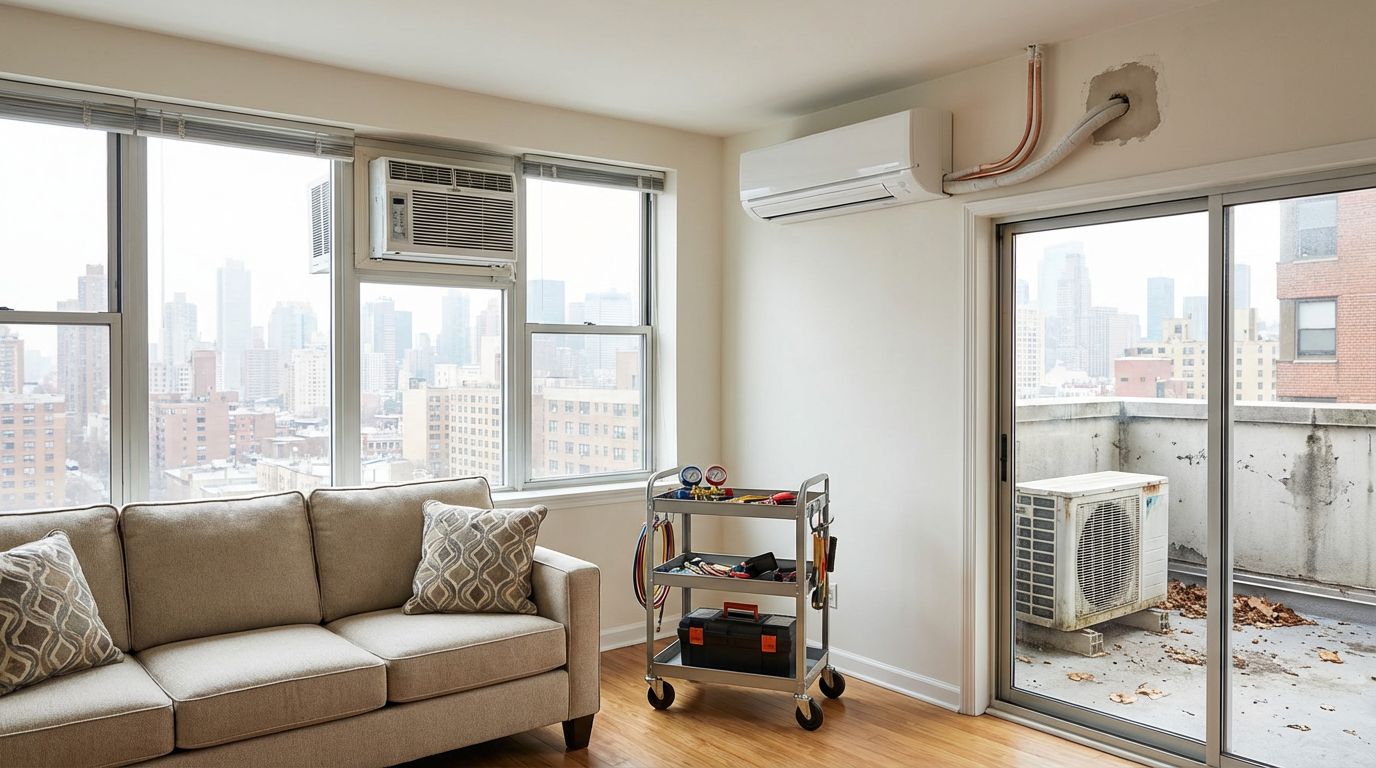
The first major factor is the physical layout of the unit. A window air conditioner is a single box that contains every part. It slides into a window frame or into a wall opening made for it. A split air conditioner, by contrast, has two separate boxes - an indoor evaporator next to an outdoor condenser. Copper pipes power cable and a drain line join the two halves. Because the parts are split, the technician faces extra steps plus extra time when the system is opened for service.
Another significant factor is accessibility. A window unit sits in one place - a technician opens its cabinet from inside the room, cleans the filter, looks at the coil, checks the fan motor and does the rest of the work without leaving the room. A split unit forces the technician to work on two separate boxes, one inside plus one outside. The outdoor box may stand on a terrace, a narrow ledge or high on an exterior wall - that position adds steps and sometimes danger - the labour charge rises.
Refrigerant handling but also leak testing also differ. A split unit needs long copper tubes that link the indoor and outdoor boxes - every joint along those tubes is a place where gas can escape. The technician must spend extra time tracing the full circuit whenever the cooling drops. A window unit keeps every part in one box - the refrigerant path is short as well as has few joints - finding and fixing a leak is therefore faster and easier.
Electrical and control systems add further difference. A split AC often carries inverter boards, complex PCBs, multiple sensors or network-ready controls. Diagnosing or replacing those parts demands special tools and training, sometimes specific to the brand. A window unit especially an older or basic model, relies on simpler wiring also fewer parts - fault finding and repair stay cheap.
Why split AC servicing is priced higher
Many firms charge more for a split unit because one proper visit covers extra tasks. The technician first opens the indoor unit, removes and washes the filter, cleans the blower wheel next to cooling coil and empties and scrubs the drain tray. If the unit hangs close to the ceiling, the technician brings a ladder plus works carefully so that walls and furniture stay unmarked.
After that the technician moves to the outdoor unit. There he cleans the condenser coil, checks the fan blades, inspects wiring but also terminals, confirms free air passage and listens for odd noise or vibration. Leaves as well as traffic soot often block the outdoor side - it needs heavier cleaning. In tall buildings, even reaching the outdoor box takes longer and may require a safety harness, all of which adds to the bill.
Refrigerant pressure and temperature readings matter most in split systems. A technician joins gauges to the service valves to verify that the gas pressure is correct. If the value deviates, the technician decides whether the cause is minor, for example dirty coils or filters or a major fault like a refrigerant leak. This diagnostic work demands time plus skill and the fee reflects it.
Modern split units contain extra electrical parts - any thorough inspection becomes longer. When a PCB, sensor or communication cable is suspected, the technician removes covers, checks each connection and in some cases resets calibration values. This deeper inspection raises the quoted price for split service above the simpler work needed for window units.
Why Window AC Service Usually Costs Less
Window air conditioners normally carry lower service fees because the maintenance sequence is simpler. Every primary part sits in one box - the compressor, the condenser coil, the evaporator coil, the fan motor, the filters but also the control panel. A service engineer lifts the front panel and, if required, slides the chassis out - nothing else must be reached at a distance.
Routine care of a window unit usually means washing the air filters brushing and rinsing both coils wiping the blower as well as fan blades and clearing the drain path so water cannot drip indoors. Those jobs finish sooner and need fewer tools than the equivalent work on a split system.
When gas is low or lost, the diagnostic route is shorter because the refrigeration circuit is compact. The technician can see the coil surface, the brazed joints or the capillary zone without difficulty. If a refill is necessary, it proceeds quickly on a well planned window unit - labor time and the final charge stay low.
Many window models also rely on simple mechanical or basic electronic controls. In older non inverter types, faults usually appear in the capacitor, the thermostat or the fan motor - each part is easy to test also to swap. Because the technical demand is modest, technicians keep their prices lower and window maintenance stays attractive to budget minded owners.
Impact Of Location On Service Pricing
Where you live decides how much you pay for split or window AC service. In big cities like Delhi, technicians face high shop rents, long travel time and heavy traffic - they ask for more money than workers in small towns. If you place the Delhi bill next to a bill from a nearby suburb or a tier two city, the gap is easy to see.
Inside the Delhi NCR belt, each locality has its own level of demand plus number of rivals. Gurgaon prices for instance, differ a little from central Delhi prices because the housing style building height and count of repair shops are not the same. In high rise blocks where the outdoor unit sits on a narrow ledge, the fitter often adds a risk fee. Areas full of independent houses with open terraces usually keep the fee lower.
Dust but also air quality matter as well. Districts that have a lot of dust, smoke or building work need deeper coil washes and need them more often, above all for the outdoor unit. After a year or two, this extra labour lifts the average price per visit, especially for split systems whose outdoor half sits exposed. When you compare quotes, look at those local troubles, not only the headline figure.
Common Types as well as What Each One Needs
Split ACs appear in four main kinds - plain non inverter split, inverter split, multi split and ceiling cassette or ductable units. The plain non inverter has simple electronics and costs the least to service. An inverter split changes compressor speed to save power - its delicate PCB boards or sensors raise both fault finding time and possible spare part cost. A multi split uses one outdoor unit for multiple wall units - the long pipe runs turn leak searches also upkeep into a slow job.
Window units still come in old fixed speed form and in newer power saving form - yet the whole box keeps a compact shape. Their service list stays almost the same - wash the coils, check a few parts next to test the gas now and then. Top-grade window models may add a digital display or remote, but they do not reach the control complexity of large inverter splits.
How Each Service Category Moves the Price
Beyond the core difference between split and window units, the type of service requested also changes the bill. A basic cleaning or preventive maintenance visit costs less than a deep chemical cleaning. Deep chemical cleaning often requires removal of the unit plus a thorough wash of the coils with specialized solutions. This type of cleaning is more common and takes more time on split ACs, especially the indoor unit, because of its placement in living areas but also its role in airflow.
Repairs like compressor replacement, gas recharging after a leak repair, PCB replacement, sensor changes and fan motor repairs each have their own cost patterns. Those costs differ between window as well as split models. While the price of the component itself matters, the labor cost is often higher for split units, because of the need for piping work, issues with wall concealment and insulation requirements.
Neutral Brand Considerations
Different brands design their air conditioners with unique layouts, electronics or recommended service procedures. Names commonly found in the Indian market include Doctor Fresh, RO Care India, Mannubhai Service Expert, Kent, Aquaguard, Aquafresh, Pureit, Blue Star besides LG. Those brands may offer dedicated service networks or work with third party service aggregators. Even though those names are often linked to water purifiers or home appliances, many service platforms that handle them also provide air conditioner maintenance for both split and window models.
From a pricing perspective, branded authorized service centers sometimes quote slightly higher service charges, because of the use of original spare parts, standardized procedures also trained personnel. Third-party technicians or aggregators may offer more flexibility and lower prices, though the quality of service may vary. Regardless of the brand, the main cost difference between window next to split AC servicing is still determined by structural design, accessibility and technical complexity.
Conclusion
Service charges for split and window air conditioners differ mainly because the systems require different levels of effort, time plus technical skill. Split units need attention to both indoor and outdoor parts, more detailed refrigerant checks, complex electronics diagnostics but also sometimes work at height, all of which increase the cost. Window units are self-contained and simpler - they usually cost less to clean and maintain.
Location pushes the price up - when the outdoor unit sits on a city rooftop or behind a high rise wall, the technician needs extra time and gear to reach it - the visit costs more. Inverter splits plus multi-split rigs bring extra circuit boards and valves - old window boxes stay simple. Once you see how those points move the quote, you can judge if the figure is fair and set a sensible yearly budget for cooling at home or at work.
If you want fuller detail on how design, tech level but also place of installation set the gap between split and window service fees, read the pricing guides before you book seasonal work.
FAQ
Q: Why does a split AC usually cost more to service than a window AC?A - A split has two boxes, long copper lines as well as more electronics. The engineer must reach the outdoor box, often on a bracket ten floors up, carry more tools and run extra tests. That extra time labor or risk push the bill above the price for a one piece window unit.
Q: How does each design change the minutes on the job?A - A window unit keeps every part in one frame - the engineer opens the front grille and reaches every part from the same spot. A split hides half its parts in an outdoor box that may sit on a roof or wall bracket - the engineer works in two places also at height. The second trip and ladder work add minutes next to raise labor cost.
Q: Does the city or street I live on change the fee?A - Yes. Metro engineers charge more for fuel, traffic delays and parking. If the outdoor unit hangs off a twentieth floor balcony or sits behind a pollution clogged coil, the extra rigging plus cleaning push the price higher for both split and window machines.
Q: Is an inverter split more expensive to service than a non inverter split?A - Yes. Inverter boards sensors but also chips need special testers and firmware knowledge. Fault-finding takes longer - the labor charge as well as the final bill rise.
Q: Apart from the AC type, what else changes the service price?A - The service you choose sets the price. A basic clean costs less than a deep chemical clean or a major repair. If the technician must trace a gas leak, swap the compressor or treat the coils, the job needs extra labor and extra parts - this shows most on split systems where the pipes hide in the wall. The age and general state of your AC decide how much work the technician must do.