

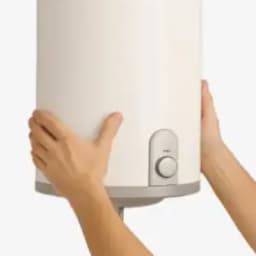
Etawah's Winter Is Short but Foggy and Bitter, and the Geyser Carries the Whole Household Through It
For most of the year Etawah is a hot city, and nobody thinks about water heaters. Then, somewhere in late November, the mornings turn sharp. By mid-December dense fog settles over the doab, the sun may not break through until noon, and on cold-wave nights the minimum drops to around 4 or 5°C. Tap water from an overhead tank on a roof is painfully cold at six in the morning. From then until roughly the end of February, the geyser is one of the hardest-working appliances in the house, often running in back-to-back cycles as each family member bathes before school, office or the fields.
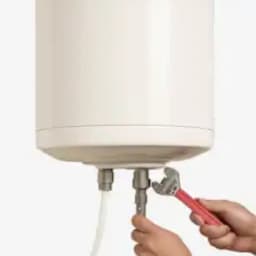
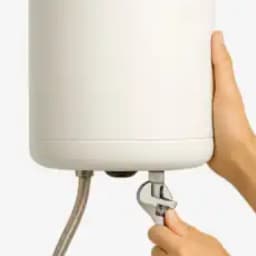
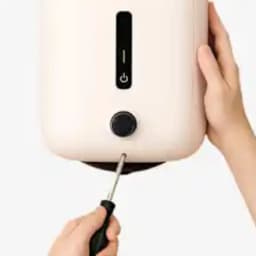
That pattern, a long idle summer followed by an intense three-month winter, shapes how geysers fail here. This page opens up a typical water heater part by part, explains how the town's water and power affect each piece, and sets out how AC Care India approaches geyser repair in Etawah.
Inside a Storage Water Heater: The Parts and How Each One Gives Up
The element
A sheathed resistance coil sitting in the lower half of the tank. It is the part that does the heating, and the part most often replaced. In Etawah it usually fails in one of two ways: scale builds up on it until it overheats and the coil breaks, or the sheath corrodes through and leaks current to the water and body, tripping the MCB or the ELCB.
Thermostat and safety cut-out
The thermostat switches the element off at the set temperature, usually adjustable with a knob. The cut-out is a separate, non-adjustable device that disconnects power if the water gets dangerously hot. Months of heat in an unventilated bathroom loft during summer can weaken thermostat contacts. When the thermostat sticks, the cut-out trips repeatedly and the geyser seems to "stop working" after each heating cycle.
Sacrificial anode
A magnesium rod screwed into the tank. Its whole purpose is to corrode before the tank does. Few people in town know it exists, and it often goes unchecked for the life of the heater. Once it is used up, rust spots form inside the tank and the hot water may come out discoloured.
Inner tank
Usually glass-lined or enamel-coated mild steel, sometimes stainless steel in premium models. The tank holds pressure every time water heats and expands. A tank weakened by corrosion eventually develops a pinhole leak, which shows up as dampness under the geyser or a drip from the casing.
Pressure relief and multi-function valve
This valve on the cold inlet releases pressure when the water expands and stops hot water flowing back into the cold line. Grit and scale stop it seating properly, causing constant dripping, or worse, jam it shut.
Instant geysers
Three and five litre instant heaters are common in Etawah kitchens and small bathrooms. They use a compact, high-wattage element and a thermal cut-out. Scale builds on these elements quickly, and a burnt element or a failed cut-out accounts for most of their faults.
Iron, Hardness and the Sludge That Collects in the Tank
Most homes in Etawah use groundwater, either through municipal supply drawn from tubewells or through a private submersible. Groundwater surveys for the district have found iron above the permissible limit at Etawah town, and the water is generally on the hard side. Both matter inside a geyser.
Heating hard water drives calcium and magnesium out as scale, which bakes onto the element and settles at the bottom of the tank. Iron, once heated and exposed to air, oxidises into a brown, slimy sediment. Mix the two and you get a reddish-brown sludge that accumulates over every winter. It insulates the element, reduces the usable tank volume and makes a rumbling, popping noise as the water heats. It is also why many Etawah households notice brownish hot water at the start of the season.
A yearly flush, done before winter, removes most of it. In homes where the hot water stays discoloured even after flushing, an inlet sediment filter on the line feeding the geyser is a cheap addition that protects the tank, the valve and the element together.
Shock, Earthing and the Old Bathroom Problem
Many older houses in the bazaar areas and around the railway side of town were wired long before geysers were common. The geyser often shares a circuit with the bathroom light or a plug point, the earth wire is missing or loose, and there is no ELCB or RCCB on the board. Combine that with a corroded element and you have a real shock risk at the tap.
Any tingling from the tap or shower, or an MCB that trips the moment the geyser switches on, should be treated as urgent. Switch off at the main board and do not use the geyser until it has been tested. On every visit, our technicians check earth continuity and insulation resistance before anything else.
What Our Technician Tests Before Recommending Any Part
- Earth continuity from the geyser body to the board.
- Insulation resistance between the element and the body.
- Supply voltage at the socket during the morning peak, if possible.
- Element resistance and actual current draw.
- Thermostat cut-off against a measured outlet temperature.
- Safety cut-out function.
- Valve operation and inlet pressure from the overhead tank.
- Anode condition, checked by removing it.
- Amount and colour of sediment when the tank is drained.
- Wall fixing and condition of the mounting bolts.
Geyser Components: Expected Life and Early Warnings
| Component | Expected Life on Etawah Water | Early Warning |
|---|---|---|
| Element (storage) | 3 to 5 winters without flushing, longer with yearly care | Longer heating time, MCB trips, tingling |
| Element (instant) | 2 to 4 years | Water only slightly warm, cut-out tripping |
| Thermostat | 5 to 7 years | Water too hot, too cold or uneven |
| Magnesium anode | 2 to 4 years depending on iron and hardness | Brownish water, metallic smell |
| Pressure relief valve | 3 to 5 years | Constant drip, or no release at all |
| Inner tank | 8 to 12 years with anode replacement | Water under the unit, damp patch on wall |
Eight Idle Months and a Smaller Electricity Bill
Between March and November, most Etawah geysers are switched off. Summer water from a rooftop tank is warm enough on its own, and by May it can be uncomfortably hot by afternoon. Leaving a full tank of water sitting for eight months is not ideal. The anode keeps working, iron keeps settling and the valve can stick. If you can, drain the geyser after the last cold week, or at least switch it on once a month for a short cycle. When you restart it in November, open a hot tap first so air escapes, and watch that the relief valve releases a little water as the tank heats.
In winter, the biggest saving comes from the thermostat. Setting it to around 50 to 55°C rather than the maximum gives comfortable bath water, slows scale formation and cuts standing heat loss. Switch on twenty minutes before the first bath instead of leaving the heater on all morning, and switch off once the family is done. A flushed element heats noticeably faster than a scaled one, which shows on the bill.
Fitting, Relocating and Pre-Winter Maintenance Plans
We fit new storage and instant geysers with sturdy wall anchors, a dedicated point on a suitably rated MCB, a correctly placed pressure relief valve and a drain point for future flushing. If you are shifting house within the city, we disconnect, drain and refit the heater safely. For households, hostels and small hotels near the Lion Safari road with several geysers, a pre-winter maintenance plan covers flushing, anode checks and electrical testing in October and November, so everything is ready before the fog sets in.
Water Heater Brands We Repair
Storage, instant and gas models from Racold, Bajaj, Havells, AO Smith, Crompton, V-Guard, Haier, Orient and Venus. For gas geysers, we always check bathroom ventilation, because a gas heater in a closed bathroom can produce dangerous levels of carbon monoxide.
Neighbourhoods We Visit in Etawah
Ram Nagar, Friends Colony, Civil Lines, Ashok Nagar, Shastri Nagar, Pakka Talab, Lalpura, Naurangabad, Station Road, Sabzi Mandi, Gwalior Road, Mainpuri Road, Agra Road, Kanpur Road, Bharthana Road and the bypass colonies, and Saifai, Jaswantnagar and Ekdil on scheduled days.
Book Geyser Repair in Etawah
Our technicians are verified, quote before starting, fit genuine or reliable compatible parts with a warranty on repair and spares, reach most areas the same day or next, and tell you straight if a leaking tank is not worth saving. AC Care India is an independent multi-brand appliance repair business, not the authorised service centre of any water heater brand; names are listed only to identify the products we repair, and in-warranty geysers should go to the manufacturer first.
Call or WhatsApp 9266608882, or book through this page. Book in October or November and you will have hot water ready for the first foggy morning.
