

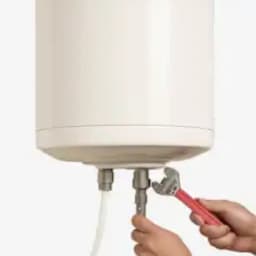



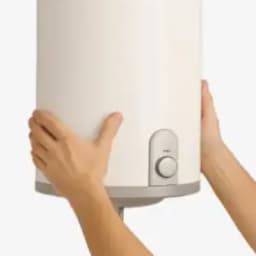
Geyser Not Heating in Mira Bhayandar? Run Through These Four Checks First
First, look at the switch: many geysers in Mira Road flats are wired through a 16-amp switch with an indicator that has failed, so the geyser is on but the light is not. Second, open the MCB box and see whether the geyser's breaker or the RCCB has tripped; if it trips again the moment you reset it, stop there and call, because that is an earth leakage. Third, open the hot tap and wait a minute; if water comes but stays cold, the element or thermostat is suspect, and if no water comes at all, the inlet or the overhead tank is the issue, not the heater. Fourth, note the time: during society water hours the pressure surges, and a pressure release valve that spits briefly at that moment is doing its job. If none of this resolves it, this page will help you understand what is going on inside the unit before AC Care India arrives for geyser repair in Mira Bhayandar.
An Honest Word About Geysers in a Warm City
Mira Bhayandar does not have a real winter. Night temperatures in December and January sit around 17 to 20 degrees, and a cold spell is anything under 15. Geysers here are used for a few minutes early in the morning for a few months, plus year-round in homes with elderly members, young children, or anyone who simply dislikes a cool bath. That pattern, short bursts after long idle spells, is its own kind of hard on the appliance. Water sits in the tank for weeks, the anode dissolves quietly, and a season of humid monsoon air works on the thermostat and the wiring. When the first properly cool morning arrives in December, the geyser that was fine in March refuses to heat, and it looks like a sudden failure. It is not.
Inside the Tank: Part by Part
The heating element
A copper or incoloy sheath around a resistance coil, immersed in the tank water. Mira Bhayandar's municipal supply from the Barvi and Surya dams is moderately soft, but tanker water, which many societies rely on in summer, and well water near the creeks can be considerably harder. Scale forms on the hot element surface, the element overheats under its own crust, and it eventually burns out or develops a pinhole that leaks current to earth. That earth leakage is what trips the RCCB.
Thermostat and thermal cut-out
The thermostat senses tank temperature and switches the element off at the set point. The cut-out is the backup that trips if the thermostat sticks on. In a humid bathroom, the thermostat's contacts corrode and its capillary bulb can lose calibration, giving lukewarm water or, at the other extreme, water so hot the valve keeps venting.
Magnesium anode rod
This rod is designed to corrode instead of the tank. In a geyser that sits idle for months, it still dissolves. Once gone, the inner tank starts to rust, the hot water turns brownish and the tank eventually weeps at the seam. Most owners here have never had the rod inspected, because nobody told them it existed.
Inner tank and insulation
Glass-lined steel, enamel or stainless. The sediment that settles at the bottom from tanker water causes the popping sound some people notice when the geyser heats. A tank that leaks from the body is rarely worth repairing.
Pressure release valve and non-return valve
The multi-function valve lets expanding hot water escape and stops it flowing back into the cold line. In this city, where overhead-tank pressure drops to nothing between supply hours and jumps when the pump runs, valves work hard. A valve that drips continuously is tired; one that never releases is dangerous.
Wiring, switch and earth
Older buildings in Bhayandar West, the chawl-style housing around Navghar and some 1990s societies on Mira Road have wiring that was never meant for a 2-kilowatt bathroom load, and earth connections that have corroded in the damp. A geyser on a bad earth is a shock hazard, and our technician tests the earth before anything else.
Instant geysers
Small 1 to 3 litre units common in Mira Bhayandar rentals. They have a compact element and a flow switch that triggers heating when water passes. Low pressure on the top floors of older buildings, especially outside supply hours, means the flow switch never triggers, and the unit appears dead when it is simply starved of water.
Diagnostics We Run on Every Visit
- Earth continuity and insulation resistance test with the geyser isolated.
- Supply voltage and element current, which reveals a partly burnt element before it fails fully.
- Thermostat check against a measured water temperature.
- Drain a sample from the tank to see the sediment and scale load.
- Anode rod removed and inspected, not assumed.
- Valve test under supply-hour pressure and again when the line is at rest.
- Mounting check: a full 15 or 25 litre tank is a heavy object on a tiled bathroom wall.
- On instant units, a flow test at the tap to confirm the flow switch has enough pressure to operate.
Component, Expected Life and Early Warning
| Component | Typical Life in Mira Bhayandar Use | Warning Sign |
|---|---|---|
| Heating element | 4 to 6 years on dam water; 3 to 4 with regular tanker supply | Slow heating, RCCB trips, higher bill |
| Thermostat | 5 to 7 years | Lukewarm water, or scalding water with the valve venting |
| Anode rod | 3 to 5 years, faster on hard tanker water | Rusty or metallic-smelling hot water |
| Multi-function valve | 3 to 5 years | Constant drip, or no release at all |
| Inner tank | 8 to 12 years if the anode is replaced in time | Damp patch below the unit, water on the floor |
| Instant geyser element | 3 to 4 years | Only slightly warm water, unit cutting out |
| Indicator and switch | 3 to 5 years in a humid bathroom | Lamp dead, switch warm to touch |
Saving Electricity in the Months You Do Use It
Because the heating season is short here, most households never think about the geyser's running cost. A few habits still help. Set the thermostat to around 50 to 55 degrees rather than the maximum; the bath is still warm, scaling is slower, and the element lives longer. Switch the unit on fifteen minutes before use instead of leaving it on from six to nine while the whole family bathes in turn, or fit a simple timer switch if your society's early-morning water pressure makes bathing times unpredictable. If the geyser is going to sit idle from March to November, as many in Mira Road do, either drain it or run it once a fortnight so the water does not stagnate. A descaled element heats the same tank noticeably faster, which is the cheapest electricity saving there is.
Installation, Shifting and Maintenance Contracts
We install storage and instant geysers with proper wall anchors, a dedicated 16-amp point with a working earth, correctly oriented inlet and outlet, a valve with a drain line, and a check that the overhead tank gives enough head for the model chosen. For the top floors of older Mira Road and Bhayandar buildings, we advise on whether an instant unit will actually get enough flow, or whether a small storage model is the safer buy. When you move within the twin city, we uninstall, drain and refit at the new address. Societies and PGs can take an annual plan that includes a pre-winter descale and safety check in October or November, before the cool mornings arrive.
Brands We Repair
Bajaj, Racold, AO Smith, Havells, V-Guard, Crompton, Haier, Venus and Orient storage and instant models, plus gas geysers in some older Bhayandar homes. On gas units we check the burner, the ignition and, above all, bathroom ventilation; a gas geyser in a sealed bathroom is a carbon monoxide risk, and we will say so plainly if the installation is unsafe.
AC Care India is an independent repair company serving many brands. We are not the authorised service centre of any geyser manufacturer, and brand names appear here only to indicate the products we handle. If your geyser is still within its warranty, contact the brand's service line first.
Neighbourhoods on Our Route
Mira Road East: Shanti Nagar, Shanti Park, Beverly Park, Poonam Garden, Ramdev Park, Sheetal Nagar, Hatkesh, Kanakia, Srishti and Silver Park. Naya Nagar. Ghodbunder Road side: Kashimira, Kashigaon, Mira Gaon and Penkarpada. Bhayandar: Jesal Park, Navghar, Indralok, Goddeo, Salt Pan Road, Chowk, Morva, Dongri and Uttan.
What Customers Get From AC Care India
Verified technicians trained specifically on water-heater electrics and safety. A quote before the cover comes off. A warranty on the repair and on the parts fitted, which are genuine or tested compatibles. Same-day or next-day visits across most of the twin city. And a straight answer when the tank is beyond saving, because we do not sell geysers.
Book Geyser Repair in Mira Bhayandar
Call or WhatsApp 9266608882, or book online through this page. Tell us the brand, the capacity, your floor and whether your society uses tankers in summer, because that changes what the technician brings. A geyser checked in November will see you through every cool morning the twin city can manage.
