

Microwave Oven Suddenly Stops Working and Restarts After 2 Minutes: Causes and Solutions
Microwave Oven Suddenly Stops Working and Restarts After 2 Minutes: Causes and Solutions
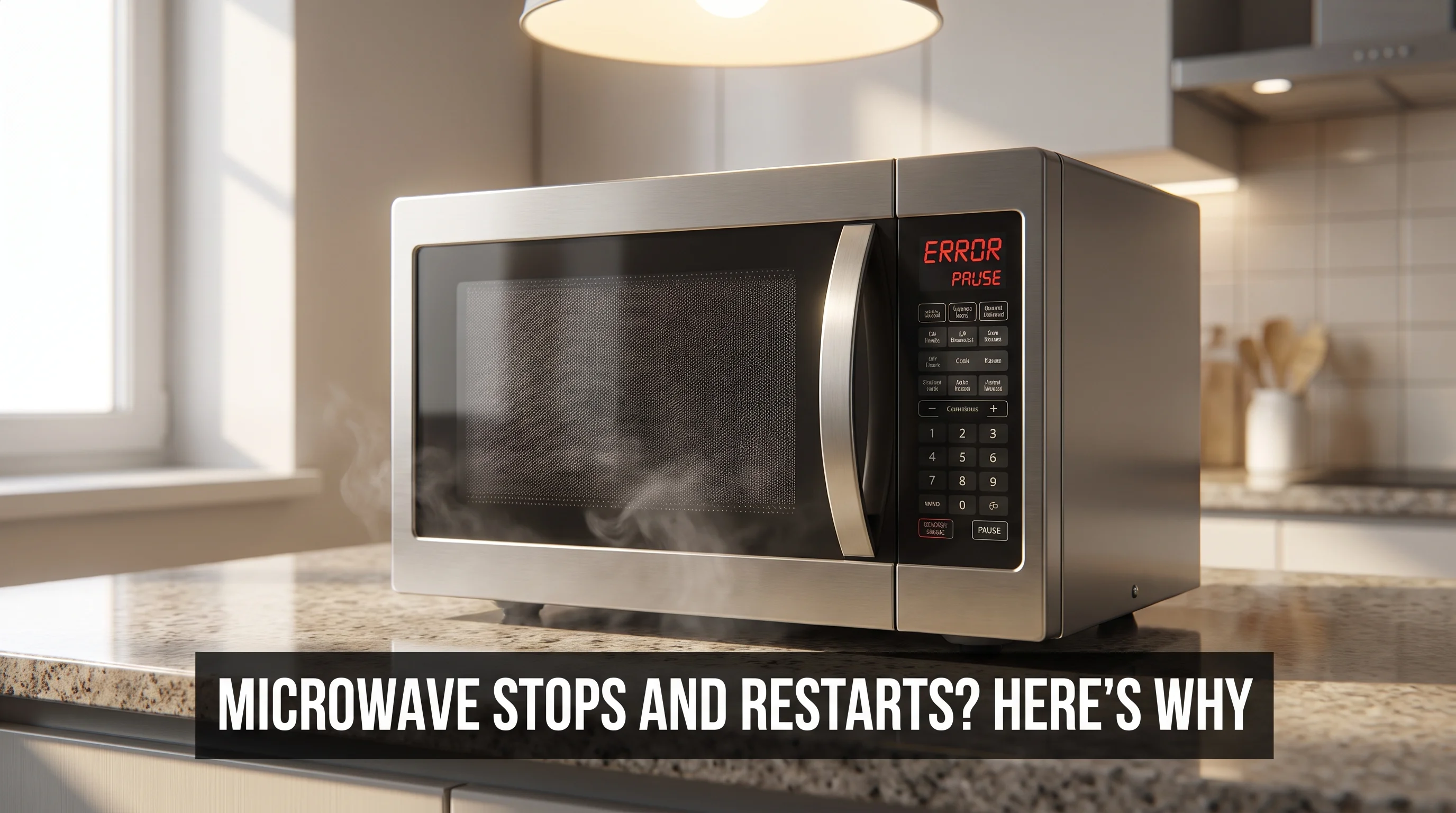
Have you ever been in the middle of heating your food when your microwave oven suddenly stops working, only to mysteriously restart after a couple of minutes? This frustrating experience is more common than you might think, affecting thousands of Indian households every day. The intermittent shutdown followed by automatic restart is not just inconvenient during meal preparation, but it also raises concerns about the appliance's safety and longevity. Understanding why your microwave oven suddenly stops working and restarts after 2 minutes can save you time, money, and the hassle of incomplete cooking cycles. Whether you live in Itanagar or any other Indian city, this problem requires immediate attention to prevent further damage to your appliance.
This peculiar behavior typically indicates an underlying issue with your microwave's safety mechanisms or electrical components. Unlike a complete breakdown where the microwave refuses to turn on at all, the stop-and-restart pattern suggests that protective circuits are being triggered. For residents seeking professional assistance, Microwave Oven Repair Service in Itanagar can diagnose and resolve these issues efficiently. The good news is that most causes behind this problem are fixable, and with proper diagnosis, you can restore your microwave to normal functioning without necessarily replacing the entire unit.
Indian households depend heavily on microwave ovens for quick meal preparation, reheating, and cooking convenience. When your trusted kitchen appliance starts behaving erratically, it disrupts your daily routine and creates uncertainty about food preparation. The two-minute restart pattern is particularly telling because it points toward thermal-related safety shutdowns rather than random electrical failures. This article will explore the various reasons behind this specific malfunction and provide practical solutions that work for Indian conditions and usage patterns.
Before attempting any DIY fixes or calling for professional help, it helps to understand the mechanics of how microwave ovens protect themselves from damage. Modern microwaves come equipped with multiple safety features designed to prevent overheating, electrical shorts, and component failure. When these protective systems detect anomalies, they temporarily shut down the appliance to prevent permanent damage or safety hazards. Knowing which component is causing the shutdown can help you communicate effectively with technicians and make informed repair decisions.
Understanding the Thermal Cutoff System
The thermal cutoff or thermal fuse is one of the most common culprits when your microwave oven suddenly stops working and restarts after 2 minutes. This safety device monitors the temperature inside the microwave cavity and the magnetron, which is the component that generates microwaves. When temperatures exceed safe operating levels, the thermal cutoff interrupts power to protect the appliance from fire hazards or component damage. After the microwave cools down for approximately two minutes, the thermal cutoff resets automatically, allowing the microwave to restart.
Several factors can trigger repeated thermal cutoff activation in Indian households. Continuous usage without adequate cooling periods is common in busy kitchens where multiple family members use the microwave consecutively. Poor ventilation around the microwave unit, often caused by placing the appliance too close to walls or inside enclosed cabinets, restricts airflow and causes heat buildup. Dust accumulation on ventilation grills is another frequent issue in Indian homes, especially during summer months when dust levels are high. Blocked air vents prevent proper heat dissipation, forcing the thermal cutoff to engage repeatedly.
The magnetron cooling fan plays a crucial role in preventing thermal shutdowns. If this fan malfunctions or operates inefficiently, the magnetron overheats quickly, triggering the thermal cutoff within minutes of operation. In cities with voltage fluctuations, the fan motor may receive inconsistent power, affecting its cooling capacity. Additionally, worn-out fan bearings can reduce fan speed, diminishing cooling effectiveness. Professional services like Microwave Oven Repair Service in Rewa can test fan operation and replace faulty cooling components before they cause permanent damage to your expensive magnetron.
High ambient temperatures in Indian kitchens, particularly during summer months when kitchen temperatures can exceed 40 degrees Celsius, contribute significantly to thermal issues. When the starting temperature is already elevated, the microwave reaches critical temperature thresholds much faster than in cooler conditions. This environmental factor, combined with internal heat generation, creates a perfect scenario for repeated thermal shutdowns. Ensuring adequate kitchen ventilation and maintaining cooler ambient temperatures can reduce the frequency of these interruptions.
Door Switch and Interlock Problems
Door switches and safety interlocks constitute another major cause of intermittent microwave operation. Modern microwaves incorporate three to four door switches that must engage properly for the appliance to operate. These switches ensure the door is completely closed and sealed before allowing microwave energy generation. When door switches become misaligned, worn, or damaged, they may fail to maintain consistent contact, causing the microwave to stop mid-cycle. After movement or settling of internal components, contact is re-established, allowing the microwave to restart.
The two-minute restart pattern associated with door switch issues occurs because users often open and close the door after the initial shutdown, inadvertently resetting the switch position. This temporary fix gives the illusion that the problem resolved itself, but the underlying switch malfunction remains. Door switches endure thousands of activation cycles throughout the microwave's lifespan, and mechanical wear is inevitable. In Indian households where microwave usage is frequent, switch degradation accelerates, leading to intermittent contact issues.
Symptoms of door switch problems include the microwave light turning off during operation even though you haven't touched the door, the turntable stopping mid-cycle, or the display remaining lit while heating stops. Sometimes you might hear a clicking sound when the microwave shuts down, indicating switch disengagement. Door misalignment caused by worn hinges or a warped door frame can prevent switches from engaging properly. This is particularly common in microwaves that have been moved frequently or subjected to door stress from heavy usage.
For those seeking reliable repairs, professional services across India have specialized tools to test door switch continuity and alignment. Attempting to repair or bypass door switches without proper knowledge is dangerous because these switches are critical safety components. A malfunctioning door switch could potentially allow microwave operation with the door open, creating serious radiation exposure risks. Always consult qualified technicians when door switch issues are suspected.
Magnetron and High Voltage Component Failures
The magnetron is the heart of your microwave oven, converting electrical energy into microwave radiation that heats your food. When the magnetron begins failing, it can draw excessive current, causing circuit breakers or internal protection circuits to trip. After a cooling period, the protective circuit resets, allowing operation to resume briefly before the cycle repeats. Magnetron degradation is a gradual process, often manifesting as intermittent operation before complete failure.
Signs of magnetron issues include unusual noises during operation, such as loud humming, buzzing, or grinding sounds. The microwave might take significantly longer to heat food, or heating might become uneven with cold spots appearing even after extended cooking times. Burning smells or sparking inside the cavity during operation indicate serious magnetron problems requiring immediate professional attention. In such cases, continuing to operate the microwave can cause further damage to other expensive components.
High voltage components supporting magnetron operation, including the high voltage capacitor, diode, and transformer, can also cause intermittent shutdowns. When these components degrade, they create irregular power delivery to the magnetron, triggering protective circuits. The capacitor, which stores high voltage charges, may develop leakage that causes temporary shutdowns. After discharging completely, the system attempts to restart, creating the observed two-minute restart pattern.
Given the high voltage involved in these components, typically ranging from 2,000 to 5,000 volts, only trained technicians should attempt diagnosis or repair. Services like Microwave Oven Repair Service in Patna employ technicians with proper safety equipment and expertise to handle high voltage components safely. The cost of magnetron replacement in India typically ranges from INR 2,500 to INR 5,000 depending on microwave capacity and model, making professional diagnosis worthwhile before considering appliance replacement.
Electrical and Power Supply Issues
Voltage fluctuations are extremely common in Indian electrical systems, particularly in tier-2 and tier-3 cities where power infrastructure may be less stable. Microwave ovens are sensitive to voltage variations, with most models designed to operate optimally at 230 volts. When supply voltage drops below 200 volts or spikes above 250 volts, internal protection circuits may shut down the microwave to prevent component damage. Once voltage stabilizes, the microwave restarts automatically.
Installing a dedicated voltage stabilizer for your microwave can eliminate voltage-related shutdowns. Stabilizers designed for microwave ovens are available in India starting from INR 1,500 for basic models to INR 4,000 for advanced units with wider correction ranges. This investment protects not just from intermittent shutdowns but also extends the overall lifespan of your appliance by ensuring consistent power delivery. For comprehensive electrical solutions, Microwave Oven Repair Service in Hubli and similar services can recommend appropriate stabilizers based on your local power conditions.
Loose electrical connections within the microwave or at the power outlet create intermittent contact that manifests as sudden shutdowns. Oxidation on plug contacts, common in coastal areas with high humidity, increases resistance and causes overheating at connection points. Internal wire connections can loosen due to vibration from the cooling fan and transformer operation. These loose connections create arcing that triggers safety circuits, causing the shutdown-restart cycle.
The main control board, which manages all microwave functions, can develop cold solder joints or component failures that cause intermittent operation. When the board overheats from continuous operation, failing components temporarily stop functioning until cooling allows partial restoration. This technical issue requires board-level diagnosis and repair or complete board replacement. Modern microwave control boards integrate multiple functions, and their failure affects various operations beyond just the heating cycle.
Common Troubleshooting Steps and Solutions
When your microwave oven suddenly stops working and restarts after 2 minutes, systematic troubleshooting can help identify the issue before calling professional help. Start by checking the basics: ensure the power outlet is functioning properly by testing it with another appliance. Examine the power cord for any visible damage, fraying, or burn marks. Check that the plug fits snugly in the outlet without looseness. These simple checks can sometimes reveal obvious problems that homeowners can address immediately.
Clean all ventilation grills thoroughly using a vacuum cleaner with a brush attachment. Remove dust and grease buildup from both intake and exhaust vents. Ensure the microwave has adequate clearance on all sides—manufacturers typically recommend at least 3 inches on the sides and 6 inches at the back for proper airflow. If your microwave is installed in a cabinet, verify that the cabinet ventilation is sufficient. Poor ventilation accounts for approximately 30 percent of thermal shutdown issues in Indian households.
Test the door closing mechanism by observing whether the door closes smoothly and latches firmly. Listen for a distinct click when the door engages. Open and close the door several times to check for consistency. Examine door seals for damage, hardening, or gaps that might affect switch engagement. If the door seems loose or misaligned, avoid using the microwave until professional inspection, as this poses safety risks.
Monitor your microwave's behavior pattern carefully. Note whether shutdowns occur at specific time intervals, with particular food types, or during certain power settings. Does the problem happen only during peak electricity hours when voltage might be lower? Recording these details helps technicians diagnose issues more quickly and accurately. Services such as Microwave Oven Repair Service in Satna can provide more efficient repairs when supplied with detailed symptom information.
If DIY troubleshooting doesn't resolve the issue within a day or two, professional diagnosis becomes necessary. Continuing to use a malfunctioning microwave risks permanent damage to expensive components or creates safety hazards. The cost of professional diagnosis in India typically ranges from INR 300 to INR 800, a worthwhile investment considering potential repair costs if the problem worsens.
Prevention and Maintenance Tips
Preventing intermittent shutdown issues requires regular maintenance practices adapted to Indian conditions. Clean your microwave interior weekly using mild detergent and water, removing food splatters and grease that can absorb microwave energy and cause overheating. Pay special attention to the ceiling area where grease tends to accumulate. Monthly deep cleaning should include removing and washing the turntable, roller ring, and any removable interior components.
External ventilation maintenance is equally important. Monthly cleaning of ventilation grills prevents dust accumulation that restricts airflow. In areas with high pollution or during dusty seasons, increase cleaning frequency to bi-weekly. Consider placing the microwave in locations with natural ventilation or near kitchen exhaust systems that help dissipate heat more effectively.
Adopt proper usage practices to minimize stress on microwave components. Avoid continuous operation exceeding 10-15 minutes without cooling breaks. When heating multiple items consecutively, allow 2-3 minutes between cycles for the magnetron and cooling system to stabilize. Never operate the microwave empty, as this causes magnetron damage and overheating. Use microwave-safe containers that don't absorb excessive microwave energy, which can lead to uneven heating and component stress.
Schedule annual professional maintenance checks, particularly for microwaves older than three years. Professional inspections can identify developing issues before they cause failures, potentially saving thousands in repair costs. Technicians can test high voltage components, verify proper calibration of thermal protection systems, and replace wear-prone parts preemptively. Many professional services offer annual maintenance contracts that provide regular checkups at discounted rates.
Conclusion
Understanding why your microwave oven suddenly stops working and restarts after 2 minutes empowers you to take appropriate action quickly. The most common causes—thermal cutoff activation, door switch problems, magnetron issues, and electrical supply irregularities—each have distinct symptoms and solutions. While some problems require professional intervention, others can be prevented through proper usage habits and regular maintenance. Indian households face unique challenges including voltage fluctuations, high ambient temperatures, and dust accumulation that accelerate microwave problems.
The two-minute restart pattern serves as your microwave's warning system, indicating that protective circuits are working to prevent more serious damage. Ignoring these warning signs often leads to complete component failure and significantly higher repair costs. Whether you choose to troubleshoot basic issues yourself or immediately contact professional services, prompt attention to intermittent shutdown problems extends your appliance's lifespan and maintains kitchen efficiency. Remember that microwave ovens contain high-voltage components that pose serious safety risks, making professional repair the wisest choice for complex issues. By combining preventive maintenance, proper usage practices, and timely professional intervention when needed, you can ensure your microwave oven provides reliable service for many years.
Understanding why your microwave experiences sudden shutdowns is crucial for kitchen safety and appliance longevity. Learn more about thermal protection systems, door switch malfunctions, and voltage fluctuations that trigger automatic restarts in modern microwaves. Explore further into diagnostic techniques that help identify whether your appliance needs simple maintenance or professional repair, ensuring your kitchen operates smoothly and safely.
Related Blogs
- How to Get the Best deal for the Air Conditioner
- Professional Water Purification Setup Services and Expert Solutions in Delhi NCR
- Complete Guide to Air Conditioning Maintenance and Repair Solutions in Mumbai
- Complete Guide to Air Conditioning Setup and Service Solutions in Mumbai
- Understanding Professional Refrigerator Maintenance Services in Mumbai: A Complete Guide