

Why Does My Microwave Hum but Not Heat Food in Satna?
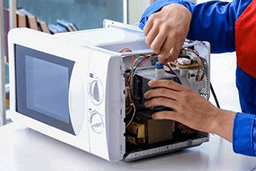
It is one of the most common questions we get from Satna households. The light comes on, the plate turns, the timer counts down, and the dal comes out exactly as cold as it went in. That pattern almost always points to the high-voltage side of the oven: the magnetron that makes the microwaves, the high-voltage diode, the capacitor or the transformer that feeds them. Sometimes it is a door switch that tells the oven it is safe to run the fan and lamp but not the magnetron.
The answer is rarely the same twice, and the timing of the fault often depends on the season. Satna's year swings from fierce dry heat to a heavy monsoon and then a cool, sometimes foggy winter, and each phase is hard on a microwave in its own way. This page walks through that year, explains what tends to fail when, and describes how our microwave repair service in Satna deals with it safely.
March to June: Heat, Dust and Overworked Ovens
By April, Satna afternoons are routinely above 40°C, and in May the average daily high sits around 42°C. Many kitchens here, especially in older houses near Station Road and the bazaar areas, have little ventilation and a roof that soaks up sun all day. A microwave tucked into a corner on top of the fridge, with its vents pressed against a wall, simply cannot shed heat.
What we see in these months:
- Thermal cut-out trips: the oven stops mid-cycle and comes back after cooling. The fuse or thermal protector is doing its job, but the cause is blocked vents or a failing cooling fan.
- Cooling fan motor failure: dust from the quarry and cement belt around the city settles in the fan bearings and the motor seizes.
- Magnetron overheating: a magnetron run hot for months loses output and eventually fails outright.
Summer is also the season of evening voltage drops. Low voltage makes the transformer run hotter and can leave the oven heating weakly even when nothing is technically broken.
Late June to September: Monsoon Storms and Kitchen Humidity
Satna gets most of its yearly rainfall in these months, with July and August the wettest. Two things happen to microwaves.
First, thunderstorms and lightning bring voltage spikes. Touch panels, control boards and the main fuse are the usual casualties. A microwave that was working at dinner and is completely dead the next morning after a storm night has usually lost its fuse or its board, and occasionally both.
Second, the steam from pressure cookers and boiling milk, combined with outdoor humidity that often stays above 80 percent, creeps into the oven. The cavity paint around the waveguide cover gets damp and greasy, and microwaves arc against that spot. If you see sparks and hear crackling inside an empty-looking cavity, stop using it. Continued sparking burns through the waveguide cover and can damage the magnetron.
Rust also starts inside the cavity floor and around the door hinge in these months, particularly in units kept near the sink.
October and November: Festival Cooking and Heavy Use
Navratri, Dussehra and Diwali bring a different strain. Convection microwaves come out for cakes, nankhatai and baked snacks, often for hours at a time on several days in a row. The convection heater element, its fan and the thermistor that reads cavity temperature all work harder than they do for the rest of the year. A grill or convection mode that stops heating in the middle of festival baking is a classic late-October call.
Turntable motors also give trouble now, usually because heavy glass dishes and trays are loaded unevenly. A plate that turns in jerks, or not at all, means a worn coupler or a failing motor.
December to February: Cool Mornings and Constant Reheating
Winter nights in Satna can drop to single digits, and the city has recorded close to freezing. In this season the microwave becomes a reheating machine: tea, milk, rotis and leftovers several times a day. The door switches take a beating, because every cycle opens and closes them, and a worn switch leads to an oven that only works if you press the door shut.
Winter is also a good time for maintenance. Use is steady but not extreme, the air is drier, and any rust spots that began in the monsoon can be treated before they spread.
A few simple habits keep a microwave healthy through the whole Satna year, and none of them need a technician:
- Leave at least a hand's width of space at the back and sides, and never block the top vents with boxes or a tray.
- Wipe the cavity and the waveguide cover after cooking anything oily or with heavy tadka splatter; grease left there is what sparks later.
- Use only microwave-safe bowls. Steel katoris and dishes with gold or silver rims cause arcing.
- Do not run the oven empty, even for a few seconds.
- Plug it into its own earthed socket, preferably through a surge protector, rather than a crowded extension board.
- Close the door gently. Slamming it wears the latch hooks and switches faster.
- Keep a cup of water inside if children might switch it on by accident.
Common Faults and What Causes Them
| Fault | Most Likely Cause | Season It Peaks in Satna |
|---|---|---|
| Runs but does not heat | Magnetron, HV diode, HV capacitor or transformer | Summer |
| Completely dead, no display | Main fuse blown, PCB surge damage | Monsoon |
| Sparking inside cavity | Greasy or damaged waveguide cover, peeling paint, metal on dish | Monsoon |
| Stops mid-cycle | Thermal cut-out, weak cooling fan | Summer |
| Turntable not rotating | Worn coupler or turntable motor | Festival season |
| Convection or grill not heating | Heater element, thermistor, convection fan | Festival season |
| Works only when door is pressed | Door switch or latch hook wear | Winter |
| Touch keys unresponsive | Membrane keypad or moisture on panel | Monsoon |
Our 10-Step Microwave Service Checklist
- Note the symptom, the model and whether it followed a storm or a long power cut.
- Check the wall socket voltage and earthing.
- Unplug and safely discharge the high-voltage capacitor before opening the cabinet.
- Test the main fuse and the thermal cut-outs.
- Check all three door interlock switches and the latch.
- Test the HV diode, capacitor and transformer windings with proper instruments.
- Check magnetron filament continuity and look for signs of overheating.
- Inspect the waveguide cover, cavity paint and turntable assembly.
- Test the cooling fan, lamp and, on convection models, the heater and thermistor.
- After the repair, run a timed water-heating test and a leakage check around the door.
What We Will Not Do
A microwave holds a lethal charge in its capacitor even when unplugged, and the door seal is what keeps microwave energy inside. So there are lines we do not cross:
- We will not bypass a door interlock switch to get an oven running.
- We will not patch a damaged cavity with ordinary paint or foil.
- We will not fit a magnetron that does not match the oven's rated output.
- We will not repair an oven whose door is warped or whose hinges are broken without restoring a proper seal.
- We will not suggest a repair that costs more than the oven is sensibly worth. A basic solo microwave with a failed magnetron and board is often better replaced.
We also ask customers never to open a microwave themselves. Replacing a fuse is not a DIY job if you do not know how to discharge the capacitor first.
Why Satna Families Trust AC Care India
Our technicians are verified and trained on solo, grill and convection ovens. You see the diagnosis and the quote before we start, parts and labour carry a service warranty, and we use genuine or properly matched compatible spares. In most areas we can visit the same day or the next, and we will tell you straight if a new oven makes more sense than a repair.
Satna Areas We Cover
Panna Road, Jawahar Nagar, Rewa Road, Bharhut Nagar, Sindhi Camp, Civil Lines, Kolgawan, Krishna Nagar, Prem Nagar, Station Road, Rajendra Nagar, Birla Road, Mukhtiyarganj, Pateri, Bagaha, Dhawari, Utaily, Semariya Chowk, Sitapur and Tikuriya Tola.
Microwave Brands We Repair
We regularly work on ovens from IFB, Samsung, Panasonic, Whirlpool, Bajaj, Godrej and Morphy Richards. AC Care India is an independent repair company and is not appointed by any of these manufacturers; their names are mentioned purely to identify the ovens we service. If yours is still under the brand's warranty, start with the company's own service line.
Book a Microwave Repair Service in Satna
Book a microwave repair service in Satna online through this page, or call 9266608882. Share the brand, whether it is solo, grill or convection, and what the oven is doing, and we will schedule a visit.
